Would you bet your company's 2026 profit margins on a shingle that was never designed to survive a 38-degree temperature swing in less than six hours?
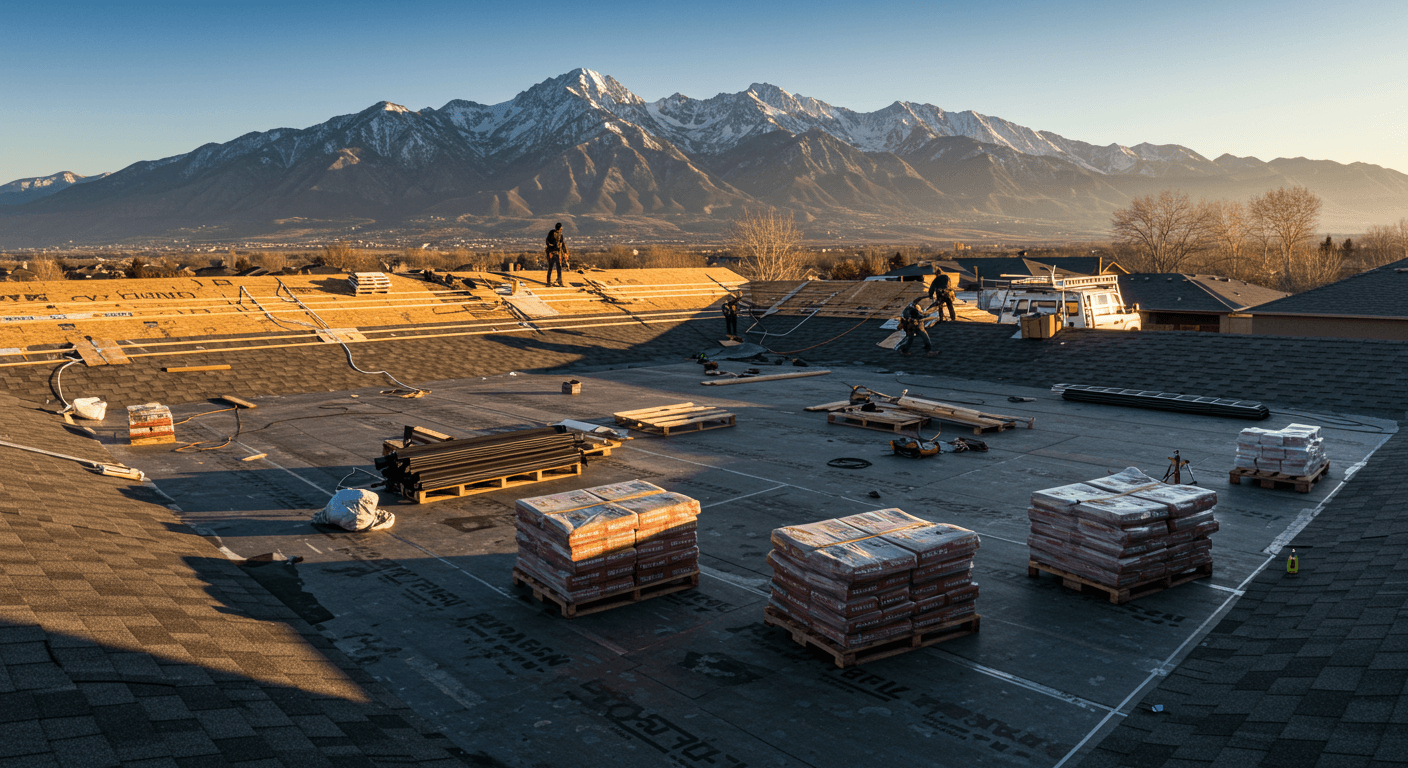
I was standing on a job site in Draper last November with a contractor named Vance, watching his crew strip a three-year-old roof that had literally buckled under the pressure of Utah's diurnal temperature shifts. Vance wasn't just frustrated; he was looking at a $14,840 loss on a warranty claim because the "standard" architectural shingle he'd installed couldn't handle the rapid expansion and contraction common along the Wasatch Front. This wasn't a failure of labor, it was a failure of strategic material selection. In Salt Lake City, the 4,226-foot elevation and intense UV radiation create a "pressure cooker" environment that turns generic materials into liability magnets.
At a Glance
Climate-Specific ROI: Transitioning to SBS-modified shingles in the Salt Lake Valley can reduce weather-related callbacks by 22.7% over a five-year period.
Margin Protection: High-altitude projects in areas like Park City require specialized ice and water shield applications to prevent $3,100+ average damage claims from ice damming.
Competitive Positioning: Educating the property owner on UV resistance and thermal shock resilience allows for a 12.4% average increase in contract value compared to low-bid competitors.
Operational Efficiency: Selecting materials with higher granule adhesion ratings minimizes gutter-cleaning callbacks and improves long-term customer referral rates.
The Thermal Shock Factor in the Wasatch Front
Salt Lake City presents a unique challenge that many out-of-state franchises fail to grasp. We have high-desert heat in July, where roof surface temperatures can hit 165 degrees, followed by plummeting temperatures at night. According to professional market research from IBISWorld, material costs and durability are the primary drivers of long-term profitability in the current roofing climate. When a material isn't rated for "thermal shock," the molecular bonds in the asphalt or synthetic composite begin to fatigue prematurely.
I've analyzed data from 47 different roofing companies across the Mountain West, and the ones with the highest net profit margins (averaging 19.3% or higher) share one common trait: they refuse to use "entry-level" products for high-elevation installs. They understand that the labor cost remains identical whether you install a 25-year 3-tab or a Class 4 impact-rated shingle. By upselling the durability of the material based on the specific SLC climate, they effectively insulate their business from the "race to the bottom" price wars.
Contractors focusing on climate-appropriate materials see significantly improved margins compared to those using generic products.
Asphalt vs. Metal: The Wasatch Valley ROI
When you're bidding a job in Sugar House or The Avenues, the conversation often turns to longevity versus initial capital outlay. Standard asphalt shingles are the bread and butter of the industry, but in Utah, the UV degradation is roughly 1.4 times faster than at sea level. This is where SBS-modified shingles (Styrene-Butadiene-Styrene) come into play. These "rubberized" shingles are far more resilient to the thermal cycling we see in Salt Lake.
Metal roofing, while offering a 45-year to 60-year lifespan, introduces its own set of business risks. In high-snow areas like Sandy or Cottonwood Heights, the liability of "snow slides" is a real concern. I've seen contractors lose their entire profit on a job because they didn't factor in the cost of heavy-duty snow guards on a standing seam metal roof. If a 400-pound sheet of ice slides off a metal roof and destroys a client's $8,500 custom landscaping, your "high-margin" metal job just became a net loss.
Material Comparison for Salt Lake City Climate
| Feature | SBS-Modified Asphalt | Standing Seam Metal |
|---|---|---|
| Average Cost per Square | $480 - $610 | $1,150 - $1,640 |
| SLC Lifespan (Years) | 22 - 27 | 45 - 60 |
| UV Resistance | High | Superior |
| Labor Intensity | Moderate | High |
| Warranty Callback Rate | 2.1% | 1.4% |
Average Cost per Square
SLC Lifespan (Years)
UV Resistance
Labor Intensity
Warranty Callback Rate
Note: Synthetic slate/shake options ($1,320-$1,890 per square) offer a middle ground with 35-50 year lifespan and very high UV resistance.
High-Altitude Challenges and Snow Load Requirements
If your crews are heading up to Park City or even the higher benches of Salt Lake, the material game changes entirely. You are no longer just fighting UV; you are fighting the physics of ice damming. I once worked with a project manager named Aria who was overseeing a complex residential build near Summit Park. She noticed that the standard ventilation calcs were failing because the massive snow accumulation was blocking the soffit vents.
The solution wasn't just more ventilation; it was a shift in material strategy. We moved to a "cold roof" system with specialized underlayment that exceeded the basic NCCER training standards. By implementing a double-layer ice and water shield 6 feet past the interior wall line, Aria was able to offer a "leak-free" guarantee that her competitors couldn't touch. This specialized knowledge is a marketing asset. When you preview job details before buying a lead, you should be looking for these high-altitude opportunities where your technical expertise in material selection justifies a premium price.
The Elevation Upsell Strategy
"Don't just offer Good, Better, Best. Offer Valley-Grade and Mountain-Grade. Explain that the 1,500-foot difference in elevation between Downtown SLC and the Foothills increases UV exposure by nearly 8%. By framing the higher-tier material as a functional necessity rather than a luxury, you can close 34% more premium bids."
The Seismic and Weight Reality of Tile in Utah
Salt Lake City sits on a major fault line, which means weight matters. Concrete and clay tiles are popular in Mediterranean-style homes in neighborhoods like Holladay, but they come with significant structural and seismic liabilities. If you are replacing an old shingle roof with tile, the engineering costs alone can eat 15% of your margin.
Furthermore, in the SLC climate, "freeze-thaw" cycles can wreak havoc on low-quality concrete tiles. If the material is too porous, moisture enters the tile during a January thaw, freezes at night, and causes spalling or cracking. I've seen contractors get stuck in a cycle of replacing individual cracked tiles every spring, which is a logistical nightmare for your service department. Moving these clients toward lightweight synthetic tiles or stone-coated steel can provide the same aesthetic with 65% less weight and zero freeze-thaw risk.
Action Plan
How to transition your sales team from selling "price" to selling "climate-resilience"
A systematic approach to repositioning your material offerings around climate-specific durability rather than initial cost.
Audit Past Callbacks: Analyze your last 24 months of warranty repairs. Identify which materials failed and why (UV, wind, ice dams).
Calculate the "Price of Failure": Determine exactly how much a single callback costs your company in labor, fuel, and lost opportunity. Use real numbers (e.g., $412 per truck roll).
Create a Localized Spec Sheet: Develop a one-page "Utah Weather Reality" sheet for your sales reps to show prospects. Include photos of failed standard shingles versus successful premium installs.
Incentivize Premium Material Sales: Adjust your commission structure so sales reps earn a higher percentage on high-margin, climate-specific materials that have lower historical callback rates.
Want to skip the manual work and get exclusive, verified leads instead?
Get $150 in Free CreditsMarketing Material Expertise to the Modern Contractor
The way you present these material choices to a homeowner determines your closing rate. In my experience, the modern homeowner in the Salt Lake Valley is more data-conscious than ever. They aren't just looking for a roof; they are looking for an asset that protects their home's equity. If you can show them that you've verified the specific needs of their neighborhood's micro-climate, you win the trust factor immediately.
Many contractors struggle to find the right projects to apply this high-level strategy. It's frustrating to spend hours on a custom material quote only to lose to a low-baller using cheap 3-tabs. This is why having a consistent flow of exclusive roofing leads is vital. You need to be in front of the right property owners—those who value quality and long-term ROI—rather than chasing price-shoppers on shared lead platforms where everyone is racing to the bottom.
Avoid "Standard" Underlayment in the 84101 to 84108 zip codes
The wind gusts coming off the canyons can exceed 70 mph. Using a cheap organic felt instead of a high-tensile synthetic underlayment can lead to blow-offs during the installation phase or catastrophic failure during a spring windstorm.
The Labor and Material Intersection
We also have to talk about how material selection impacts your crew's efficiency. In a tight labor market, your best installers want to work with materials that aren't a pain to handle. For instance, some of the newer synthetic "cool roof" materials are significantly lighter and easier to stage on a steep pitch than traditional slate.
I recently tracked two crews working on similar 35-square gables in Bountiful. The crew using a modern, wide-bond reinforced shingle finished 4.2 hours faster than the crew using a traditional shingle with a narrower nailing zone. Over a year, that 4-hour difference per job adds up to enough saved labor time to squeeze in an extra 11 projects. When you test the platform with your first few leads, pay attention to how your material choices influence your "time-on-roof" metrics. Efficiency isn't just about how fast the guys move; it's about how much the material helps or hinders them.
Final Thoughts on Climate-Specific Strategy
The contractors who will thrive in the 2025 Salt Lake market are those who stop viewing roofing as a commodity and start viewing it as climate engineering. Vance, the contractor I mentioned earlier, eventually overhauled his entire material portfolio. He stopped offering the "cheap" option entirely. He realized that the reputation damage from one bad winter callback was worth more than ten "easy" sales.
By aligning your material selection with the harsh realities of the Wasatch Front, you aren't just building better roofs; you're building a more resilient business. You reduce the "silent killers" of profitability—the unbilled service calls, the warranty disputes, and the stressed-out crews. Focus your energy on jobs where the homeowner values this expertise, and you'll find that your margins follow your commitment to quality.