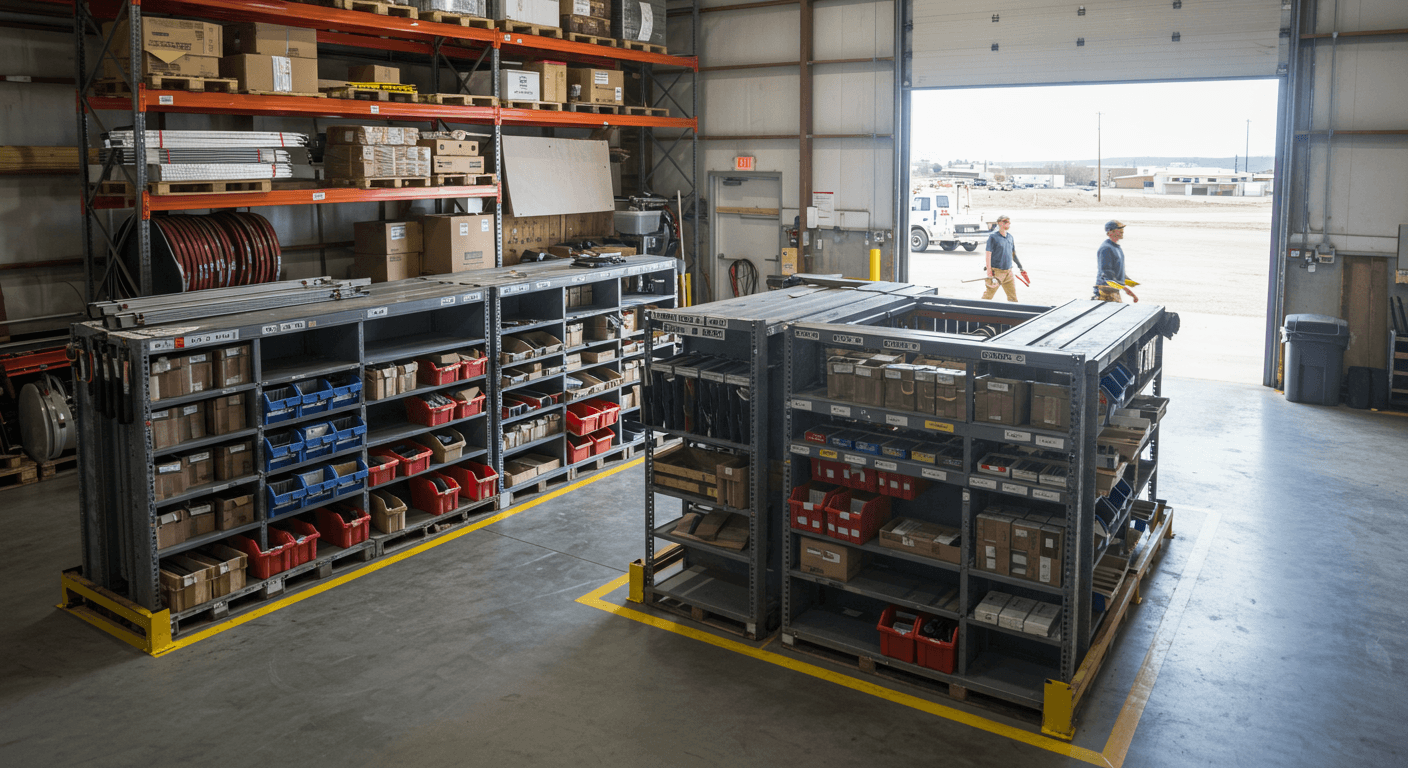
Have you ever actually calculated the depreciating value of the "boneyard" sitting in the back of your warehouse right now?
I was standing in a shop off East Mississippi Avenue last Tuesday with a contractor named Jaxon. He was frustrated because a crew was delayed by three hours waiting for a specific color of Drip Edge that Jaxon swore he had in stock. We walked to the back of his lot, past two rusted trailers, and found three pallets of GAF shingles that had been sitting since a hailstorm near Cherry Creek State Park in 2022. The wrappers were shredded by the intense Aurora sun, and the asphalt was starting to delaminate. That was $5,734 in materials that were effectively trash, all while his crew sat idle, burning another $420 in unbillable labor.
Inventory is either a catalyst for speed or a graveyard for your cash flow. In the roofing world, we often treat materials as an afterthought, something we just "order for the job." But according to recent market research, material costs represent one of the most volatile variables in a contractor's P&L. If you aren't managing that flow with the same precision you use for your nailing patterns, you are likely leaking nearly 10% of your net profit into the Colorado dirt.
At a Glance
Holding more than 14 days of inventory often leads to "ghost losses" from damage and mismanaged job returns
Hybrid inventory models can reduce overhead by 17.6% compared to traditional bulk-buy strategies
Real-time digital tracking prevents the "emergency run" to the supply house, which costs the average Aurora shop $215 per occurrence in lost time
Standardizing your material list can increase crew speed by 12% by reducing decision fatigue on the job site
The High Cost of "Just-In-Case" Management
Most Aurora contractors I work with fall into the trap of the "Just-In-Case" model. They see a price break on a bulk buy of 30 squares and pull the trigger, thinking they are saving 5%. But they forget to factor in the 18.3% carrying cost. This includes the lease on the extra warehouse space, the insurance premiums on the stock, the fuel spent moving it three times, and the inevitable "shrinkage" (a polite term for things that grow legs and walk off the site).
When Jaxon and I sat down to look at his numbers, we realized his "bulk savings" were being wiped out by the simple fact that his warehouse manager spent 6.5 hours a week just rearranging pallets to get to the forklift. We are seeing more industry analysis suggesting that leaner operations are outcompeting the big-stockpilers because they remain liquid during market shifts.
The percentage of net profit that Aurora contractors lose annually to inventory mismanagement, including carrying costs, damage, and shrinkage
Method 1: The Traditional Self-Managed Warehouse
This is the old-school way. You own the trucks, you own the building, and you keep a "par level" of every starter strip, vent, and nail coil.
The Pros: You are never at the mercy of a supplier's delivery window. If a crew finishes a job on East Colfax and needs to jump to a repair in Seven Hills, the materials are ready.
The Cons: The capital tie-up is massive. For a mid-sized Aurora shop, keeping $45,000 in sitting inventory means that money isn't being spent on marketing or securing new job leads that could actually grow the business.
Method 2: Just-In-Time (JIT) Delivery
In this scenario, you keep zero stock. Every shingle, roll of underlayment, and box of cap nails is ordered specifically for the job and delivered to the site by the supplier.
I've seen shops in the Denver metro area streamline their operations significantly by moving to JIT. It forces a level of planning that "Just-In-Case" shops lack. You have to be precise with your measurements because there is no "extra" back at the shop to grab.
However, the risk is the "Aurora Factor." A sudden afternoon thunderstorm or a pile-up on I-225 can delay your supplier's flatbed. If your crew is standing on a stripped deck and the shingles are stuck in traffic, your profit margin on that job just evaporated.
Method 3: The Hybrid VMI (Vendor Managed Inventory)
This is my preferred strategy for shops looking to scale. You keep a "speed stock" of high-turnover items (ice and water shield, standard vents, flashing) in a small, organized cage, but you leave the bulk shingles to the supplier.
Jaxon moved to this model three months ago. We cut his warehouse footprint by 47%. He now uses a local supplier that handles his "par levels." When he drops below 5 rolls of underlayment, they automatically replenish it during his next job delivery. It's systematic, it's boring, and it's incredibly profitable.
Inventory Management Methods Comparison
| Feature | Self-Managed Warehouse | Just-In-Time (JIT) |
|---|---|---|
| Capital Tie-up | High ($40k+) | Very Low |
| Waste Risk | 9-12% | <2% |
| Response Speed | Instant | Delayed (24h) |
| Admin Burden | 10+ hours/week | 2 hours/week |
Capital Tie-up
Waste Risk
Response Speed
Admin Burden
Hybrid VMI: The Best of Both Worlds
| Factor | Traditional Self-Managed | Hybrid VMI |
|---|---|---|
| Capital Tie-up | High ($40k+) | Moderate |
| Waste Risk | 9-12% | 4-5% |
| Response Speed | Delayed (24h) | Same-Day |
| Admin Burden | 10+ hours/week | 4 hours/week |
Capital Tie-up
Waste Risk
Response Speed
Admin Burden
The 48-Hour Return Rule
"Implement a strict policy: any material not installed must be returned to the supplier or the warehouse within 48 hours of job completion. I've found that materials left on a job site for more than 3 days have a 64% higher chance of being damaged or forgotten, costing you an average of $342 per project."
Calculating Your Inventory ROI
To see if your current system is working, look at your "Inventory Turnover Ratio." Take your Cost of Goods Sold (COGS) and divide it by your average inventory value. If you aren't turning your stock at least 12 times a year, you're essentially running a very expensive storage unit for your suppliers.
When we audited a shop near Buckley Space Force Base, we found they were only turning stock 4.2 times a year. By tightening their ordering process and signing up for better lead flow to keep projects moving consistently, they pushed that turn rate to 14.7. That shift alone freed up $22,840 in liquid cash within six months.
The annual turnover rate achieved after optimizing ordering processes, compared to the industry average of 4.2x for inefficient shops
Transitioning Your Aurora Shop
Moving away from the "clutter" isn't just about cleaning the floors. It's about changing the culture. Your project managers need to trust the system. If they don't trust the supplier to show up, they will continue to squirrel away "extra" bundles in their truck beds.
Start by color-coding your returns. We used bright orange "Return to Vendor" tags in Jaxon's shop. Anything with an orange tag was loaded onto the first truck heading back to the supplier, no questions asked. This simple visual cue saved his foreman 3 hours of "sorting" time every Friday afternoon.
Action Plan
The Aurora Inventory Optimization Framework
A systematic approach to reducing warehouse overhead while maintaining operational flexibility for Aurora roofing contractors.
Audit your current inventory: Calculate your exact Inventory Turnover Ratio and identify materials sitting longer than 14 days
Implement the "Van Stock" system: Equip repair rigs with standardized kits of universal items, audited weekly
Establish vendor partnerships: Work with suppliers who offer automatic replenishment for high-turnover items
Create the 48-hour return policy: Any unused material must be returned within 48 hours of job completion
Track and measure: Use a simple bin system or digital tool to monitor stock levels and prevent emergency runs
Want to skip the manual work and get exclusive, verified leads instead?
Get $150 in Free CreditsThe "Emergency Run" Cost Trap
Every time your crew has to make an emergency run to the supply house, you're losing an average of $215 in lost time, fuel, and opportunity cost. If this happens twice a week, that's $22,360 annually. Real-time tracking prevents this.
Common Questions
Efficiency isn't about working harder; it's about removing the friction that stops your crews from doing what they do best. When you stop treating your warehouse like a junk drawer and start treating it like a high-speed logistics hub, the numbers on your bottom line will finally start to reflect the hard work you're putting in on the roof.