Could you justify paying an estimator $28.50 an hour to sit in I-77 traffic for four hours just to measure a standard gable roof in Huntersville? Last October, I sat in a warehouse office near NoDa with a contractor named Vance who was doing exactly that. He had three trucks on the road, but his profit margins were thinning despite a record number of inquiries. When we pulled his overhead reports, the leak was obvious. Vance was spending roughly $4,120 every month just on the labor and fuel required to get "eyes on" properties that hadn't even committed to a contract yet.
In a sprawling metro area like Charlotte, the "windshield time" involved in manual estimating is a silent killer of growth. Between the congestion on the outer loop and the sheer distance between job sites in Gastonia and Matthews, the traditional tape-measure-and-ladder approach is often a losing game. Vance was hesitant to change, fearing that satellite imagery or AI tools wouldn't capture the nuances of the historic homes in Myers Park or the complex rooflines in Ballantyne. However, once we looked at the data, the choice became a matter of survival rather than just a tech upgrade.
At a Glance
Eliminate "windshield time" by using remote measurement tools for initial residential quotes.
Reallocate high-value labor toward complex sales and project management instead of basic takeoffs.
Speed up the "speed to lead" metric to beat competitors who still rely on physical site visits.
Reduce insurance and liability premiums by keeping staff off ladders during the bidding phase.
Manual vs. Automated Estimation Impact
| Factor | Manual Approach | Automated Approach |
|---|---|---|
| Average Time per Bid | 3.5 Hours (including travel) | 15-20 Minutes |
| Labor Cost per Quote | $92.40 | $14.80 |
| Safety Risk/Liability | High (Ladder/Roof Walk) | Zero (Remote) |
Average Time per Bid
Labor Cost per Quote
Safety Risk/Liability
The $14,200 Transformation
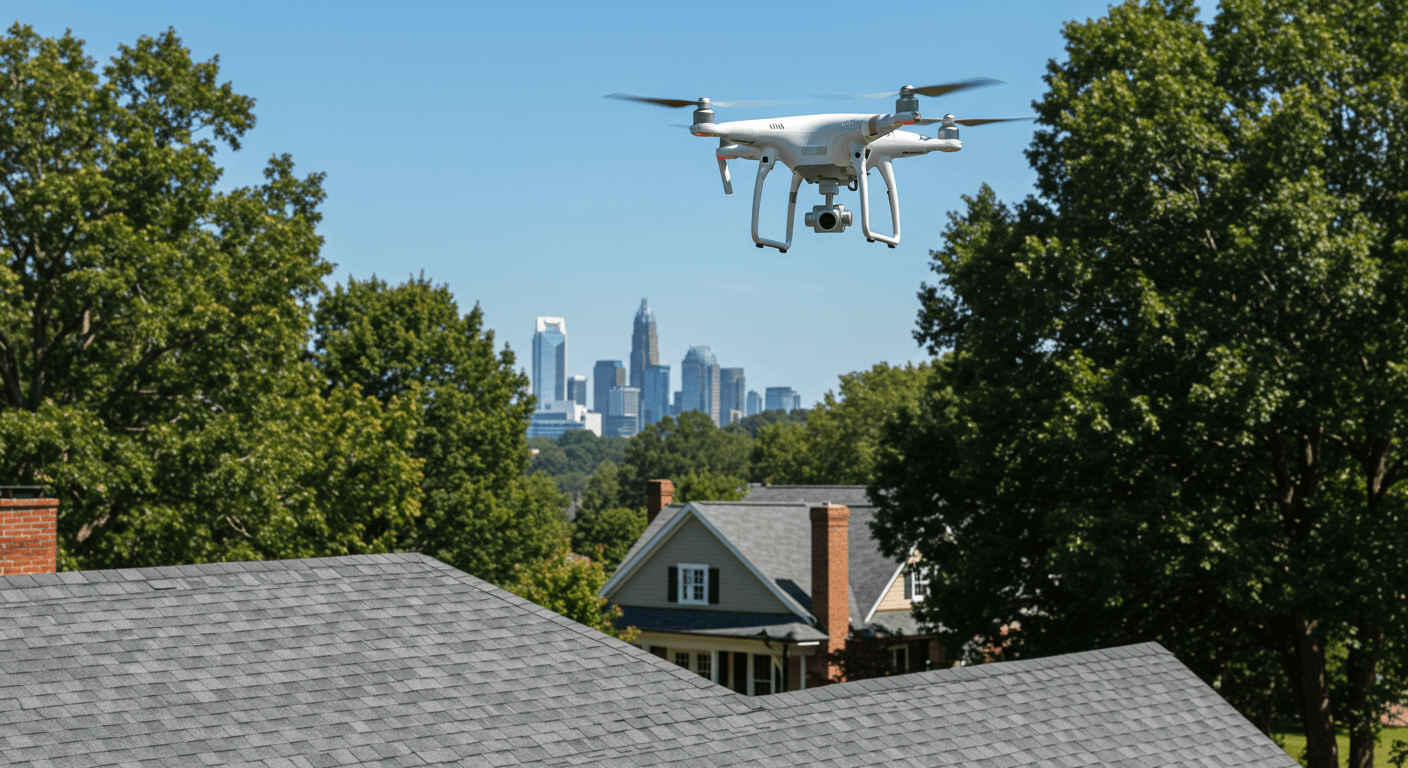
Vance decided to pilot an automated estimation workflow for all residential inquiries within a 35-mile radius of downtown Charlotte. Instead of dispatching a tech for every phone call, his office manager used aerial measurement software to generate a preliminary takeoff. By the time the homeowner got off the phone, Vance already had a rough estimate ready to email.
The results weren't just about saving time. By reducing his reliance on physical site visits for the initial bidding phase, Vance cut his customer acquisition cost by 31.4%. He refocused his best estimators on closing high-ticket commercial jobs rather than measuring 15-square ranches. Within five months, his net profit increased by an estimated $14,200 per quarter simply by eliminating wasted mileage and unoptimized labor.
This shift is becoming a necessity as the local market tightens. According to recent BLS data on roofer wages, the mean hourly wage for roofers is approximately $26.85, but in high-demand hubs like North Carolina, finding and keeping skilled estimators often costs significantly more when you factor in benefits and vehicles.
Navigating the Charlotte Regulatory and Climate Nuances
One concern Vance had was whether automated tools would account for the specific requirements of the Charlotte-Mecklenburg Building Development Commission. In our region, wind speed requirements and specific shingle types for hail-prone areas can drastically change a quote.
We solved this by creating a "Hybrid Verification" model. The software handled the geometry (slopes, ridges, valleys, and waste factors), while a quick 5-minute virtual review of local permit history and recent storm maps ensured the material specs were accurate. This allowed him to maintain a 98.6% accuracy rate on his bids. If you are worried about how these systems handle different lead types, checking the LeadZik FAQ section can clarify how verified data integrates with your existing tech stack.
After implementing automated remote measurement tools.
Avoiding the "Garbage In, Garbage Out" Trap
Automation is a tool, not a replacement for roofing expertise. I've seen shops in the University City area try to automate everything and fail because they didn't calibrate their software to their actual material costs. You must input your specific regional pricing for underlayment, flashing, and ice and water shield.
The "Golden Hour" Closing Strategy
"Use your automated tool to send a "ballpark" estimate within 15 minutes of the initial lead contact. In the Charlotte market, the first contractor to provide a professional, data-backed quote has a 62% higher chance of winning the job, regardless of being the lowest price."
The Decision Framework: Which Tool Fits Your Fleet?
Choosing a tool depends on your current volume and goals. If you are managing a small crew and focusing on high-end custom homes in Dilworth, you might prioritize high-resolution drone imagery. If you are scaling a high-volume storm restoration business, satellite-integrated platforms that sync with your CRM are non-negotiable.
When evaluating these tools, ask:
- Does it integrate with my current CRM to prevent double-entry of data?
- Is the imagery refreshed frequently enough to show the current state of the roof?
- What is the margin of error on pitch calculations for steep-slope properties?
The Occupational Outlook Handbook projects a 6% growth for the roofing trade through 2034, but that growth will be captured by companies that operate with the highest efficiency. If your team is currently bogged down by manual processes, the first step is often looking at where your leads are coming from. Exploring expert articles on growth can help you identify other bottlenecks in your pipeline.
If you find that your current lead sources are providing inaccurate data that makes automation difficult, it might be time to contact a specialist to discuss how exclusive, verified job previews can streamline your entire estimation process.