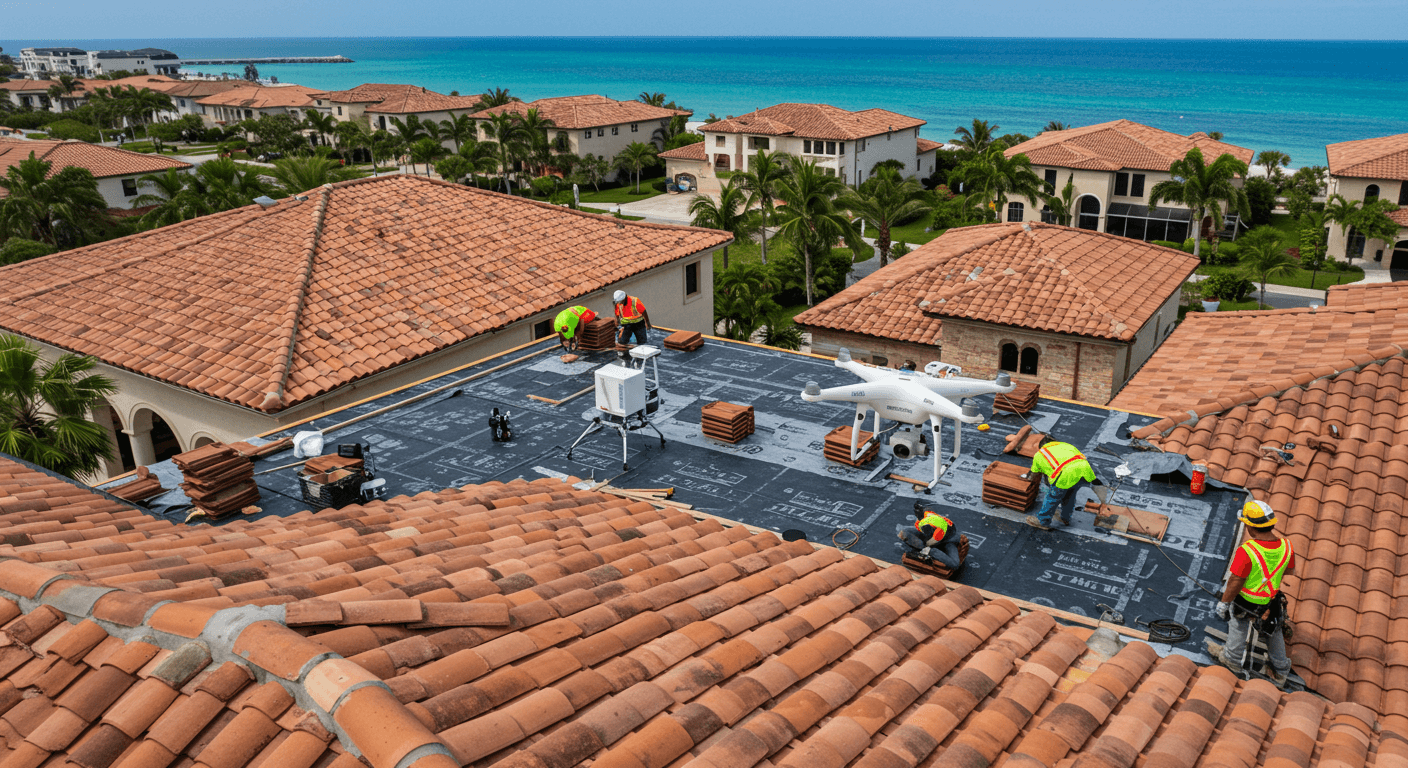
Across the manicured lawn of a $4.7 million estate in Pelican Bay, Vance watched the homeowner point toward his crew's ladder. He wasn't pointing because he wanted a quote, he was pointing because he'd seen a video of Vance explaining the exact salt-spray corrosion issues affecting tile underlayment in that specific zip code. Vance didn't have to sell the job. The homeowner had already watched 14 minutes of Vance's "operational deep dives" on YouTube before the first inspection. The sale was done before the ladder even touched the fascia.
This is the shift I'm seeing across the Southwest Florida market. The old "post a photo of a finished roof" strategy is dying a slow, expensive death. In a high-competition zone like Naples, where every contractor is bidding for the same lucrative storm-damage or aging-tile projects, the winner isn't the guy with the loudest ad. It's the guy who builds a systematic content library that proves expertise long before the phone rings.
Main Points
Hyper-local content targeting Naples-specific issues (salt air, hurricane codes) converts 2.8x better than generic roofing advice.
Video-first documentation of job sites reduces the sales cycle by an average of 14.2 days.
Building an "Evergreen Asset Library" lowers long-term customer acquisition costs (CAC) by reducing reliance on expensive PPC bidding wars.
The Death of the "Generic" Roofing Brand
When I look at the operations of the most successful shops in Collier County, they've stopped treating marketing as a separate department. They've integrated it into their daily workflow. According to recent data from ConsumerAffairs, the roofing industry is a massive $56 billion market, but in luxury hubs like Naples, the competition for high-margin projects is fiercer than ever.
The problem is that most contractors are still posting "Call us for a free estimate" across Facebook. That's not a strategy, it's a plea. Homeowners in Port Royal or Grey Oaks don't want to be sold to. They want to know why their specific roof is failing. I've helped companies transition from "selling roofs" to "managing assets," and that starts with content that addresses the unique coastal variables of Florida's Gulf Coast.
Analyzing the Salt-Air Content Gap
One of the biggest missed opportunities I see is the failure to talk about the "2.5-mile zone." If you're a roofing owner in Naples, you know that a roof three blocks from the beach faces different structural challenges than one out near Golden Gate Estates. Yet, most contractor websites look identical for both locations.
I recently worked with a shop that was spending $8,400 a month on Google Ads with a dismal 4.2% conversion rate. We pivoted. Instead of bidding on "Naples roofing contractor," we created a series of videos and articles about "Galvanic corrosion in Naples waterfront homes."
We documented how salt air eats away at substandard flashing in less than 9.5 years. By focusing on this operational reality, the company saw their lead quality skyrocket. They weren't getting calls for $500 repairs anymore. They were getting calls for $68,000 full-tile replacements from homeowners who were terrified of their flashing failing.
Naples Content Strategy Comparison
| Factor | Traditional Posting | Operational Content |
|---|---|---|
| Content Type | Generic finished roof photos | Specific job site "why" videos |
| Keyword Strategy | Broad "Naples Roofing" keywords | Neighborhood-specific case studies |
| Sales Focus | Focus on price/promotions | Focus on technical expertise |
| Lead Generation | High reliance on paid ads | Organic asset building |
Content Type
Keyword Strategy
Sales Focus
Lead Generation
Operationalizing Your Content Creation
Most owners tell me, "Mia, I don't have time to be a filmmaker." I get it. Your crews are busy, and your project managers are buried in permits. But efficiency-obsessed shops don't make content a chore, they make it a byproduct of the work.
Think about it this way. If your foreman is already taking 35 photos for insurance documentation and internal QC, you have 92% of the content you need. The trend I'm projecting for the next 18 months is the rise of the "documented workflow."
The 5-Minute Foreman Hack
"Equip your lead foreman with a chest-mounted camera or a simple gimbal. Have them narrate just one "discovery" per day—like a poorly installed valley or a rotted deck—and explain the fix. This raw, authentic footage often outperforms polished $5,000 commercial videos because it builds real-world trust."
Instead of hiring a flashy agency that doesn't know a hip from a ridge, use your actual expertise. When you document a project in Aqualane Shores, mention the specific permitting hurdles you cleared with the City of Naples. That level of detail signals to other homeowners in the area that you aren't just a roofer, you're a local specialist who understands their neighborhood's specific rules.
The Shift Toward Multi-Channel Distribution
Content is only half the battle. The other half is ensuring the right people see it. We're seeing a massive trend where Construction Dive reports that digital adoption in the trades is finally catching up with other sectors. This means your content needs to live where your customers are.
In Naples, that's not just Facebook. It's specialized local forums, LinkedIn for commercial property managers, and even neighborhood-specific newsletters. But more importantly, it's about your sales team using content as a tool.
Imagine your salesperson sends a follow-up email after a quote. Instead of "Just checking in," they send a link to a video of a similar roof you just finished four streets over. "Hey, we just solved this exact drainage issue for your neighbor. Take a look at how we handled the transition here." That is how you use content to fix a leaky sales bucket.
Action Plan
How to build a Naples-focused content engine without slowing down your crews
A systematic approach to creating hyper-local content that builds trust and drives high-intent leads while maintaining operational efficiency.
Identify the "Neighborhood Pain": List 5 specific problems homeowners in areas like Old Naples or North Naples face (e.g., specific HOA requirements or 130mph wind zone specs).
The "One-Take" Video Capture: Have your PM film a 2-minute "why this failed" video during the initial inspection. No editing, just raw expertise.
Local SEO Tagging: Use hyper-specific geotags. Don't just say "Naples." Say "Tile roof replacement in Park Shore."
The Sales Integration: Embed these videos into your digital estimates. Let the content do the heavy lifting while you're busy at the next site.
Want to skip the manual work and get exclusive, verified leads instead?
Get $150 in Free CreditsMoving Away from Shared Lead Dependency
A major reason I advocate for this systematic approach is the rising cost of shared leads. Many contractors I consult for are tired of the "race to the bottom" on platforms where five other guys are calling the same homeowner within 3.4 seconds.
By building your own content assets, you're creating a moated brand. However, content takes time to kick in—usually 5.5 to 8 months for significant organic traction. While you build that engine, it's vital to have a source of high-intent, exclusive leads.
I've seen shops optimize their pipeline by using platforms that offer verified previews, allowing them to bridge the gap between their content efforts and immediate revenue needs. This balanced approach ensures you aren't starving while your organic content matures. The goal is a systematic lead flow that doesn't require you to babysit the marketing every hour of the day.
The Future: AI-Assisted Local Content
Looking ahead to 2025 and 2026, the big trend will be using AI to localize content at scale. Imagine taking one video of a job in Lely Resort and using AI tools to generate a blog post, 5 social captions, and a neighborhood mailer script in under 12 minutes.
The shops that win won't be the ones using AI to write generic junk. They'll be the ones using AI to amplify their real-world, job-site observations. If you can prove you've solved 43 different roof leaks in the Vineyards, and you have the content to back it up, you become the only logical choice for anyone living in that community.
The company was founded by people who realized that generic marketing doesn't work for the specialized world of roofing. You need a system that respects the technical reality of the trade while speaking the language of the business owner.