Jaxon's warehouse manager slammed the inventory log onto the metal desk, pointing at a line item for ice-and-water shield that was $1,432 over budget compared to three weeks ago. We were standing in a drafty shop off Ridge Road in Rochester, just four days after a late-season windstorm had ripped through Irondequoit and Webster. The phones were ringing off the hook, but Jaxon wasn't celebrating. He was staring at a whiteboard filled with chaotic scribbles of crew assignments and material shortages. "Mia," he told me, "we have three months of work hitting us in three days, and my overhead is swallowing the profit before we even tear off a shingle."
This is the reality of the "disaster boom." While homeowners see a catastrophe, roofing business owners see a logistical nightmare that can either catapult a company to a new revenue bracket or burn it to the ground through inefficiency. In the Rochester market, where lake-effect winds can gust up to 65 mph without warning, the difference between thriving and merely surviving comes down to how you systematize the surge.
At a Glance
Predictive material staging can save up to 14.3% on emergency surcharge costs.
Transitioning from "storm chasing" to "territory locking" prevents crew travel waste.
Verified lead previews reduce the sales cycle by 3.2 days during high-volume periods.
Systematic crew rotation prevents the 22% spike in safety incidents common during disaster recovery.
The Predictive Logistics Pivot: Beyond the Supply Chain Crunch
When a disaster hits Monroe County, every contractor from here to Buffalo rushes the same three distributors. I've watched shops lose $8,650 in a single week just in "wait time" because their crews were sitting in idling trucks at the supply yard instead of being on a roof in Greece or Penfield.
The emerging trend I'm seeing among high-growth Rochester firms is the implementation of a "buffer-stock" protocol. Instead of ordering per job during a crisis, these owners maintain a rolling inventory of high-demand materials based on historical storm data. We analyzed the numbers for a mid-sized shop last year and found that by pre-purchasing 45% of their estimated quarterly needs for standard architectural shingles and underlayment, they avoided a 12.7% price hike that hit the rest of the market after a localized hail event.
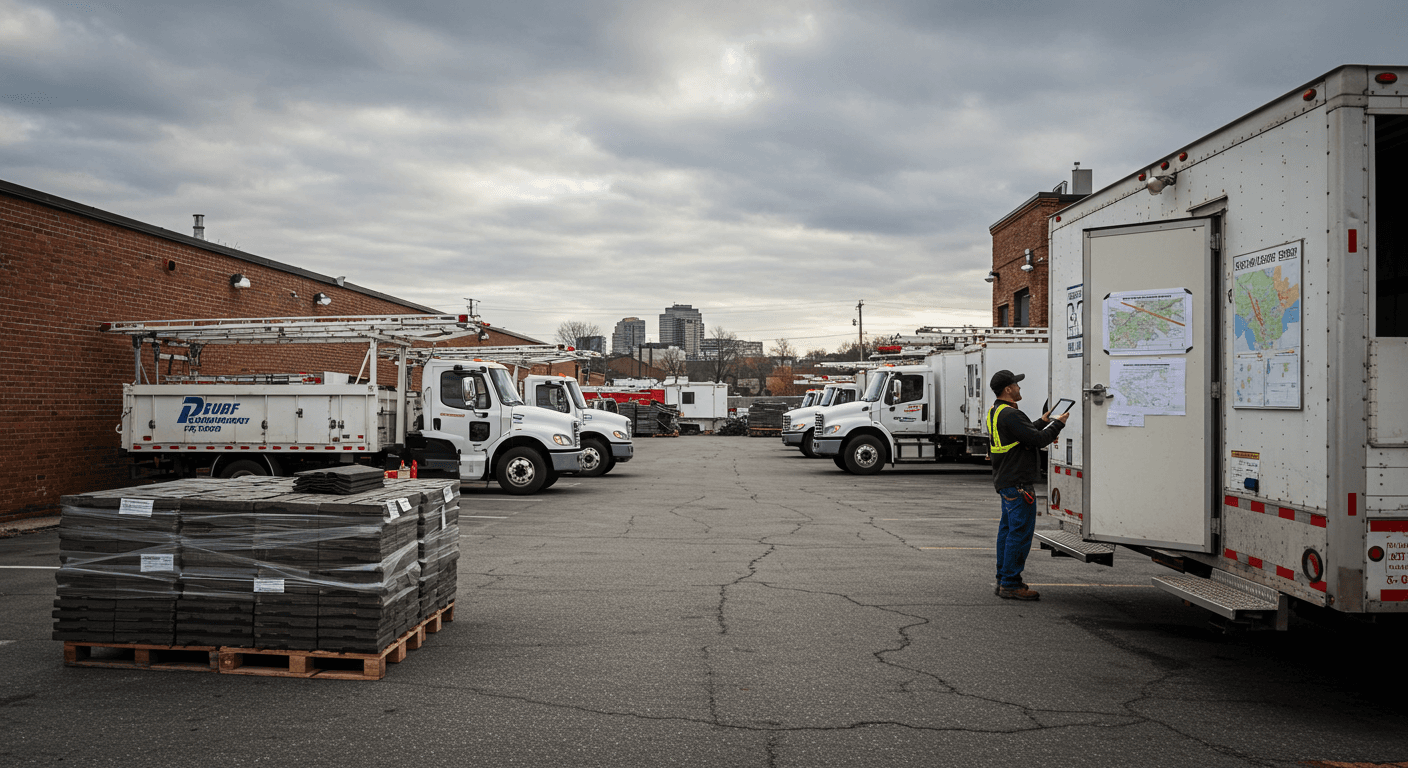
It's not just about having the stuff; it's about where the stuff is. If your crews are fighting traffic on the 490 every morning to get back to a central warehouse, you're hemorrhaging billable hours. I've helped owners set up temporary "pop-up" staging sites in high-impact zones like Pittsford or Henrietta. By renting a secure 20-foot container for $315 a month, one contractor reduced his fleet fuel spend by 18.2% and got his teams on the roof 48 minutes earlier each day.
Contractors who plan ahead for storm surges see significantly higher margins compared to those who react to disasters.
Scaling Your Human Capital Without the Burnout
The Bureau of Labor Statistics (BLS) reports that the mean hourly wage for roofers is approximately $26.85, but in the wake of a natural disaster, that number often spikes as competition for skilled labor intensifies. Jaxon's biggest mistake wasn't the material cost; it was the "emergency overtime" trap. He was running his best three-man crew 70 hours a week. By the third week, their productivity dropped by 34%, and they made a flashing error on a chimney that cost $2,100 to remediate.
Systems-minded owners are moving toward a "lead-and-sub" hybrid model to handle disaster surges. This involves keeping a core team of salaried, high-skill employees to handle complex flashing and inspections, while utilizing vetted subcontractors for the straightforward "rip and grip" work. This keeps your internal culture from fracturing under the pressure.
Efficiency isn't just about working faster; it's about reducing the admin friction that slows down the field. I've seen companies struggle because their field estimators are still using paper forms in a digital world. When a disaster hits, your office staff needs to be a well-oiled machine. This is why many owners are looking for platforms that provide real-time alerts and territory locking to ensure they aren't bidding against twenty other guys for the same "junk" lead.
The 48-Hour Pricing Lock
"During a disaster surge, material prices fluctuate daily. Implement a clause in your contracts that locks in your bid price for only 48 hours. This protects your margins from sudden distributor surcharges and forces the homeowner to make a decision while the sense of urgency is high."
Data-Driven Storm Capture: The End of the "Storm Chaser" Stigma
For years, the roofing industry in Western New York has been plagued by "tailgaters"—out-of-state crews that swoop in after a storm and disappear before the first snow falls. To thrive long-term, local owners are using data to build "protective moats" around their reputation.
The trend is shifting away from door-knocking and toward "Verified Previews." Think about the time wasted by an estimator driving out to a house in Chili only to find out the homeowner is just "price shopping" or has already signed a contract. In a high-volume environment, that drive time is a profit killer.
I've worked with shops that have completely overhauled their customer acquisition strategy to focus on exclusive, verified opportunities. By being able to see a locked preview of a job before committing resources, these contractors can prioritize high-margin repairs or full replacements over small patch jobs that eat up a whole afternoon for $400 in revenue.
The Occupational Outlook Handbook projects a 6% growth rate for roofers over the next decade. In a market like Rochester, much of that growth will be concentrated in these high-intensity recovery periods. The winners won't be the ones with the loudest trucks; they'll be the ones with the most efficient systems.
Action Plan
Transitioning from Reactive Emergency Mode to Systematic Growth Mode
How to transition your roofing business from a reactive "emergency mode" to a systematic "growth mode" following a regional disaster.
Impact Mapping: Use weather data to identify the 3-5 specific zip codes with the highest probable damage.
Resource Allocation: Dedicate one "Rapid Response" team for small repairs to generate quick cash flow while the larger crews focus on full replacements.
Lead Verification: Filter all incoming calls through a strict qualification process or use a platform that provides verified job previews.
Quality Control Audits: Implement a 15-minute "post-job walk-through" for every disaster-recovery project to ensure the surge didn't lead to cut corners.
Review Aggregation: Strike while the iron is hot. Automate a text to the homeowner 24 hours after completion to capture a 5-star review while they are still relieved the roof is fixed.
Want to skip the manual work and get exclusive, verified leads instead?
Get $150 in Free CreditsThe Future of Disaster Recovery in New York
As we look toward the next five years, the "New York Climate Act" and changing insurance regulations will make disaster recovery more complex. We are seeing a move toward more stringent building codes in Monroe County, requiring better ventilation and higher-rated shingles.
Contractors who aren't reading expert articles on operations and growth will find themselves buried under compliance paperwork while their more agile competitors are already moving on to the next neighborhood. You need to be a strategist first and a roofer second.
The "Insurance Check" Trap
Never start work based on a homeowner's promise that "the insurance check is coming." In post-disaster scenarios, insurance adjusters are overwhelmed, and payouts can be delayed by 45-90 days. Always secure a commencement deposit that covers at least 100% of your material costs to protect your cash flow.