At a Glance
Balance is Mandatory: Always aim for a 50/50 split between intake (soffit/eave) and exhaust (ridge/high-profile vents) to prevent stagnant hot spots.
Audit the Baffles: Improperly installed insulation often chokes off the intake. A systematic check of the rafter bays is vital for every tear-off.
Document Everything: Take photos of the NFA calculations and the installed vents for the project file to protect against future warranty disputes.
Sell the Longevity: Use the local climate data to explain to homeowners why a $1,200 ventilation upgrade saves them a $18,000 roof replacement in 12 years.
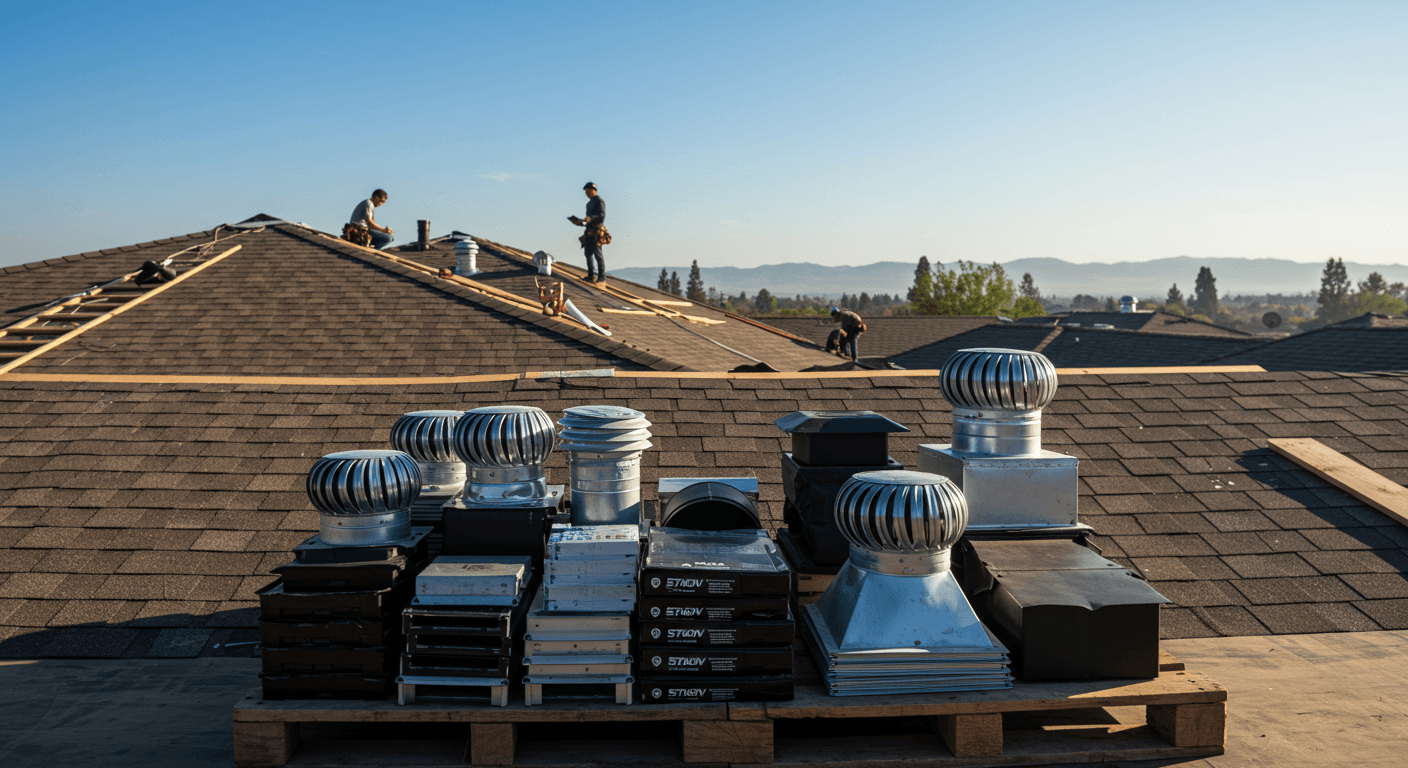
Finn dropped the pry bar onto the scorched plywood, the metallic clang echoing across the quiet cul-de-sac in Roseville. He didn't need to peel back another layer of shingles to know what he'd find underneath. The smell of baked resin and trapped, stagnant humidity hit him first, a thick wave of heat radiating from the attic below that felt like opening a commercial oven. This was the third callback this quarter for a roof less than seven years old, and the buckling along the ridge was unmistakable. It wasn't a material failure or a storm casualty. It was a slow-motion suicide of the roofing system, caused by a ventilation strategy that was basically "guess and pray."
I stood on the ladder and watched Finn's face go from frustration to a sort of resigned calculation. He was running a crew of eight, and every hour spent on this roof was an hour they weren't on a fresh, billable install. In California, where the Central Valley sun turns attics into 145-degree pressure cookers, getting the airflow wrong isn't just a minor technical error. It is a massive leak in your company's bottom line. When we sat down later to look at his books, the numbers were staggering. Between labor for the repair, the gas for the trucks, and the lost opportunity cost, that one "simple" ventilation mistake had already cost his shop $4,320.
Most owners treat ventilation as an afterthought, something the junior guy handles with a few plastic vents and a staple gun. But after analyzing the operations of dozens of shops across the West Coast, I've seen that the most profitable contractors are the ones who treat air balance as a core engineering requirement. They don't just "install a roof," they install a thermal management system.
Ventilation Strategy Impact on Shop Margins
| Factor | Standard "Code Minimum" Approach | Systematic Balanced Airflow SOP |
|---|---|---|
| Callback Rate | High (approx. 7.4% of jobs) | Low (under 1.2% of jobs) |
| Average Roof Lifespan | 16.5 Years | 24+ Years |
| Warranty Liability | Standard Warranty Liability | Reduced Liability & Higher Referral Rate |
Callback Rate
Average Roof Lifespan
Warranty Liability
The Math of Attic Stagnation in the California Market
If you are operating in Sacramento, Fresno, or the Inland Empire, you aren't just fighting rain. You are fighting thermal expansion. During a typical July week, a poorly vented attic can reach temperatures that literally cook the shingle's asphalt from the inside out. This leads to granule loss, curling, and eventually, the structural failure Finn was staring at in Roseville.
The industry standard 1/150 rule is often cited, but I've found that many California crews don't actually know how to calculate Net Free Area (NFA) on the fly. They see a roof, they throw on four O'Hagin vents, and they call it a day. But if the intake doesn't match the exhaust, you create a vacuum effect. Instead of pulling cool air from the soffits, the system starts pulling conditioned air from the house or, worse, pulls nothing at all.
I worked with a shop in Modesto that was bleeding $14,287 a year in rework. We implemented a mandatory "NFA Calculation Sheet" for every estimate. The sales rep had to measure the attic square footage and specify exactly how many inches of intake and exhaust were required before the crew even loaded the truck. It added six minutes to the measurement process but dropped their ventilation-related callbacks to near zero within 14 months. This is the kind of operational efficiency that separates the shops that scale from the ones that just tread water.
Solving the "Choked Intake" Bottleneck
The biggest operational failure I see on California job sites isn't the exhaust. It is the intake. You can put the most expensive ridge vent in the world on a house, but if the soffit vents are painted over or blocked by 30 years of blown-in fiberglass insulation, that ridge vent is just a decoration.
When Finn and I looked at his Roseville job, we realized the previous crew had ignored the clogged frieze blocks. They assumed that because there were vents on the roof, air was moving. It wasn't. We started implementing a "Baffle First" policy. No shingles go on until the lead installer verifies that the intake path is clear.
This is where your crew efficiency comes into play. If your guys have to stop mid-install to fix an intake issue they didn't account for, your labor budget is blown. I recommend a pre-job walk-through specifically for airflow. It's a five-minute task that prevents a five-day headache later. This level of detail is what we talk about on our blog, where we focus on the granular operational moves that actually move the needle for roofing owners.
When attic temperatures consistently exceed 140 degrees due to poor ventilation.
Operations Over Artistry: Building the SOP
To make ventilation a profit center instead of a liability, you have to take the decision-making power away from the "gut feeling" of the installer. You need a process. At LeadZik, we've spoken with hundreds of owners who found that their best features in a business aren't the tools they use, but the systems they follow.
Action Plan
The Ventilation Workflow That Fixed Finn's $14,000 Drain
This systematic approach transforms ventilation from a guessing game into a documented, repeatable process that protects your margins and your reputation.
The Pre-Check: The estimator uses a digital calc tool to determine the required NFA based on the attic's footprint.
The Intake Verification: Before any tear-off begins, the foreman inspects the eaves. If they are blocked, the homeowner is notified, and a change order is issued to install baffles or new soffit vents.
The 50/50 Rule: The crew must install an equal amount of NFA for intake and exhaust. If the roof design makes ridge venting impossible, they pivot to a calculated number of high-profile box vents.
The Attic Inspection: After the roof is dry-in, one crew member goes into the attic (briefly and safely) to ensure no insulation was shifted to block the new vents.
This might sound like overkill, but the data doesn't lie. Finn's shop went from an 8.4% callback rate to 1.3% in a single season. He wasn't just saving money on repairs, he was freeing up his crews to handle more volume. When you aren't chasing your tail on old jobs, you can actually focus on the leads you're buying and the new revenue coming in.
The California Title 24 Advantage
"Use California's strict energy codes as a selling point. Properly balanced ventilation isn't just a roofing requirement; it's a key part of staying compliant with state energy efficiency standards, which can lower a homeowner's cooling costs by up to 14.2%."
Safety and Compliance in the Heat
We can't talk about ventilation in California without talking about the guys in the attic. According to OSHA's roofing safety guidelines, heat stress is a major risk, especially when working in confined spaces like attics for ventilation retrofits.
I've seen owners lose a lead installer for two weeks because of heat exhaustion during a "quick" baffle fix. Systematizing your ventilation work means scheduling attic-heavy tasks for the first hour of the day. If the crew is still messing with intake vents at 2:00 PM in Fresno, your safety protocols have failed.
Our company history is filled with stories of contractors who realized that "doing it right" isn't just about the shingles, it's about the people and the process. When Finn moved his ventilation work to the "AM Slot," his crew morale skyrocketed. They weren't fighting the heat, and they weren't rushing the install.
Common Questions
The Long-Term ROI of Proper Airflow
At the end of the year, Finn sat down with his 14-month report. He had spent about $2,100 more on ventilation materials (baffles, better vents, more labor time) than he had the previous year. But his warranty reserve fund was untouched. He hadn't sent a single "apology crew" out to Roseville or El Dorado Hills.
That is the operational shift. You are trading a small, upfront cost in materials and process for a massive, long-term gain in crew utilization and brand reputation. In a competitive market like California, being the guy who "fixes the heat problem" instead of just "fixing the leak" allows you to command a premium price.
If you want your shop to stop bleeding profit through the attic, you have to treat ventilation as a science. It's about the math, the SOPs, and the discipline to check the eaves every single time.