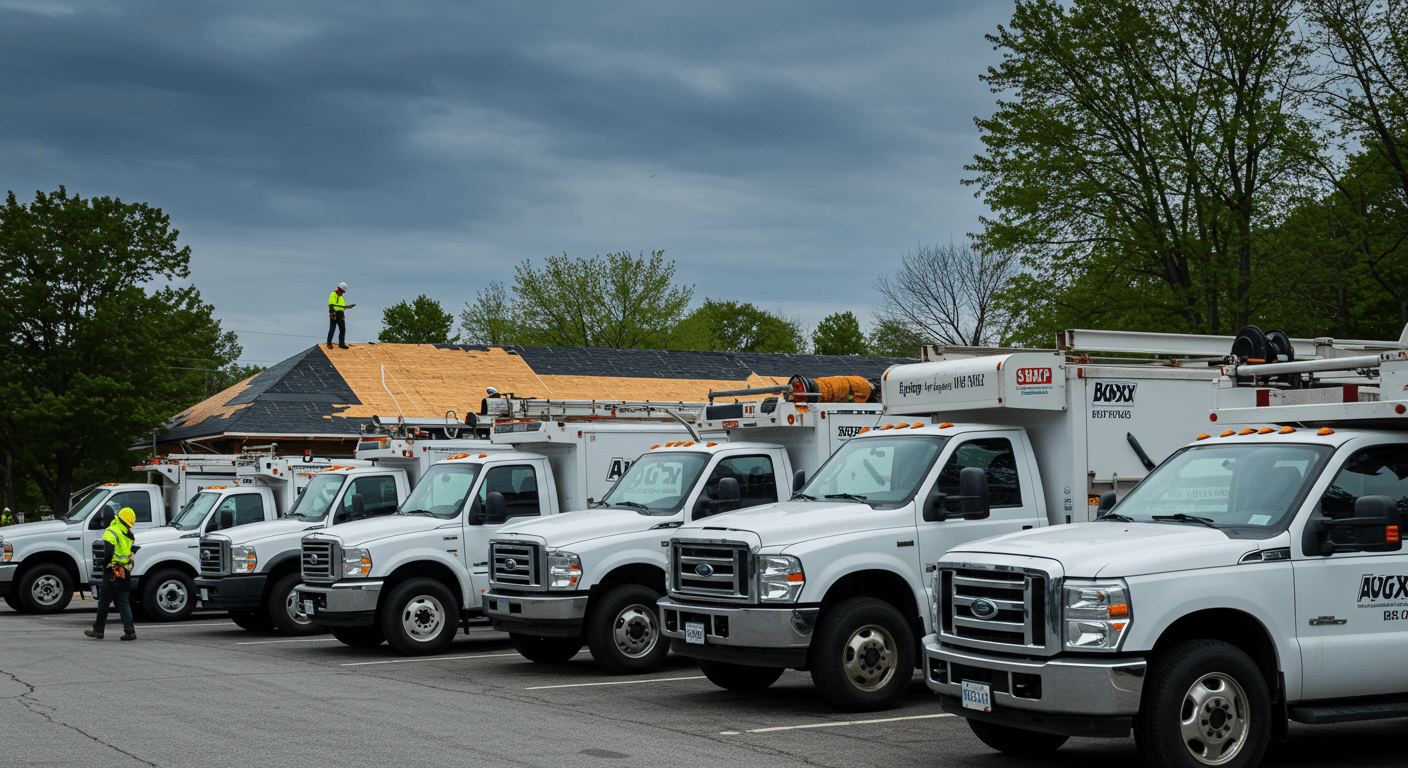
Four white pickups sat idling in the parking lot of the Destiny USA mall, burning through $3.78 a gallon while the crew leaders debated where to grab lunch. I was looking at the live dashboard with Gavin, the owner of a mid-sized roofing operation in Syracuse, and his face was turning a shade of red that matched the "Alert" icons on his screen. We calculated the damage in real-time. Those four trucks, idling for forty-two minutes, weren't just wasting fuel. They were stalling three different installations in Cicero and Manlius. Gavin realized that without eyes on his assets, his margins were evaporating into the cold Central New York air.
This isn't just about knowing where your trucks are. It is about the data-driven reality of running a high-stakes roofing business in a region where weather windows are tight and labor costs are climbing. Last year, I analyzed the overhead of twelve different shops across New York. The ones without telematics were losing an average of $1,142 per vehicle per year just in unauthorized side-trips and excessive idling. In Syracuse, where the lake-effect snow can turn a twenty-minute drive into an hour-long slog, the need for precision logistics is no longer optional.
At a Glance
Operational Savings: Implementing fleet tracking typically yields a 14.7% reduction in fuel costs within the first six months.
Predictive Maintenance: Tracking engine hours and salt exposure helps prevent catastrophic vehicle failure during the Syracuse winter.
Insurance ROI: Many B2B insurance providers offer 8% to 12% premium discounts for fleets equipped with active monitoring systems.
Lead Optimization: Real-time location data allows for faster response to emergency repair leads when a crew is already in the neighborhood.
The High Cost of the "Syracuse Crawl"
Managing a fleet in Syracuse presents unique challenges that contractors in warmer climates simply do not face. Between the heavy road salt used on I-690 and the unpredictable traffic shifts near the Carrier Circle, your vehicles are under constant duress. I recently audited a shop that was spending $84,200 annually on fleet maintenance. By diving into their tracking data, we found that two of their drivers were consistently taking the long way around Onondaga Lake to avoid "perceived" traffic, adding 12.4 miles to every round trip.
When you multiply that by five days a week and twenty-two workdays a month, the numbers become staggering. We're talking about thousands of dollars in unnecessary tire wear and fuel consumption. Beyond the mileage, there is the "lake effect" factor. If a storm hits the Southtowns while your crews are staged in Liverpool, you need to be able to reroute them instantly. This level of agility is what separates the high-growth shops from the ones just scraping by.
Contractors using integrated telematics reported significantly boosted customer satisfaction scores.
Beyond GPS: The Evolution of Telematics in Roofing
The trend we are seeing move into 2025 isn't just basic GPS. It is the integration of vehicle health and driver behavior. Modern systems now monitor "harsh braking" and "rapid acceleration." Why does this matter to a roofing business owner? Because those behaviors are leading indicators of accidents and increased maintenance needs.
I've seen how these metrics correlate directly with safety standards. Proper vehicle operation is a cornerstone of a safe job site culture. When your drivers know that their performance is being measured, they tend to adhere more closely to safety protocols, similar to the Plan, Provide, Train framework advocated by OSHA. It creates a ripple effect. A driver who respects the speed limit on Erie Boulevard is more likely to respect the tie-off requirements on a 10/12 pitch roof in Skaneateles.
Furthermore, these systems are becoming more integrated with professional development. If you are looking to elevate your team's professionalism, referencing standards from organizations like the National Center for Construction Education can help you build a training program that includes both technical roofing skills and professional fleet operation.
Privacy Policy Required
Do not implement fleet tracking without a clear written policy. If your crews feel "spied on" without a business-case explanation, you risk losing high-performing foremen to competitors. Frame it as a tool for safety and efficiency, not a surveillance device.
Correlating Fleet Proximity with Lead Conversion
One of the most overlooked benefits of fleet tracking is its impact on your sales cycle. In my work with lead generation, I have noticed a direct link between "speed to lead" and proximity. If a high-value homeowner lead comes in from a neighborhood where your truck is already finishing a job, the ability to send that foreman over for a five-minute inspection is a massive competitive advantage.
I often tell my clients that the best lead is the one you can walk to. When you receive verified homeowner leads, you can cross-reference those addresses with your live fleet map. If your crew is on a break or wrapping up in the same ZIP code, you can significantly reduce your customer acquisition cost by eliminating the dedicated sales trip.
I have watched shops in the Syracuse area use this strategy to close jobs before the competition even returns the initial phone call. By using the LeadZik mobile app, owners can see a lead notification and their fleet location on the same device, allowing for instant dispatching.
The Insurance Negotiation Play
"Before you renew your commercial auto policy, print out a 90-day report showing your fleet's reduced idling and lack of safety violations. Use this data as leverage to negotiate a lower "safe driver" rate. I have seen Syracuse contractors save over $3,400 annually just by presenting this data to their brokers."
Predictive Maintenance in the Salt Belt
Syracuse is notorious for its corrosive road conditions. For a roofing company, your trucks are your most expensive tools after your labor. Fleet tracking systems now offer "engine diagnostic" alerts that ping your phone the moment a sensor fails.
In Gavin's case, we noticed that one of his heavy-duty pickups was throwing a frequent "coolant temperature" warning that the driver hadn't reported. Because we caught it via the tracking software, he spent $214 on a new thermostat instead of $7,800 on a seized engine three weeks later. In a market where a new truck can cost $62,000 or more, protecting your existing iron is the fastest way to maintain your cash flow.
The trend moving forward is "predictive analytics." Instead of changing oil every 5,000 miles, the system tells you exactly when to service the vehicle based on actual load, idling time, and environmental conditions. For a roofer hauling heavy shingles up and down the hills of Onondaga Hill, this usage-based maintenance is far more accurate than a sticker on the windshield.
How to Roll Out Fleet Tracking Without Losing Your Best Workers
Implementing fleet tracking requires careful change management. The key is transparency and incentives, not surveillance. Here's a proven approach that maintains crew morale while maximizing ROI.
Action Plan
The 5-Step Fleet Tracking Rollout
A systematic approach to implementing fleet tracking that gains employee buy-in while delivering immediate operational savings.
Audit Your Current Waste: Use a trial period on 2-3 vehicles to gather baseline data on idling and unauthorized mileage.
Draft a Transparency Memo: Clearly explain that the system is for insurance discounts, fuel savings, and faster emergency dispatching.
Incentivize Top Drivers: Create a monthly "Fuel Efficiency" or "Safety Score" bonus. I've seen a $54 gas card or a $100 bonus go a long way in gaining buy-in.
Integrate with Leads: Start using the data to dispatch the nearest available person to contact potential clients for estimates.
Review Monthly ROI: Sit down every 30 days to see if the savings are outweighing the subscription cost of the software.
Want to skip the manual work and get exclusive, verified leads instead?
Get $150 in Free CreditsThe Future: AI-Driven Route Optimization
As we look toward the next three to five years, the integration of AI will change the Syracuse roofing market. We are moving toward a world where the software will automatically sequence your material deliveries and crew arrivals based on live traffic patterns and weather sensors.
Imagine a system that sees a lake-effect band moving into Baldwinsville and automatically alerts your crew to tarp the roof thirty minutes earlier than planned. This isn't science fiction; the data layers are already being built. Contractors who adopt these systems now are building the data history needed to leverage these AI tools when they become the industry standard.
The operational cost reduction isn't just about saving a few bucks at the pump. It's about building a resilient, scalable business that can survive the lean months and maximize the busy ones. If you're still relying on your drivers to "text you when they get there," you're leaving a significant portion of your profit on the pavement of the New York State Thruway.
For questions about implementing fleet tracking or optimizing your lead response times, don't hesitate to reach out to our team. We work with contractors across Central New York to integrate technology solutions that drive real ROI.