Quick Summary
Manual Method: Hard to track trends, high risk of human error, and zero real-time visibility into what was on the trucks.
Digital Method: Automated alerts when shingles hit low levels, instant job-costing updates, and accountability for every crew lead.
Walking across a gravel lot on Mound Road, I noticed a stack of architectural shingles tucked behind a rusted dumpster that didn't belong in the trash. It wasn't just a few bundles; it was nearly 11 squares of perfectly good material left over from a residential tear-off in the Fitzgerald neighborhood. To the crew, it was "extra" they didn't want to haul back. To the owner, Vance, it was $1,430 of pure profit evaporating in the humid Michigan air.
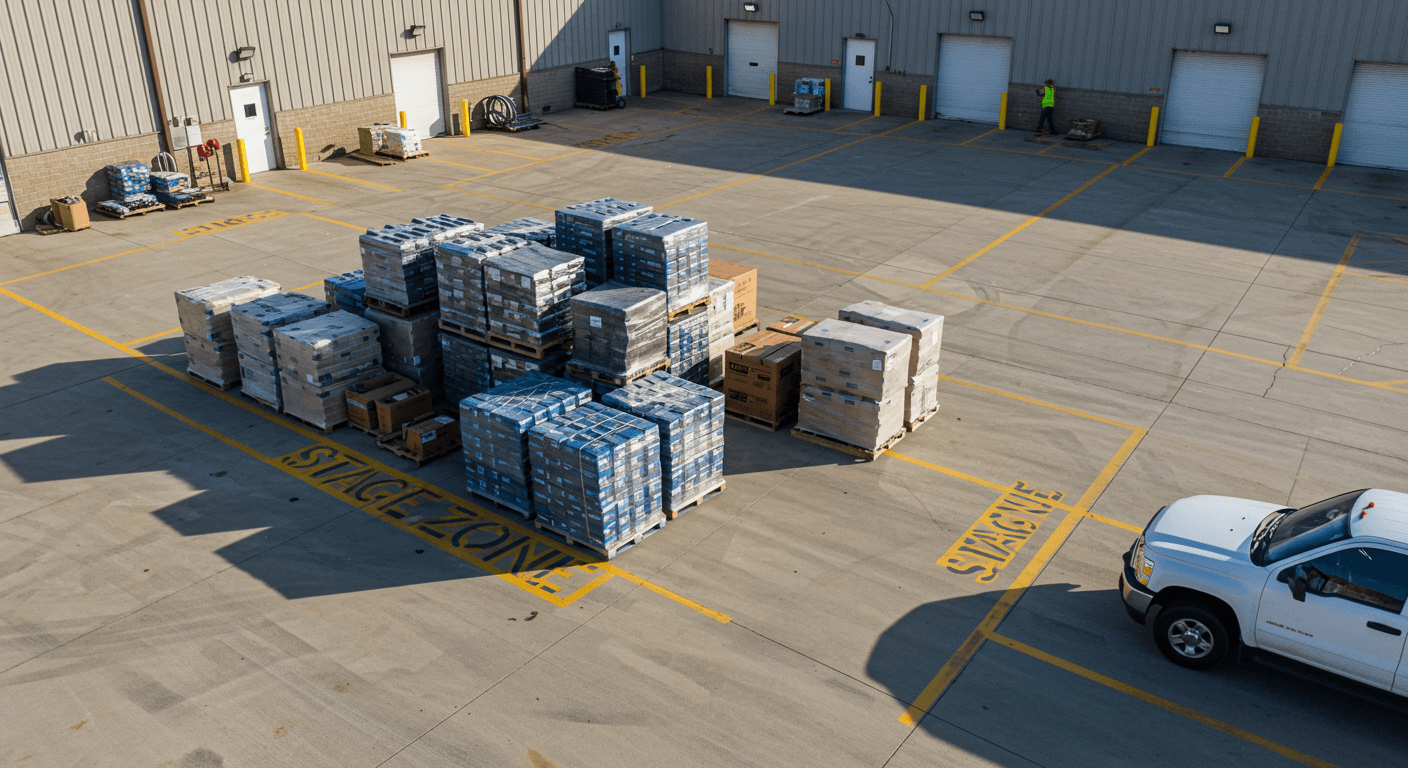
That afternoon changed how I look at inventory. We weren't just losing shingles; we were losing the very fuel that scales a roofing business. Vance was running a $2.4 million operation, but his net margins were tightening because his yard looked more like a chaotic flea market than a staged logistics hub. We sat down right there, leaning against his Ford F-150, and crunched the numbers on his last six jobs. The math was brutal: he was over-purchasing by 8.7% on every single contract just to "be safe." It was time to stop the bleeding.
The Invisible Leak in Warren Roofing Margins
Many contractors in the Warren metro area focus solely on top-line revenue. They chase the next big commercial job near 10 Mile or a cluster of residential reroofs in the suburbs, assuming that more volume equals more profit. However, the reality I've seen in the field is that profit is often won or lost in the warehouse, not just on the roof.
When inventory isn't managed, your cash is literally sitting on shelves (or in dumpsters) instead of in your bank account. For Vance, the lack of a system meant that $9,642 worth of coil nails, underlayment, and flashing was "unaccounted for" over an eight-month period. This wasn't theft in the traditional sense. It was a combination of over-ordering, improper storage leading to damage, and crews grabbing extra supplies for "just in case" scenarios that never materialized.
Even if you have the best lead generation strategies in place, your business can't scale if you're hemorrhaging 5% to 10% of your material budget on every job. I’ve helped shops realize that tightening inventory is the fastest way to give yourself a "raise" without having to sell a single extra roof.
Auditing the Chaos: Finding the Missing $8,642
The first step in Vance’s transformation was a "Wall-to-Wall" audit. We didn't just count boxes; we categorized everything by its movement speed. We found that certain specialty tiles for high-end jobs near the Grosse Pointe border had been sitting for 19 months, taking up valuable real estate.
We discovered three major issues:
- 1The "Safety Buffer" Addiction: Estimators were adding 10% to every order to avoid mid-day runs to the supplier. While avoiding downtime is good, the lack of a return process meant that "extra" stayed in the crew's trucks until it was damaged.
- 2Double Ordering: Because the warehouse was disorganized, Vance bought $3,240 worth of ice and water shield he already had buried under a pile of old tarps.
- 3The "Tailgate Exchange": Crews were swapping materials between trucks in the morning without any paperwork, making it impossible to track job-costing accurately.
If you don't know exactly what it costs to produce a square of roofing on a specific street in Warren, you aren't managing a business; you're gambling.
The Staging System: Moving from Chaos to Coordination
Efficiency isn't about working harder; it's about reducing the number of touches an item requires. We redesigned Vance’s yard to follow a "Flow-Through" model. Materials for the next day's jobs were staged in dedicated "Job Bays" by 4:00 PM the previous day.
This meant that when the crews arrived at 6:30 AM, they weren't hunting for flashing or vents. They backed up, loaded their pre-staged bay, and were on the road 22 minutes faster than before. In a tight labor market like Warren, saving 22 minutes per man across a 6-person crew adds up to 11 hours of recovered labor every week. That’s nearly $450 in labor savings alone, before even touching material costs.
I’ve seen shops transform their pipeline by simply knowing what they have. When you aren't stressed about whether you have the materials to finish a job, you can focus on previewing verified job opportunities that actually fit your current stock and crew capacity.
Digital Tracking vs. The "Clipboard Method"
Vance was a "paper and pen" guy, which worked when he had two trucks. At five trucks, the paper was getting lost in the rain or buried under coffee cups. We moved him to a digital system that synced with his mobile lead management app.
The comparison between his old way and the new system was night and day:
- Manual Method: Hard to track trends, high risk of human error, and zero real-time visibility into what was on the trucks.
- Digital Method: Automated alerts when shingles hit low levels, instant job-costing updates, and accountability for every crew lead.
By using technology, Vance could see that one specific crew was consistently using 6.4% more ridge cap than the others. It turned out they weren't stealing it; they just hadn't been trained on a specific cutting technique that reduced waste. That’s a management insight you only get with data.
When you're looking into how to get roofing leads, remember that the lead is just the start. If your inventory system is broken, a "hot lead" can actually cost you money if the job-costing is based on flawed material assumptions.
ROI: The 90-Day Result
After three months of these changes, the numbers spoke for themselves. Vance didn't just save money; he gained clarity. His net profit margin increased by 5.8% across the board. On a $12,840 roof, that’s an extra $744 in his pocket that previously went to the landfill.
The most surprising benefit? Crew morale. The guys hated the morning chaos. They hated realizing halfway through a job in Sterling Heights that they were short two rolls of underlayment. By fixing the inventory, Vance removed the friction that leads to burnout.
We also integrated a stricter lead verification process to ensure that the jobs he was staging for were high-probability wins. There's no sense in staging $8,000 in materials for a lead that hasn't been properly vetted.
Final Thoughts for the Warren Contractor
Inventory management isn't the "sexy" part of roofing. It’s not a shiny new truck or a massive drone, but it is the backbone of a profitable operation. If you’re operating in the Warren area, the competition is too tight to allow for a 10% waste margin.
Start small. Audit your "extra" pile this Friday. Look at what’s sitting in your dumpsters. You might find that your next $10,000 in profit is already sitting in your yard, just waiting for a system to claim it.