Everyone tells their crews that as long as there is air moving, the roof is breathing. Most owners think that adding extra vents "just to be safe" protects the deck. Forget that logic. I was looking at a project with Zane near the Research Triangle last October where he was facing a $14,830 redo on a job finished less than seven years ago. The issue wasn't a lack of vents, it was the "short-circuiting" effect caused by a mix of different exhaust types. We found that 62% of his crews were just eyeballing the Net Free Area instead of calculating the actual intake-to-exhaust ratio required by the North Carolina Residential Building Code.
When we pulled the data on Zane's previous 43 projects, the pattern was clear. Jobs where he simply "added more" to satisfy a worried homeowner actually had higher attic moisture levels than those with a strictly balanced system. If you are operating a shop in Raleigh, Charlotte, or Wilmington, you aren't just fighting heat. You are fighting a localized humidity index that can turn a poorly ventilated attic into a petri dish in 4.5 months.
At a Glance
Eliminate Mixed Systems: Combining ridge vents with power fans or gable vents creates "short-circuiting" that leaves 38% of the roof deck unventilated.
Calculate NFA Precisely: Use the 1/300 rule only when balanced, otherwise stick to 1/150 to avoid premature shingle failure and voided warranties.
Sell the System, Not the Shingle: Positioning ventilation as a "longevity system" allows for a $1,245 average increase in contract value.
Focus on Intake: Most NC homes suffer from clogged soffits, which is where 87% of ventilation failures actually begin.
The High Cost of the "More is Better" Myth
The biggest misconception I see in the North Carolina market is the belief that cumulative vent space equals better performance. It doesn't. In fact, adding a solar fan near a ridge vent often reverses the intended airflow. Instead of pulling cool air from the soffits, the fan sucks air directly from the ridge vent. This leaves the lower 72% of the attic stagnant.
I recently analyzed a set of claims for a firm in Greensboro. They were seeing a 14.6% spike in granule loss on south-facing slopes. The crews had installed ridge vents but left the old gable vents open. This created a localized pressure loop at the peak, while the mid-roof temperatures hit 163 degrees Fahrenheit. According to Roofing Contractor Magazine, proper attic ventilation is one of the most misunderstood components of the building envelope, yet it is the primary factor in meeting manufacturer warranty requirements.
If your crews aren't measuring the Net Free Area (NFA) for both intake and exhaust, you are essentially guessing with your company's reputation. A balanced system means the intake NFA matches the exhaust NFA. When the intake is lower than the exhaust, the system tries to pull air from the easiest source, which is often the exhaust vents themselves or, worse, from the conditioned living space through unsealed light fixtures.
Action Plan
The 4-Step NC Ventilation Audit
A tactical workflow for auditing attic airflow to ensure NC building code compliance and maximize shingle lifespan.
Measure Existing Intake: Use a tape measure to calculate the total Net Free Area (NFA) of all soffit vents. Most NC homes have vinyl soffit with 1/16-inch perforations—multiply the square footage by 0.5 to get actual NFA.
Calculate Required Ventilation: Use the 1/300 rule (1 square foot of vent per 300 square feet of attic floor) if you can achieve 50/50 balance. If soffits are blocked or insufficient, switch to 1/150 rule.
Identify Short-Circuit Risks: Check for mixed exhaust systems (ridge + gable, ridge + power fan). These create pressure imbalances that prevent proper airflow through the entire attic space.
Document with Photos: Before installing shingles, photograph the ventilation system. This creates a warranty defense record and helps justify premium pricing to homeowners.
Want to skip the manual work and get exclusive, verified leads instead?
Get $150 in Free CreditsNavigating the North Carolina Humidity Trap
Operating in NC means you deal with a specific climate profile. In the Piedmont, you have stagnant, heavy air for three months of the year. On the coast, you have salt-laden moisture that can corrode standard off-the-shelf vents in under 8.5 years.
I've seen contractors preview job details before bidding, only to realize the existing structure has zero soffit overhang. In these cases, installing a ridge vent is useless unless you also install a "smart" intake system at the drip edge. Without that intake, you're creating a vacuum.
I remember a conversation with a project manager in Asheville. He was frustrated because his crews were getting "ghost" leaks. These weren't actual roof leaks, they were instances of interior condensation. Because the attic wasn't moving air, the moisture from the home was hitting the cold underside of the roof deck and dripping onto the insulation. To the homeowner, it looks like a roof failure. To the business owner, it's a $480 service call that yields zero revenue.
Passive vs. Active Ventilation in NC Markets
| Factor | Unbalanced Active | Balanced Passive |
|---|---|---|
| System Type | Unbalanced Active (Power Fan + Gable) | Balanced Passive (Ridge + Soffit) |
| Reliability | Mechanical failure points | No moving parts |
| Maintenance | Higher long-term costs | Lower homeowner maintenance |
| NFA Balance | Often pulls from conditioned spaces | Requires 50/50 balance for efficiency |
| Warranty Impact | Voids shingle warranties if mixed | Meets manufacturer requirements |
| Energy Cost | Ongoing electricity consumption | Zero operating cost |
| Lifespan | Motor burnout after 4-6 years | 25+ year system durability |
System Type
Reliability
Maintenance
NFA Balance
Warranty Impact
Energy Cost
Lifespan
The Math of Longevity: 1/150 vs. 1/300
The National Roofing Contractors Association (NRCA) provides clear guidelines on the ratios required for various attic types. In North Carolina, the building code generally follows the 1/300 rule, provided that at least 50% (but no more than 80%) of the required ventilating area is provided by ventilators located in the upper portion of the space.
If you can't hit that balance, you must revert to the 1/150 rule, which effectively doubles the required vent space. This is where many NC roofers get into trouble during inspections. They bid for 1/300 but the inspector finds the soffits are blocked by insulation baffles, forcing a change to 1/150. If you didn't account for those extra vents in your estimate, your profit on that 28-square job just took a $630 hit.
I recommend that your sales team uses a mobile app to document attic conditions during the initial inspection. Taking photos of the underside of the deck and checking for "baffle blocks" allows you to price the job accurately from day one. It's much easier to sell a $1,500 ventilation overhaul when you can show the homeowner the black mold beginning to form on their rafters because of a 15-year-old ventilation mistake.
The Smoke Test
"On a hot day, use a simple smoke pen near the soffit intake. If the smoke doesn't immediately draw upward into the attic, your system is stalled. Show this to the homeowner to justify a full ventilation redesign rather than a simple shingle swap."
Selling Ventilation as a Competitive Advantage
In a market like Charlotte, where everyone is fighting for the same leads, you have to differentiate. Most "chuck in a truck" operations are going to quote a "blow and go" shingle job. They won't mention the NFA. They won't calculate the intake.
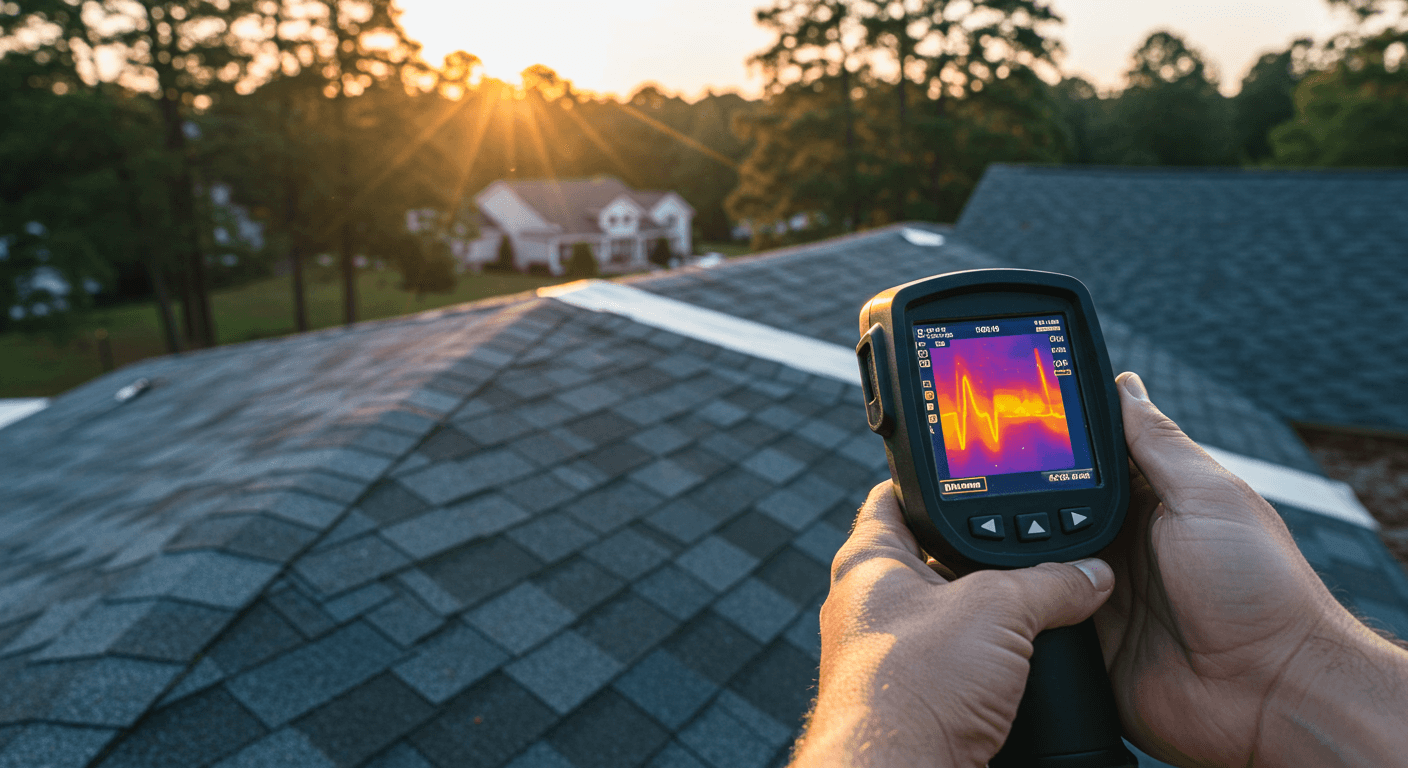
I worked with a contractor who started including a "Thermal Longevity Report" with every bid. He used a basic infrared camera to show homeowners that their attic was 42 degrees hotter than the ambient outdoor temperature. By explaining that this heat "cooks" the shingles from the inside out, he was able to close 22% more jobs at a higher price point than his competitors.
This isn't just about being a "good guy." It's about protecting your bottom line. When you buy verified leads, you are investing in a potential customer. If you win that job but lose the profit to a callback two years later because the shingles are blistering, your acquisition cost just skyrocketed.
Best Practices for North Carolina Installations
If you want to ensure your roofs last the full 25 to 30 years they are rated for, you need a standardized protocol for your crews. Here is what I've seen work for the top-performing shops in the Southeast:
- Clear the Path: Never assume the soffit vents are working. I've seen crews install brand new vinyl soffit over old wood soffit that didn't have holes cut in it. You are essentially installing a plastic wall. Always verify the intake path is clear.
- Calculate, Don't Guess: Use a simple NFA calculator. A standard 4-foot ridge vent piece usually offers about 18 square inches of NFA per foot. If you have 40 feet of ridge, that's 720 square inches. You need 720 square inches of intake to match.
- Baffles are Non-Negotiable: If your insulation guys (or the previous ones) pushed the fiberglass all the way to the eaves, your ventilation is dead. Always install rafter vents (baffles) to maintain that 2-inch air gap.
- Weather Considerations: In coastal NC, use high-wind rated ridge vents that incorporate an external baffle. These are designed to create a low-pressure zone that pulls air out even when the wind is hitting the ridge at 90 mph, while also preventing wind-driven rain from entering.
Final Thoughts on Deck Longevity
Ventilation isn't an "add-on." It is the foundation of a high-performance roof. In North Carolina, where the dew point can stay in the 70s for weeks at a time, your ability to move air is more important than the brand of shingle you install.
I've watched contractors go from a 12% callback rate to less than 2% just by implementing a mandatory "NFA Checklist" for every project. This shift doesn't just save money on labor. It builds a referral engine. When a homeowner's neighbor asks why their roof looks better after 10 years than everyone else's on the street, your name is the one that gets dropped.
Stop guessing at your airflow. Start measuring, start balancing, and start charging for the expertise that keeps your roofs standing while the competition's work is literally melting in the Carolina sun.