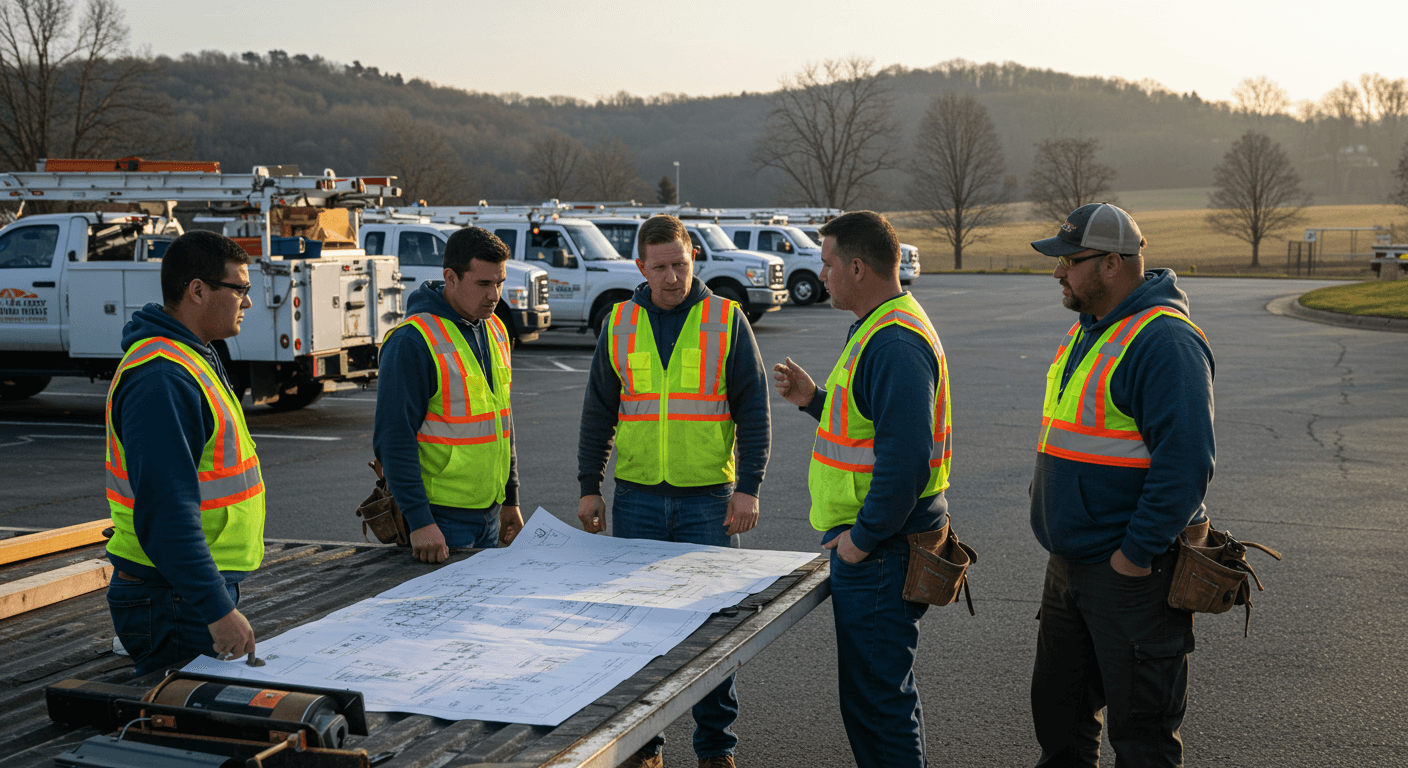
Xavier slammed the door of his heavy-duty pickup so hard the siding samples rattled in the back. Across the job site in West Chester, three crew members were leaning against the trailer while a homeowner stood on her porch pointing at a stack of shingles blocking her driveway. No one was moving. The foreman, the guy Xavier trusted to "run the show," was staring at his phone, completely oblivious to the homeowner's growing frustration or the $14,600 contract dissolving in real-time. This wasn't a lead problem or a material pricing issue. It was a leadership vacuum that would eventually cost Xavier more than just this single job in Chester County.
I see this scenario play out from Erie to Allentown. Owners are so busy putting out fires that they forget to build the fire department. In Pennsylvania, the competition for skilled labor is fierce, and the cost of losing a seasoned lead installer or a promising sales rep is astronomical. If you are the only person in your company capable of making a high-stakes decision, you don't own a business (you own a high-stress job).
At a Glance
Developing middle management reduces owner burnout by delegating 64% of daily operational decisions.
Targeted leadership training can lower crew turnover by as much as 31.5% in high-competition markets like Philadelphia.
Professionalized management structures increase company valuation by proving the business functions without the owner's constant presence.
Clear career paths for installers prevent "poaching" from competitors offering small hourly raises.
The Economics of the Pennsylvania Leadership Gap
Pennsylvania has a unique roofing environment. Between the strict requirements of the Home Improvement Consumer Protection Act (HICPA) and the aggressive seasonality of the Northeast, your margins live or die by the efficiency of your crews. When a foreman lacks leadership skills, efficiency drops. A job that should take 1.5 days stretches into 2.5 days. That extra day isn't just a labor cost issue. It is an opportunity cost that prevents you from starting the next $11,840 tear-off.
According to the latest IBISWorld Roofing Industry Report, labor productivity is a primary driver of profitability. In my experience coaching shops across the Keystone State, a "leader-less" crew operates at about 72% capacity. They wait for instructions. They misinterpret work orders. They fail to upsell simple repairs.
When you invest in leadership development, you are not just being "nice" to your staff. You are protecting your bottom line. I recently worked with a shop in Lancaster that was losing roughly $9,431 every time a lead installer quit. Between recruiting fees, onboarding time, and the inevitable mistakes a new hire makes on their first three roofs, the "churn and burn" model was eating their profit.
Moving Beyond the "Top Dog" Mentality
Many owners in Pittsburgh or Scranton grew up in the trades. They were the fastest installers, the best closers, and the hardest workers. The problem arises when they expect everyone else to just "know" what to do by osmosis. Leadership is a skill set separate from shingle application.
I once sat in a training session with a rep named Jaxon. He was a killer on the roof but a disaster as a manager. He barked orders and wondered why his crew was surly. We spent three weeks working on "The Why" behind his instructions. Instead of saying, "Move those bundles," he started saying, "Move those bundles to the ridge so the guys on the north slope don't have to walk as far, which saves us an hour of daylight."
The shift was immediate. His crew felt respected because they understood the strategy. His close rate on "add-on" gutter work even climbed by 14% because he started leading his team to look for those opportunities rather than just finishing the primary task.
The 10-Minute Morning Huddle
"Stop giving orders and start asking questions. During your morning huddle, ask your foreman: "What is the biggest bottleneck you see on this roof today?" This forces them to think like an owner and anticipate problems before they cost you money."
The Market Analysis: Why Your Best People Leave
The Pennsylvania market is saturated with "lifestyle" roofing companies. These are small shops that pay decent wages but offer zero upward mobility. If your best installer realizes they will still be an installer in five years, they will leave for a $2.25 per hour raise at the company down the street.
Professionalizing your management isn't just about titles. It is about creating a "Leadership Pipeline." Analysis from Construction Dive suggests that firms investing in internal career paths see significantly higher retention rates during economic shifts. If your people see a path from installer to foreman, then foreman to production manager, they become stakeholders in your success.
When your team is stabilized, your growth becomes predictable. You can finally stop worrying if a crew will show up and start focusing on scaling. If you're tired of wasting time on tire-kickers while managing these internal headaches, checking out how our verification process works can at least secure your pipeline while you fix the culture.
Action Plan
A 3-Stage Framework for Transitioning Your Top Performers
A systematic approach to developing effective managers without losing job site quality.
The Shadow Phase (Weeks 1-4): Have the prospective leader shadow you or a senior manager specifically for administrative and client-facing tasks, not just the physical work.
The Controlled Delegation Phase (Weeks 5-12): Give them total authority over a small, 3-man repair crew. Let them handle the scheduling, homeowner communication, and final walk-through.
The P&L Responsibility Phase (Month 4+): Show them the actual numbers for their jobs. When a foreman understands that a 4% waste in materials comes directly out of the company's ability to pay bonuses, their behavior changes overnight.
Want to skip the manual work and get exclusive, verified leads instead?
Get $150 in Free CreditsScaling Leadership Across Multi-City Operations
If you are looking to expand from a base in Harrisburg into the Philadelphia or Lehigh Valley markets, you cannot be everywhere at once. Regional expansion fails when the "DNA" of the owner isn't replicated in the regional managers.
Most owners ask how our pricing works when they realize their time is better spent training these regional leaders than chasing bad data or unverified leads. You need a system where your "Manager of Philadelphia" is incentivized by the same metrics you are: net profit, customer satisfaction scores, and safety ratings.
I've seen shops in the Lehigh Valley double their revenue in 18 months simply because the owner stopped being the primary salesperson and started being the primary coach. They shifted from "doing" to "developing."
Creating a Culture of Accountability
Leadership requires clear metrics. You cannot hold a foreman accountable for "doing a good job." You hold them accountable for a "zero-callback rate" or "staying within 3% of the estimated material load."
In Pennsylvania, word-of-mouth travels fast. A single bad project in a tight-knit community like State College can ruin a season. By developing leaders who take personal pride in the final "HICPA-compliant" contract and the clean-up process, you are building an automated referral machine.
If you need to pivot your strategy and move from being a "worker" to a "CEO," contacting our team can help align your lead flow with your new crew capacity. Growth is a choice, but it requires a foundation of people who can carry the weight when you aren't on the ladder.