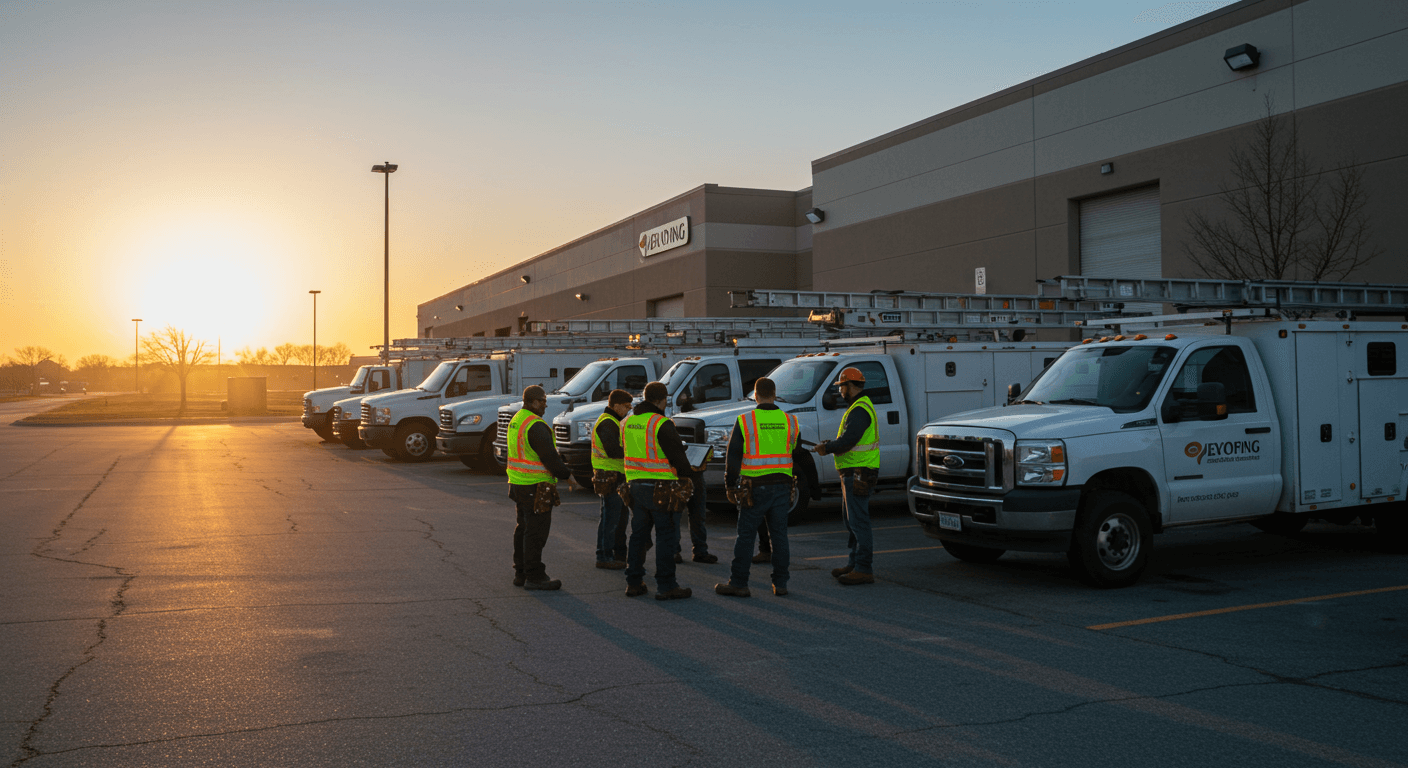
Four white crew trucks sat idling in the gravel lot just off Van Dyke Avenue while Finn, my most reliable lead installer, handed me his keys without saying a word. He didn't look angry; he looked drained, the kind of deep-seated fatigue that a long weekend at Stony Creek Metropark couldn't fix. This wasn't about a fifty-cent-an-hour raise from a competitor in Troy or Clinton Township. It was the "silent quit"—the final result of a culture that treated high-performing humans like line items on a spreadsheet until the gears finally seized.
I watched him walk to his personal vehicle, realizing that I hadn't just lost a foreman; I'd lost the $14,650 in specialized training I'd invested in him over the last 3.4 years. In the roofing world, we obsess over lead costs and material surcharges, but we often ignore the most expensive leak in the entire business: the revolving door of talent. When a seasoned roofer leaves, they take their speed, their safety record, and their relationship with your junior guys with them.
In Sterling Heights, the competition for labor isn't just coming from other roofing outfits. We're competing with the manufacturing plants along the Golden Corridor and the lure of steady, indoor work at the Stellantis facilities. If you aren't offering a reason to stay that transcends the hourly wage, you're essentially running a training academy for your competitors.
At a Glance
Implement 'Career Pathing' to show installers a five-year trajectory beyond the shingle.
Transition from flat hourly rates to performance-based incentives that reward efficiency.
Reduce sales burnout by providing high-quality, verified leads that actually close.
Invest in regional-specific perks like cold-weather gear and off-season training stipends.
Retention Strategy Evolution
| Factor | The Transactional Model (Old Guard) | The Relational Model (New Era) |
|---|---|---|
| Compensation Model | Pay-by-the-hour with minimal incentives | Performance-based bonuses and profit-sharing |
| Management Style | Reactive 'firefighting' management style | Quarterly career pathing and skill development |
| Communication | Top-down communication (orders only) | Open-book transparency and crew feedback loops |
| Hiring Approach | Generic job boards for all hiring | Internal referral programs and culture-first vetting |
Compensation Model
Management Style
Communication
Hiring Approach
The Real Cost of the Sterling Heights Talent Drain
Most owners I coach in Macomb County think losing a guy costs them a few days of production. The reality is much uglier. When you factor in recruiting costs, onboarding time, the "learning curve" errors on the first six jobs, and the psychological impact on the remaining crew, the price tag is staggering.
According to the Bureau of Labor Statistics, the mean hourly wage for roofers sits around $26.85, but that's just the base. The "fully burdened" cost of an employee includes taxes, insurance, and overhead. When that employee walks, you're looking at a replacement cost of roughly $7,432 for a mid-level installer and upwards of $12,800 for a foreman who knows your systems.
I recently sat down with a shop owner near 15 Mile Road who was frustrated that his turnover rate hit 42% last year. We ran the numbers. He was losing nearly $94,000 annually just to stay at the same headcount. That's a brand-new, fully rigged-out service truck evaporating every twelve months because he couldn't keep his team engaged.
Why Top Talent is "Ghosting" Roofing Owners
In my training sessions, I often hear sales reps complain about the quality of the opportunities they're given. It's a major retention killer. If you hire a killer closer but feed them junk leads that haven't been vetted, they'll be updating their resume by month four. They want to win, and winning requires a solid pipeline.
I've seen shops transform their retention rates simply by improving the quality of the work they put in front of their team. When your sales force knows they are walking into a house where the homeowner is real and the need is urgent, their morale skyrockets. This is why we focus so heavily on our 7-point lead verification process, ensuring that your team's time isn't wasted on tire-kickers.
But it goes beyond the leads. In the Sterling Heights market, there's a specific psychological trigger I call "The Manufacturing Comparison." Your crews see their friends working at the plants with clear shifts, climate control, and defined benefits. To compete, you have to offer something they can't: a sense of ownership and a visible ladder.
The "Ownership" Shift: A Script for Retention
I was coaching a sales manager named Wesley last month. He was worried about losing his top producer, who felt like he'd hit a ceiling. I had Wesley pull the rep aside for a conversation that didn't involve a commission check.
"Finn," Wesley said, using the framework we developed, "I don't want you just running appointments for the next ten years. I want to know where you want to be in thirty-six months. Do you want to be a regional manager? Do you want to run your own division? Tell me the number you need to hit to feel like this is a career, not just a job, and I'll build the roadmap with you."
That single conversation changed the dynamic. It moved the relationship from transactional (I pay you for your time) to partnership (we are building your future together).
Trend Analysis: The Rise of the "Tech-Forward" Roofer
As we look toward the next 6.5 years in the Michigan market, the profile of the "ideal employee" is shifting. The younger generation entering the trades in Macomb County grew up with technology. They don't want to do things the "hard way" just because that's how your grandfather did it.
One of the biggest retention trends I'm seeing is the adoption of drones and AI-assisted measuring tools. It's not just about efficiency; it's about longevity. If you can show a 24-year-old roofer that they won't have to be on a 12/12 pitch in the middle of a Michigan January for every single inspection, they see a longer career path with your company.
Furthermore, the total roofing market size is hovering around $56B, and as it grows, the demand for "smart" contractors increases. Employees want to work for the winner. They want to work for the shop that has the best tools, the best leads, and the most organized job sites.
Solving the Sales Burnout Crisis
Sales retention is a different beast than crew retention. Your sales reps are the frontline of your revenue, but they are also the most prone to burnout. In Sterling Heights, where the roofing season has a hard start and stop due to weather, the pressure to perform from April to November is intense.
If your reps are spending 14 hours a week driving to "leads" that turn out to be disconnected numbers or renters, they will quit. I've seen it happen dozens of times. To fix this, you need to tighten the feedback loop.
When a rep feels supported by a system that guarantees exclusive, verified job opportunities, they feel like the company is invested in their success. It's the difference between throwing them into a lake and giving them a boat. If you have questions about how these systems integrate with your current team, our support team can walk you through the logistics of lead distribution and exclusivity.
Performance Incentives That Actually Work
Forget the "Employee of the Month" plaque. In this industry, cash and time are the only currencies that matter. But you have to tie them to the right behaviors.
I recommend a tiered incentive structure that rewards:
- Safety Milestones: A bonus for the entire crew after 150 days without a reportable injury.
- Quality Scores: Using post-job photos to grade the work. If the crew hits a 9.2/10 average over a quarter, they get a "gear stipend" for new boots or tools.
- Efficiency Gains: If a project is estimated for 18 hours but completed in 15 with zero callbacks, share a percentage of that saved labor cost with the crew.
This turns the job into a game where they can see the score. It's much harder to walk away from a company where you have "skin in the game" and a clear understanding of how your effort translates into your bank account.
The 90-Day Huddle
"Stop waiting for annual reviews. Every 90 days, sit down with each key employee for 17 minutes. Ask two questions: 'What is one tool or process that would make your job 15% easier?' and 'What is one thing the competition is doing that we should consider?' This builds instant loyalty and provides you with free boots-on-the-ground intel."
Future Projections for the Michigan Workforce
The labor shortage isn't going away. In fact, over the next 4.2 years, the gap between available skilled roofers and the demand for roof replacements in aging suburbs like Sterling Heights is expected to widen.
The shops that survive won't be the ones that pay the absolute most—they'll be the ones that provide the most stability. This includes things like:
- Off-Season Retention Pay: Providing a base salary or training work during the "dead" months of January and February to ensure your best guys don't go look for warehouse work and never come back.
- Health and Wellness: Offering actual benefits packages. As the workforce ages, a roofer with a family is more interested in a dental plan than a Friday afternoon beer cooler.
- Internal Promotion Tracks: Publicly celebrating when an installer moves into an estimating role. It proves to the junior guys that there is a way up.
If you are struggling to keep your pipeline full enough to justify these benefits, it might be time to look at your lead source. We provide answers to common questions about scaling your volume in our FAQ section.
Final Thoughts on Building a Legacy Team
Building a roofing business in Sterling Heights is a marathon, not a sprint. You can't win the marathon if you're constantly stopping to tie your shoes—or in this case, constantly stopping to hire and train a new crew.
Retention is a sales job. You are selling your employees on the idea that their lives are better under your roof than anywhere else. Use the data, use the psychological triggers, and most importantly, treat your talent like the appreciating asset they are. When Finn handed me those keys, it was a failure of leadership, not a failure of the market. Don't let your "Finn" walk away because you were too busy looking at the shingles to look at the person laying them.