Main Points
Actionable insights for roofing businesses in today's competitive market
Data-driven strategies to protect and grow your profit margins
Practical steps you can implement this week to see real results
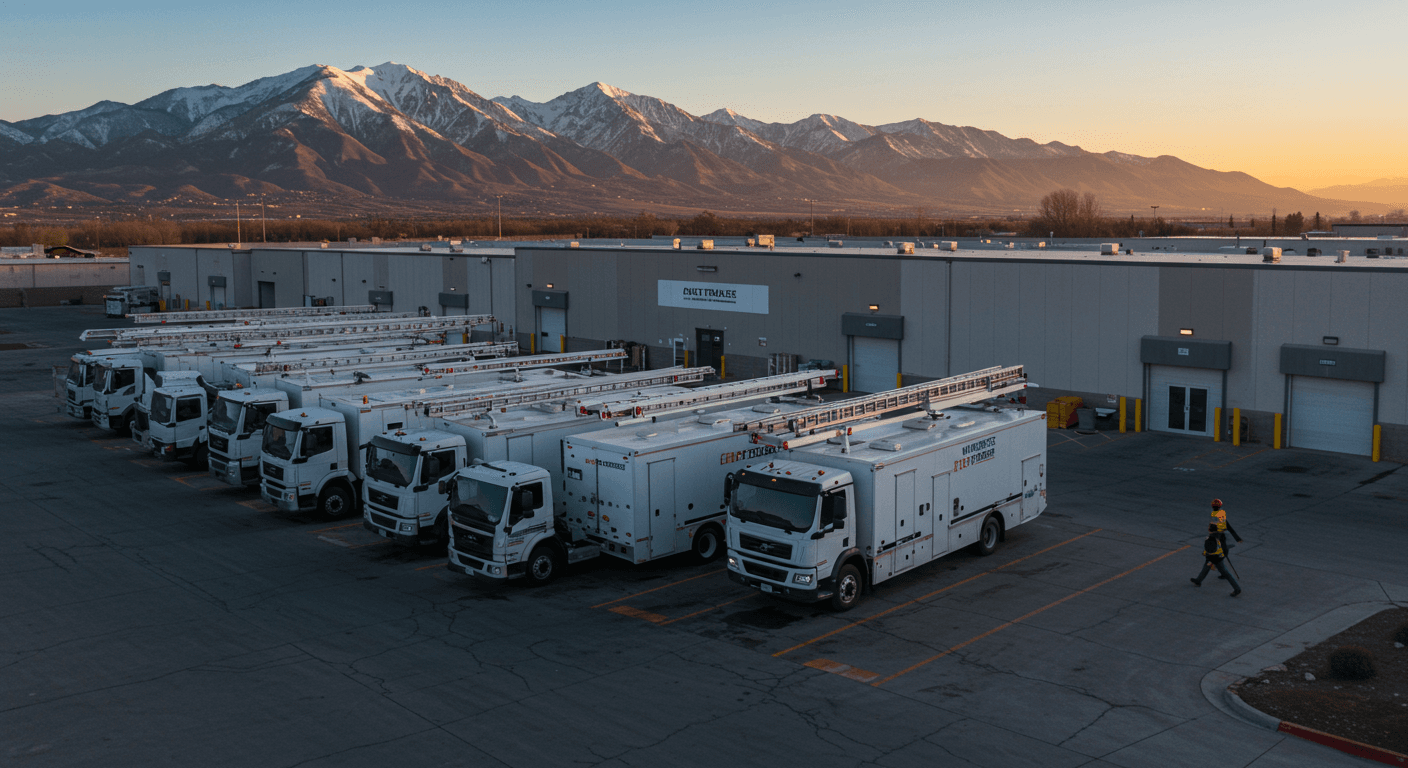
Do you actually know where your $65,000 service trucks are right now, or are you just hoping they are at the job site in Sandy? I was looking at a fuel report with a contractor in Orem last month, and the numbers simply did not add up. Jaxon had four crews out, but his Chevron bill looked like he was running a long-haul trucking company. We pulled the GPS logs and found one truck idling for 4.6 hours a day to keep the AC running while the crew sat inside. Another was making "material runs" that conveniently passed by a residence in Draper every Tuesday afternoon. In Utah's tight labor market, you cannot afford to babysit, but you also cannot afford to ignore the 19.2% leak in your overhead caused by unmonitored assets.
The Hidden Cost of "Trust" Along the Wasatch Front
Trust is a great value for a family business, but it is a terrible accounting strategy. When I started working with a mid-sized shop in St. George, the owner, Yara, prided herself on "knowing her guys." She didn't think she needed telematics. However, when we did a deep dive into her payroll versus her GPS pings, we found a discrepancy of 11.4 hours per week across her three lead foremen. They weren't being malicious; they were just "Utah nice," stopping to help neighbors or taking the long way around I-15 traffic to grab a specific lunch.
Those small detours add up. According to the roofing industry statistics from ConsumerAffairs, the market is massive, valued at $56B, but that scale means even a 2% inefficiency can wipe out a year's worth of growth capital. For a Utah contractor, where the terrain ranges from the steep grades of Park City to the heat of Washington County, your fleet takes a beating. If you aren't tracking how those vehicles are driven, you are essentially handing your keys to someone else's P&L.
Managing the "I-15 Factor": Traffic and Routing Efficiency
If you’ve ever tried to get a crew from Lehi to Salt Lake City at 4:30 PM, you know that Utah traffic is no longer a "big city" problem—it is a daily operational hurdle. I recently saw a crew spend 74 minutes in stop-and-go traffic because they took the "standard" route instead of a dynamic path suggested by a fleet management system.
When you integrate smart routing, you aren't just saving fuel. You are increasing your "wrench time." If a crew of three earns your company $185 per hour in production value, every hour stuck on the freeway is a direct hit to your bottom line. By using a mobile management system to push optimized routes directly to your drivers, you bypass the Point of the Mountain bottlenecks that kill afternoon productivity.
Combating the Utah Idle: Seasonal Fuel Waste
Utah weather is the enemy of fuel efficiency. In January, crews leave the trucks running to stay warm during lunch. In July, the engine stays on to keep the cab at 68 degrees. I worked with a shop in Logan that discovered their trucks were idling for an average of 3.8 hours per day during the winter.
By setting up automated alerts, the owner was able to implement a "3-minute rule." If a truck idled for more than 180 seconds, he got a ping. He didn't use it to fire people; he used it to educate them. He showed the crew that the $4,230 they saved in fuel over three months was the exact amount he needed to upgrade their pneumatic tools. When the guys saw the ROI for themselves, the behavior changed overnight.
The Liability Shield: Protecting Your Assets
Utah's legal environment is becoming increasingly difficult for small business owners. One "he-said, she-said" accident in a branded company truck can lead to a settlement that exceeds your insurance limits. I always tell my clients that fleet tracking is their best defense.
A contractor I know in Provo was sued for a "hit and run" that allegedly happened at 2:00 PM on a Friday. Because he had active tracking, he produced a report showing his truck was parked at a job site in Spanish Fork at that exact moment. The case was dropped in 48 hours. Without that data, he would have been at the mercy of a witness who "thought" they saw his logo. This level of protection is just as vital as verifying your leads to ensure you are only spending time on real opportunities.
Implementation Without Mutiny
The biggest hurdle isn't the technology; it is the "Big Brother" stigma. When you introduce tracking, your best guys might feel insulted. I've found the most successful rollouts focus on safety and rewards, not punishment.
Tell your team: "I'm installing this so I can prove you weren't at fault if someone hits you, and so I can give bonuses to the safest drivers." Use the data to gamify the workday. The driver with the fewest "hard braking" events or the best fuel economy gets a $150 gift card to Cabela's or Maverick.
The Data-Driven Future of Utah Roofing
Recent reports from Construction Dive highlight that technology adoption is the primary differentiator between shops that plateau at $2M and those that scale to $10M+. You cannot scale what you cannot measure.
If you are ready to stop guessing and start growing, you need to look at your fleet as a mobile profit center. If you find that your current lead flow isn't keeping those trucks moving enough to justify the overhead, it might be time to contact a growth specialist to audit your pipeline.