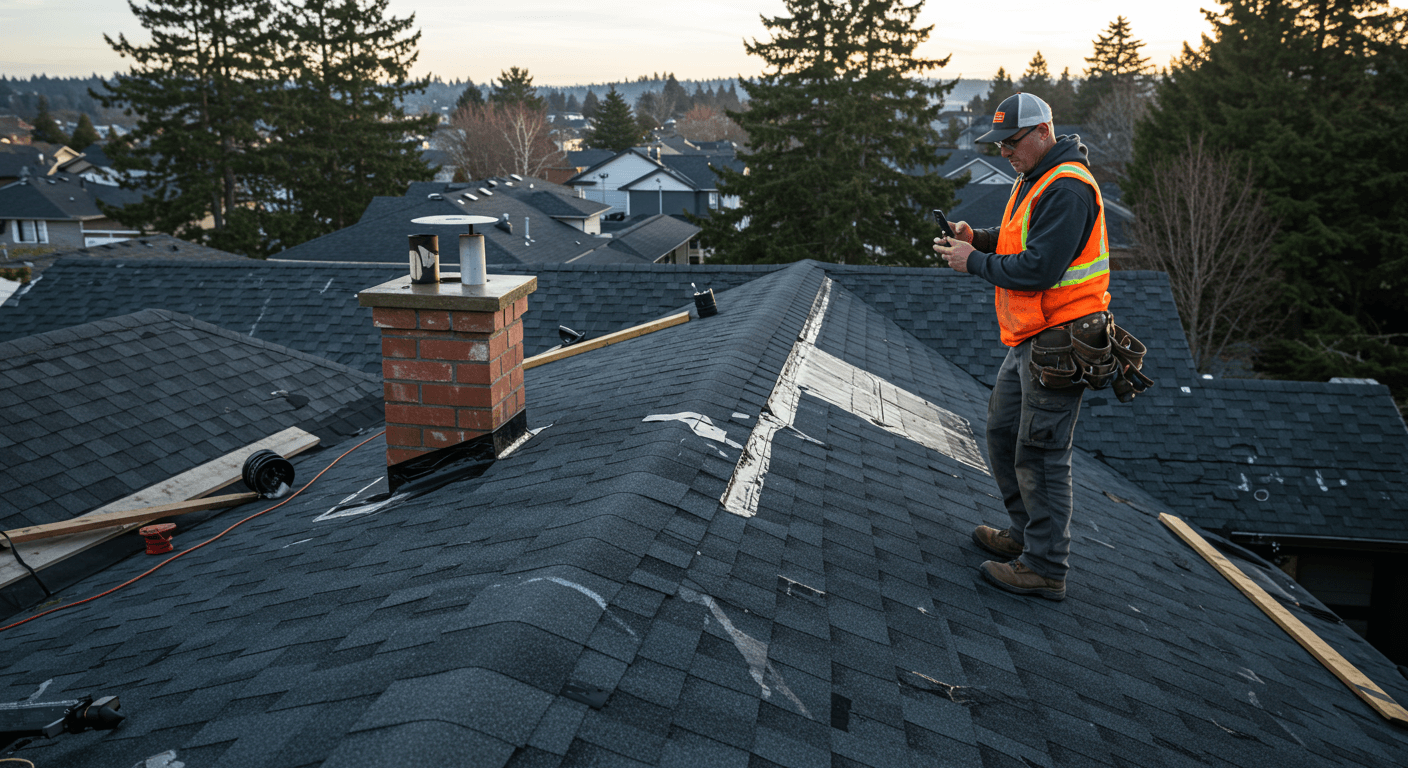
I was standing on a 6:12 pitch in a windy neighborhood near Tacoma with Elias, a contractor who had built a solid $3.4 million business but couldn't seem to break the next ceiling. He handed me his iPad, showing a report from a marketing agency he'd hired six months prior. He had paid $12,850 for a "comprehensive content strategy" that resulted in twenty blog posts with titles like "How to Choose a Shingle Color" and "Signs You Need a New Roof."
We looked at his analytics together while his lead tech prepped the flashing. The data was brutal. 87% of the traffic to those articles came from states where Elias didn't even have a license. He was essentially paying to educate homeowners in Florida and Ohio while his own crews in Washington were facing a three-day gap in the schedule for the following week.
"Mia, I feel like I'm screaming into a void," he told me. He wasn't wrong. Generic content is a liability in a high-cost market like the West Coast. If your content doesn't prove you understand the specific seismic requirements of California or the persistent moisture challenges of the Pacific Northwest, you're just adding to the digital noise.
At a Glance
Shift from generic SEO to local authority to reduce waste
Use 'process-driven' video to shorten the sales cycle by 14.3 days
Leverage specific West Coast project data to outshine national competitors
Documenting job sites creates a reusable asset library for sales teams
The Death of "Information" and the Rise of "Proof"
The biggest shift I've observed in the last 18 months across the West Coast market is that homeowners no longer search for information; they search for proof of competence. Ten years ago, writing an article about "Types of Roofing Materials" might have earned you a click. Today, that same homeowner is being bombarded by AI-generated fluff and national aggregators.
To win now, your content needs to be an extension of your operations. It shouldn't be written by a freelancer who has never stepped on a roof. It needs to come from your job sites. When we analyzed Elias's approach, we realized he was sitting on a goldmine of content that he was ignoring: his daily project logs and crew photos.
According to the Asphalt Roofing Manufacturers Association (ARMA), proper installation is the single biggest factor in roof longevity, yet most marketing focuses on the product rather than the process. For West Coast contractors, the "process" is your unique selling proposition. Whether it's how you handle steep-slope safety in hilly San Francisco or how you manage debris during a high-wind event in the Inland Empire, that is the content that converts.
Content that showcases actual job sites and specific project details significantly outperforms generic educational content in West Coast markets.
The "Operational Transparency" Trend
There is a specific trend taking over the Western states right now that I call "Operational Transparency." This isn't just about showing a finished roof. It's about documenting the "ugly" parts of the job.
I recently worked with a shop in San Diego that started filming 60-second clips of their tear-offs. They didn't use a professional film crew. The foreman just used his phone to show exactly how they protected the homeowner's xeriscaping and how they identified rotted decking that a cheaper bid would have ignored.
The result? Their sales cycle dropped from an average of 19 days to just under 5 days. Why? Because the content did the heavy lifting of building trust before the sales rep even pulled into the driveway. When a prospect sees a video of your crew actually doing the work in a neighborhood three miles from their house, the "price" conversation becomes secondary to the "quality" conversation.
Localized Metadata
"When posting job site photos, always mention the specific neighborhood or landmark. 'Roofing in Seattle' is too broad; 'Replacing a cedar shake roof near Discovery Park' builds immediate local authority."
Why National SEO is Killing Your Local Margins
Many contractors fall into the trap of chasing high-volume keywords. They want to rank for "best roofer," but that puts them in a cage match with billion-dollar companies. In my experience building systems for shops from Vancouver to San Diego, the real money is in "long-tail localized intent."
Instead of fighting for the top spot on a general term, focus on content that addresses regional pain points. On the West Coast, this might include:
- Wildfire-resistant roofing materials for California suburbs.
- Moss mitigation strategies for the rainy PNW.
- The impact of salt spray on metal roofing in coastal towns.
If you're struggling to find where your marketing spend is actually going, it's often because your leads aren't verified for your specific service area. I've seen companies get much better results when they see what's available in their own backyard first rather than casting a wide, expensive net across the entire internet.
Generic vs. Operational Content Strategy
| Factor | Generic Content Strategy | Operational Content Strategy |
|---|---|---|
| Keyword Focus | High-volume national keywords | Local neighborhood-specific keywords |
| Visual Assets | Stock photography | Actual job site photos/videos |
| Content Type | Focus on 'educational' blog posts | Focus on 'proof of work' case studies |
| Content Creation | Outsourced writing with no field experience | Content created by or with the field crews |
Keyword Focus
Visual Assets
Content Type
Content Creation
Creating a Content Machine Without Losing Crew Efficiency
The #1 objection I hear from owners like Elias is: "Mia, my guys are roofers, not influencers. They don't have time to take pictures."
This is an operational hurdle, not a creative one. You have to build content collection into the job flow. If it's not part of the checklist, it won't happen. One shop I consulted with in Phoenix implemented a "First and Last" rule. The lead hand had to take one photo of the staged materials (showing organization) and one photo of the clean job site at the end of the day.
Those two photos, uploaded to a shared drive, provided the marketing team with 10 pieces of "proof" per week. We then used that data to create "Project Spotlights." A Project Spotlight is more effective than any 2,000-word blog post. It includes:
- The specific problem (e.g., "Leaking valley in a 1970s ranch home in Beaverton").
- The systematic solution (e.g., "Installed heavy-duty ice and water shield and custom flashing").
- The specific ROI for the homeowner (e.g., "Eliminated recurring leak and increased home value by $9,400").
Action Plan
The 30-Minute Weekly Content Workflow
A tactical framework for maximizing content ROI without overwhelming your field teams.
Identify one 'Problem Job' from the previous week's schedule.
Extract 3 photos: the issue, the mid-process fix, and the clean finish.
Write 4 sentences explaining why your crew's approach was superior to a standard 'code-minimum' job.
Post to your Google Business Profile and local Facebook groups with neighborhood tags.
Want to skip the manual work and get exclusive, verified leads instead?
Get $150 in Free CreditsThe Future of Video in Roofing Sales
We are moving toward a video-first world. The National Roofing Contractors Association (NRCA) has highlighted the importance of professionalism in the digital age, and nothing conveys professionalism faster than a clear, concise video. Research from the Roofing Contractor Magazine shows that contractors who consistently produce job site video content see a 23% increase in lead quality compared to those relying solely on static images.
You don't need a high production budget. In fact, "raw" video often performs better because it feels more authentic. I watched a contractor in San Jose use a drone for five minutes at the end of every job. He'd voiceover the footage later, explaining the technical details of the ventilation system he installed. He wasn't just selling a roof; he was selling his expertise as a systems builder.
This type of content reduces your customer acquisition cost (CAC) because it builds a library of assets your sales team can use during their presentations. Instead of saying "we do great work," they can show a video of a similar house in the same ZIP code.
Managing the Waste in Your Pipeline
Content marketing is ultimately about efficiency. If your content brings in 100 leads but only 3 are in your service area, your system is broken. You are wasting administrative hours filtering through junk.
I've always been obsessed with why we built this business model at LeadZik—it was born from the frustration of seeing contractors like Elias burn money on broad marketing that didn't convert into local revenue. To understand more about our story and why we focus on verified data, you can see how we prioritize the contractor's bottom line over vanity metrics like "clicks" or "impressions."
The 'AI Fluff' Trap
Avoid using AI to generate generic articles. Google's latest updates prioritize 'Helpful Content' based on first-hand experience. If the article doesn't contain unique photos or specific project data, it will likely be penalized in search rankings.
Conclusion: Turn Your Content Into a Revenue Engine
The difference between content that drives revenue and content that's just noise comes down to one thing: authenticity. When your content comes from your actual job sites, showcases your specific regional expertise, and proves your operational competence, it becomes a powerful sales tool that works 24/7.
Stop paying freelancers to write generic articles that attract traffic from states where you don't operate. Start documenting your work, showcasing your process, and building a library of proof that pre-sells your services before your sales team even makes the call.
Ready to transform your content strategy? The foundation starts with understanding what opportunities are actually available in your market. Get started with LeadZik today and see how verified, local leads can transform your marketing ROI.