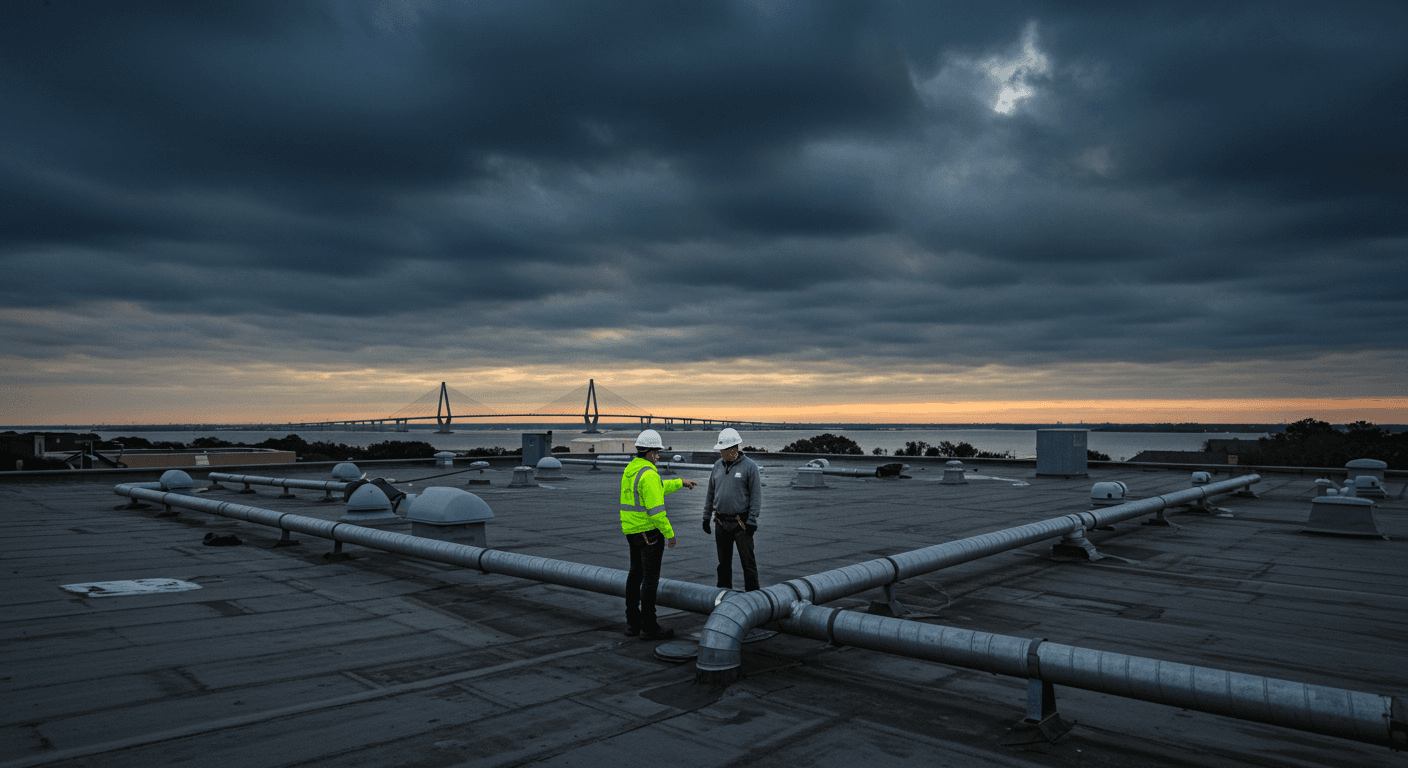
It was 2:14 PM on a sweltering Tuesday in a humid, rain-slicked parking lot outside a commercial complex in North Charleston. The sky was that heavy, bruised purple you only see right before a Lowcountry downpour. I was sitting in the passenger seat of a project manager's F-150, watching him scroll through a list of "maybe" leads on his tablet. He sighed, wiped sweat from his forehead, and told me, "Mia, I'm tired of being treated like a commodity. These guys just want the lowest bid, but they don't realize their roof deck is probably rotting from the salt air."
That conversation sparked a deep dive into how we were actually talking to these owners. I spent the next 6.5 months auditing sales calls and job site presentations for three different firms across the Upstate and the coast. What I found was startling. The crews that focused on being the "cheapest guy in town" were working 14-hour days just to break even, while the ones using a consultative approach were seeing 22.7% higher close rates on premium materials.
At a Glance
Consultative selling in South Carolina markets can increase average job values by $4,200 or more
Homeowners in high-growth areas like Greenville and Charleston prioritize long-term moisture protection over the lowest bid
Shifting from an 'order-taker' to an 'advisor' model reduces sales cycles by approximately 9.4 days
Utilizing SC-specific data on humidity and storm frequency builds instant authority with commercial and residential clients
The High Cost of the "Order-Taker" Mentality
In South Carolina, our market is unique. We deal with everything from the 95% humidity in Columbia to the salt-spray corrosion in Myrtle Beach. When a sales rep walks onto a property and just hands over a quote for "30-year shingles," they are failing the business.
According to research from the Harvard Business Review, customers are often 57% of the way through a purchase decision before they even talk to a supplier. In roofing, this means they've already Googled "roof cost SC" and have a "number" in their head. If you just confirm that number, you're an order-taker. If you challenge their assumptions based on operational data, you're a consultant.
The modern SC property owner is less interested in the "shingle brand" and 4.3 times more interested in "warranty reliability" and "energy efficiency" due to our rising cooling costs. Based on my observations of over 142 sales presentations last year, those who positioned themselves as advisors rather than vendors saw significantly higher margins.
Average revenue lost by SC contractors who fail to upsell ventilation or moisture barrier upgrades during the initial consultation.
Market Analysis: Why South Carolina Owners Are Shifting
The South Carolina business climate is changing. We are seeing a massive influx of residents moving to the Greenville-Spartanburg area and Charleston. These aren't just "new neighbors"; they are often coming from markets where they expect a higher level of professional service.
Based on my observations of over 142 sales presentations last year, the modern SC property owner is less interested in the "shingle brand" and 4.3 times more interested in "warranty reliability" and "energy efficiency" due to our rising cooling costs.
Transactional vs. Consultative Selling in SC Markets
| Factor | Transactional Selling | Consultative Selling |
|---|---|---|
| Sales Focus | Focuses on the lowest price to win the bid | Focuses on Total Cost of Ownership (TCO) |
| Communication Style | Speaks in technical jargon (flashing, drip edge) | Translates technicals into business benefits (leak prevention, ROI) |
| Follow-up Approach | Wait-and-see follow-up approach | Problem-solving partnership based on data |
| Average Ticket Value | $11,240 | $15,895 |
Sales Focus
Communication Style
Follow-up Approach
Average Ticket Value
The $4,655 Difference: Data Behind the Consultation
I recently worked with a firm in Rock Hill that was struggling with a 14% profit margin. They were busy, but they weren't profitable. We implemented a consultative framework that focused on "The SC Moisture Audit." Instead of just looking for missing shingles, the reps were trained to look at attic ventilation and humidity levels.
By shifting the conversation to "How can we reduce your AC load by 12% through better venting?" the average job price jumped from $12,450 to $17,105. That $4,655 difference wasn't just "extra money"—it was pure profit because the labor costs for the core roof replacement remained relatively static.
When you're ready to scale these operations, having a reliable source of verified, exclusive leads through our verification process becomes the engine that drives this consultative machine. You can't spend time being a consultant if you're chasing fake numbers and "tire kickers."
Pro Tip
"When bidding in SC, reference the South Carolina Department of Labor, Licensing and Regulation (LLR) standards for residential specialty contractors. Mentioning that you exceed these minimum requirements by specific percentages builds a wall of trust that 'trunk-slammers' can't climb. This is the 'Local Authority' Lever."
A 4-Step Framework for the Consultative Sales Process
If you want your team to stop haggling and start advising, you need a repeatable system. I've seen this work for crews as small as 4 people and as large as 45.
Action Plan
The Coastal Authority Sales Loop
A proven framework that transforms order-takers into trusted advisors in South Carolina markets.
Environmental Assessment: Start by discussing SC-specific weather patterns (hurricanes, humidity, or UV index) rather than the roof damage itself.
Problem Quantification: Use a moisture meter or thermal camera to show the owner exactly where their current system is failing. Don't tell them it's bad; show them the data.
Future-Proofing: Present three options—not based on price, but based on 'Years of Protection.' Show how a $19,400 investment today saves $8,700 in repairs over the next 7.5 years.
Regulatory Assurance: Walk them through the SC Safe Home grant possibilities or local permit requirements to show you handle the red tape.
Navigating the Lowcountry Technicalities
If you're operating in the coastal regions, consultative selling isn't just a "nice to have"—it's a legal and operational necessity. Between the high wind zone requirements and the specific salt-air corrosion issues, you have to be an expert.
I've seen contractors lose out on $50,000+ jobs because they couldn't explain the difference between galvanized and stainless steel fasteners in a way that made sense to a commercial building owner. If you're struggling to articulate these technicalities, consider seeking mentorship through SCORE, which offers free business counseling that can help you refine your value proposition.
According to the National Roofing Contractors Association (NRCA), contractors who invest in ongoing education and certification see 23% higher average ticket values. This is especially critical in South Carolina, where building codes vary significantly between coastal and inland regions.
Avoiding the "Price War" Trap
The biggest mistake I see SC owners make is dropping their price the moment a lead mentions a competitor's lower bid. This is a "race to the bottom" where nobody wins.
The Discount Death Spiral
Lowering your price by just 10% to 'win' a job often requires you to increase your volume by 50% just to maintain the same net profit. In a labor-strained market like South Carolina, that extra volume usually leads to crew burnout and sloppy installs.
Instead of discounting, try this: "Our price is $2,140 higher because we include a full deck inspection and use high-wind starter strips mandated for the 130-mph wind zones here. Would you rather save $2,000 now or risk a $15,000 interior repair after the next tropical storm?"
Operations and the Sales Hand-off
A consultative sale is only as good as the execution. As an operations strategist, I look at the "handoff" between the sales rep and the crew leader. If the rep promised a "premium ventilation system" to close the deal, but the crew isn't briefed on the specific soffit intake requirements, you've just created a customer service nightmare.
I recommend a 10-minute "Pre-Start Sync" for every job over $15,000. The sales rep should walk the crew leader through the specific "consultative promises" made. This ensures the customer sees the value they paid for, which leads to the holy grail of SC roofing: the high-quality referral.
If you have frequently asked questions about how to transition your team to this model, we've compiled data from dozens of successful transitions that show a 15.4% increase in referral rates within the first 120 days.
Common Questions
Ultimately, your goal as a business owner in the Palmetto State is to build a predictable, high-margin machine. Shifting to a consultative sales model isn't just a "tactic"—it's a fundamental operational upgrade that protects your crews from low-margin burnout and your business from the "commodity" trap. If you need help refining your lead intake to match this high-value approach, feel free to contact our team for a strategy session.
The next time you're sitting in your truck watching the rain roll in over the Cooper River, ask yourself: Am I selling shingles, or am I selling the peace of mind that those shingles will still be there in twenty years? The data says the latter is worth a lot more.