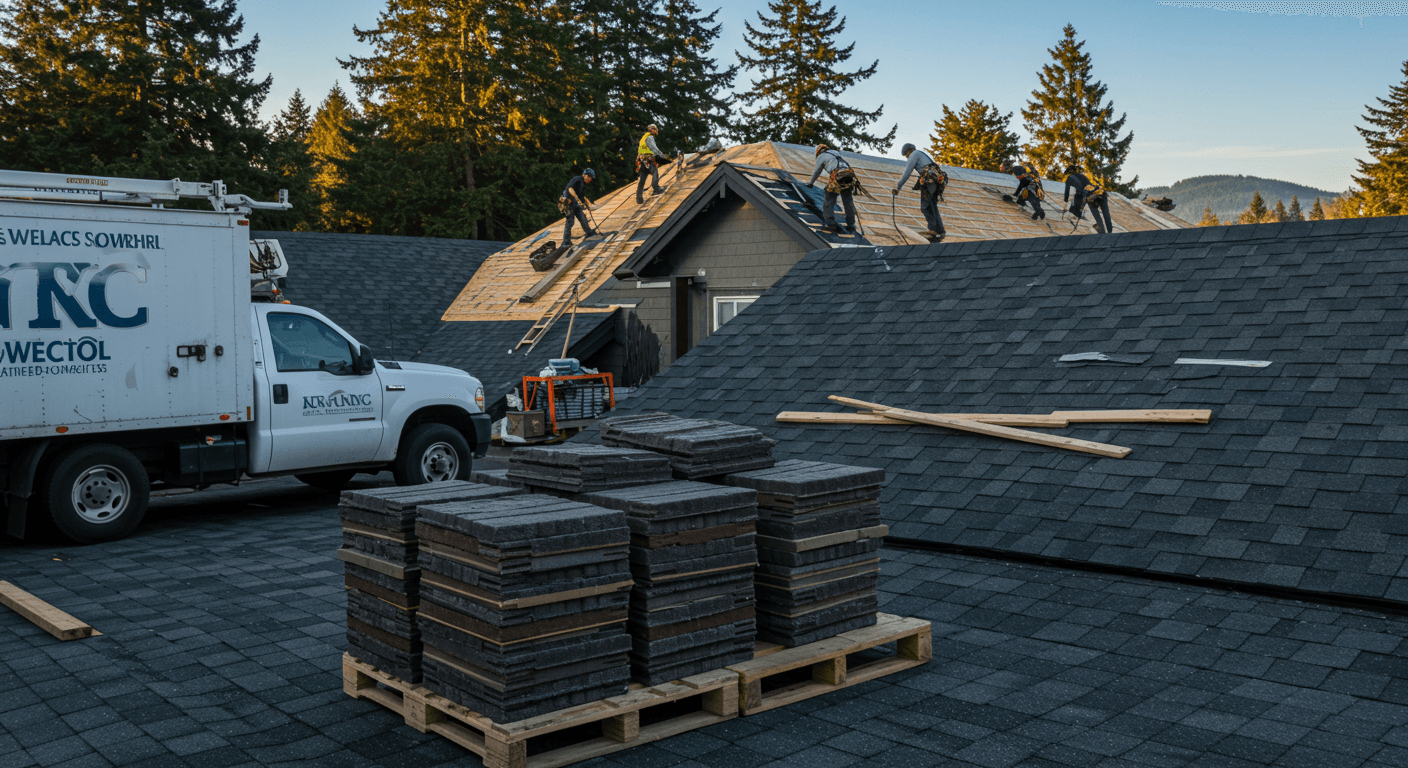
I was sitting in a cramped office in Portland back in October, watching the rain hammer against a display case of shingle samples. Across from me was Cal, a guy who had spent 13.7 years building a decent roofing outfit but felt stuck at the $2.1 million revenue mark. He had a glossy folder from a major national franchise on his desk. He looked at me and asked if the 7.2% royalty fee was worth the "proven system" they were promising. He was tired of reinventing the wheel every morning at 6:30 AM.
That conversation stayed with me because it represents the fork in the road every West Coast owner hits eventually. Do you buy the roadmap, or do you build the engine yourself? In markets like Seattle, San Francisco, or Phoenix, the competition is too fierce for "guessing." You need a model that scales without eating your net profit alive.
At a Glance
Franchise models offer rapid systemization but often carry a 6.4% to 8.8% drag on gross revenue through royalties.
Independent firms retain 100% of brand equity, which can lead to a 1.4x higher valuation if internal processes are documented.
West Coast market volatility requires localized sales scripts that national franchises often fail to provide.
Success in either model hinges on lead quality and the ability to verify job intent before sending a rep to the site.
The Franchise Framework: Buying Speed at a Premium
The appeal of a franchise is the "business in a box" promise. For a guy like Cal, the idea of having a pre-built marketing machine and a recognized logo felt like a life raft. On the West Coast, where labor costs in cities like San Diego or San Jose can be 19% higher than the national average, having a tight operational manual is a massive advantage.
Franchises provide a standardized training curriculum. I have seen reps come out of franchise boot camps with a solid 24% baseline closing rate because they aren't guessing what to say. They follow a script, they use the tech provided, and they stay in their lane.
However, that speed comes with a permanent tax. When you look at the IBISWorld Roofing Industry Report, you see that profit margins are often squeezed by rising material costs. Adding a 7.1% royalty on top of a 3.2% national advertising fund contribution means you start every month roughly 10.3% behind an independent competitor.
This permanent overhead cost puts franchise owners at a significant margin disadvantage compared to independent operators.
Independent Growth: The High-Margin Agility Play
The independent route is for the owner who wants to own the dirt, the trucks, and the reputation. When you scale independently in the West, you can pivot faster. If California introduces a new Title 24 energy code requirement, an independent shop can update its sales deck in 48 hours. A franchise owner might have to wait for corporate approval from an office in Charlotte that doesn't understand West Coast solar mandates.
The challenge is the "Process Gap." Most independent owners I coach are great roofers but average systems designers. They haven't documented their sales process, leading to "hero culture" where the owner is the only one who can close the $48,600 specialty tile jobs.
To win as an independent, you have to steal the franchise's best weapon: the system. This starts with how you handle incoming opportunities. If you are still chasing unverified leads, you are burning fuel and time. If you want to see how top-tier independents structure their incoming pipeline, you should explore our blog for more growth strategies that focus on operational efficiency rather than just raw volume.
Scaling Model Comparison
| Factor | Standard Franchise Model | Strategic Independent Model |
|---|---|---|
| Gross Margins | Lower (Royalty Drag) | Higher (Full Retention) |
| Brand Control | Strict/Restricted | Total/Localized |
| Setup Cost | $150k - $350k Fee | Sweat Equity/Tech Stack |
| Exit Multiplier | Fixed by Network | High (If Systematized) |
Gross Margins
Brand Control
Setup Cost
Exit Multiplier
The Sales Psychology of the "Local Expert"
I once sat in on a sales call with an independent rep in Tacoma. He was up against a big national franchise. The franchise rep had a beautiful iPad presentation, but he sounded like a robot. My guy, let's call him Pete, used what I call the "Regional Resonance" script.
Instead of talking about "Our 50 years of national excellence," Pete said: "We've been watching how the salt air off the Sound affects these specific composite shingles for 12 years. The national guys use a standard nail pattern, but we use a 6-nail reinforced technique because we know what the wind looks like in November here."
Pete closed that deal at a 14.2% higher price point than the franchise bid. Why? Because he sold local expertise that a national brand can't fake.
Pro Tip
"Train your reps to mention specific local landmarks or weather patterns from the last 18 months. Instead of saying 'We use good materials,' say 'After that wind storm last April in the Valley, we saw which shingles stayed on and which didn't. That is why we only install this specific grade.'"
Building Enterprise Value for the Long Haul
If your goal is to sell your business in 6.5 years and retire to Cabo, you need to think about enterprise value. A franchise is often easier to sell because the buyer is purchasing a predictable "box." However, the pool of buyers is limited to people who want to be franchisees.
An independent business with documented processes, a 21.8% net margin, and a clean brand is a prime target for private equity or larger regional players looking to expand into the West Coast. According to the National Center for Construction Education, industry standards for training and certification are becoming the baseline for valuation. If you have those certifications baked into an independent brand, your multiplier goes up.
The key to that valuation is a consistent lead flow that doesn't depend on the owner's personal network. You need a system that brings in verified work without you picking up the phone. When you are ready to build that kind of machine, you can start getting leads today that are exclusive to your territory and already vetted for intent.
Action Plan
The Independent Scaling Audit
Four critical steps to transform your independent operation into a systematized, scalable business that rivals franchise efficiency.
Document the 'Daily 5': Create checklists for the five most repeatable tasks in your office.
Audit Lead Costs: Calculate your true cost per acquisition across all channels over the last 9.5 months.
Localize the Deck: Update your sales presentation to include West Coast specific climate challenges and local project photos.
Verify Before You Fly: Implement a lead scrubbing process to ensure reps only visit homeowners with active project timelines.
Want to skip the manual work and get exclusive, verified leads instead?
Get $150 in Free CreditsThe Hidden Costs of "Proven Systems"
Don't ignore the soft costs of the franchise route. I worked with a rep in Sacramento who was miserable because he had to use a CRM that was built in 2012 and hadn't been updated. The franchise agreement locked them into using it. He was losing about 5.5 hours a week just fighting with the software.
As an independent, you choose your tech stack. You can integrate modern tools, use drones for measurements, and adopt lead platforms that give you a locked preview of the job before you spend a dime. This flexibility often results in a 12.4% increase in staff retention because your team isn't frustrated by obsolete tools.
The 'Ghost Brand' Trap
Many franchises forbid you from building personal brand equity. If you ever leave the franchise, you often lose your phone number, your website, and your customer list. You are essentially renting your own success.
Which Path Wins in the West?
There isn't a single right answer, but there is a right answer for your specific goals. If you want a job where the instructions are written for you, the franchise route offers a safety net. But if you want to build a West Coast legacy that you own from the ridge cap to the foundation, the independent path offers the highest ceiling.
The most successful owners I coach are "Hybrid Independents." They stay independent to keep their margins high, but they operate with the discipline of a franchise. They use scripted sales cycles, they measure every metric, and they never let a rep leave the office without a verified lead in their hand.
According to research from the Small Business Administration, businesses that document their processes and systematize operations see 40% higher valuations when it comes time to sell. The key is building those systems while maintaining the flexibility that makes independent operations powerful in volatile West Coast markets.