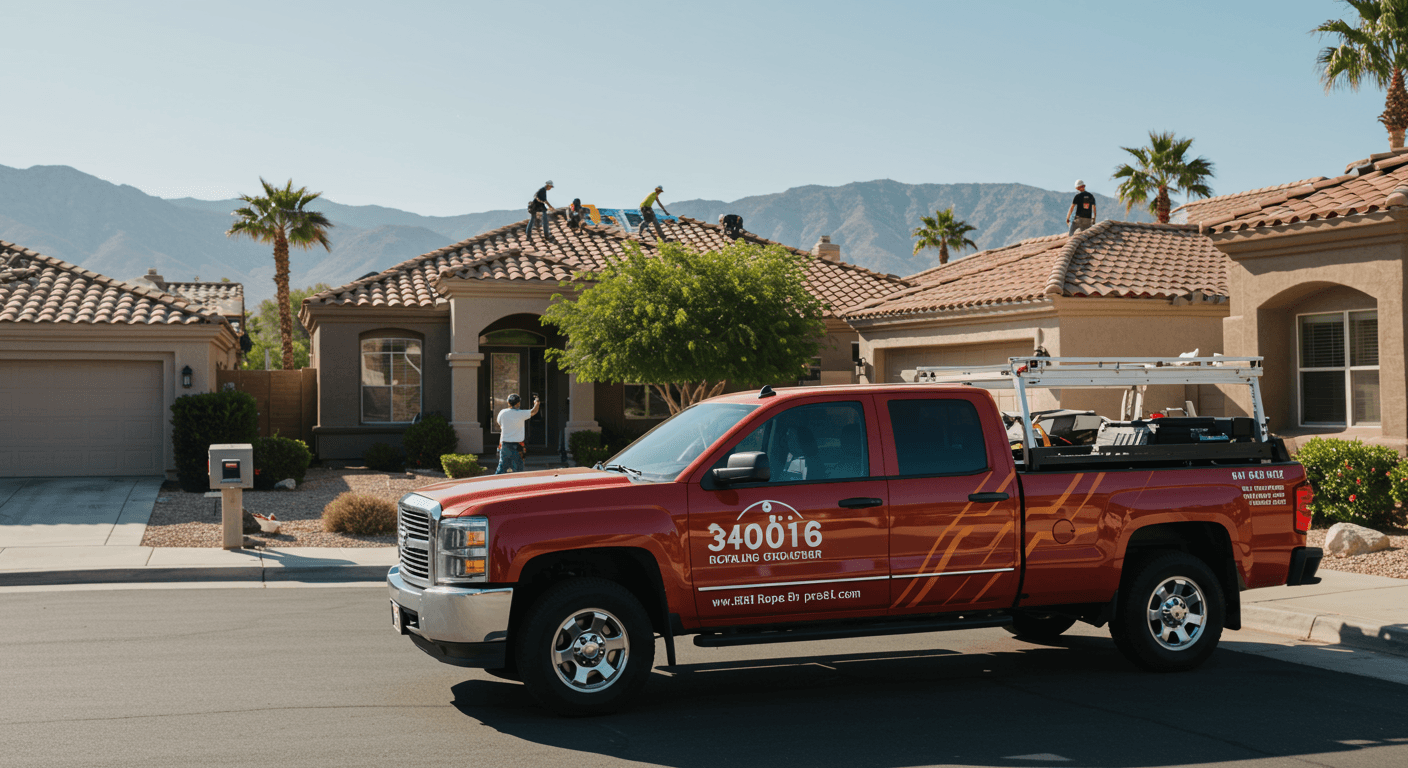
Traditional wisdom in the Southwest roofing scene says that if you nail the shingles down right, the phone will eventually ring with a neighbor's job. This is the comfort zone of the "passive referral" myth, and it is costing high-growth shops hundreds of thousands in missed revenue every year. I was sitting with Vance, a veteran owner in the East Valley of Phoenix, looking at his lead attribution for the first quarter of 2024. He pointed to a 14.3% dip in word-of-mouth leads despite his crews hitting record-high customer satisfaction scores. The problem was not the quality of the ridge vents or the stucco repairs. The problem was his reliance on human memory in a market where homeowners move every 5.2 years and digital noise has replaced the backyard fence conversation.
Most owners treat referrals like a bonus rather than a line item. They think of them as "free" leads. In reality, a referral that happens by accident is a failure of systemization. When I looked at Vance's data, we found that his organic referrals had a 64% closing rate, which is fantastic, but the volume was too inconsistent to build a production schedule around. To scale in markets like Las Vegas, Tucson, or Albuquerque, you have to stop hoping for advocacy and start engineering it. We spent the next three months turning his "do a good job and wait" approach into a proactive acquisition engine.
At a Glance
Stop viewing referrals as "free" and start calculating their true Cost Per Acquisition (CPA) to ensure scalability.
Implement a tiered incentive structure that rewards "Micro-Advocacy" before the final sale is even closed.
Leverage the high-density suburban sprawl of the Southwest by using proximity-based referral triggers.
Shift from manual "thank you" notes to automated tracking systems that maintain a 12-month touchpoint cycle.
The Mathematical Collapse of the Passive Referral
The Southwest is currently one of the most transient regions in the country. Data from various regional housing reports suggests that in metro areas like Phoenix and Henderson, the average length of homeownership is significantly shorter than the national average. Why does this matter for your roofing business? Because the "neighbor effect" is weakening. When Vance's customers moved away 4.7 years after a roof replacement, his brand equity in that specific cul-de-sac moved with them.
If you aren't actively capturing that referral within the first 11 months, you've likely lost it forever. We analyzed the lifetime value of customers in his CRM and found that a proactive referral program could increase the "Viral Coefficient" of a single job from 0.12 to 0.43. That means for every ten roofs you install, you should be getting four more leads directly from that cohort. If your current ratio is lower than 0.2, your system is leaking money.
The 48-Hour Advocacy Window
"The highest emotional peak for a homeowner isn't when the roof is finished, it is 48 hours after the crew leaves and the yard is spotless. Send your referral invite via SMS during this window, not two weeks later with the final invoice."
Engineering the Cost Per Acquisition (CPA)
Every lead has a cost. Even if you aren't paying Google $185 per click, you are paying for referrals through staff time, incentive payouts, and follow-up systems. I've seen contractors hesitate to offer a $250 referral fee because it feels like "giving away margin." This is a fundamental misunderstanding of marketing math.
Compare the numbers I pulled from a recent Southwest market analysis:
Lead Acquisition Cost Comparison
| Metric | Google Ads Lead | Engineered Referral Lead |
|---|---|---|
| Average CPA | $614 | $287 |
| Source | Google Ads | Engineered Referrals |
| Close Rate | 12% | 64% |
Average CPA
Source
Close Rate
The referral lead isn't just cheaper, it closes at a 2.1x higher rate than cold leads. Vance was spending nearly $9,400 a month on various digital platforms while his referral program had zero budget. By shifting just 14% of that ad spend into a formalized "Partner in Protection" program, he decreased his overall blended CPA by $84 per job. This is the kind of optimization that allows you to outbid competitors who are stuck overpaying for shared leads on generic platforms. Many owners find that once they understand their founding story and mission, they can better communicate the value of joining their referral network.
Referral leads consistently outperform cold leads in conversion rates across Southwest markets.
The Southwest Proximity Trap
Southwest architecture often involves massive HOAs and master-planned communities. In places like Summerlin or Scottsdale, if you do one house, you are effectively on an audition for the entire street. However, the "trap" is assuming that seeing your truck is enough.
We tested a "Neighborhood Saturation" model where we offered a tiered reward system. If one neighbor referred another, both got a $100 credit. If three neighbors on the same block booked within 90 days, we upgraded all of them to a premium shingle or a smart home attic fan at cost. This created a social pressure for the neighbors to work together. We weren't just the "roofer," we became a community project. This strategy helped Vance's team secure 7 jobs on a single street in Chandler within 22 days. This is the level of tactical growth that separates the million-dollar shops from the ones struggling to keep their crews busy.
Building Your Referral Flywheel
The difference between a passive referral and an engineered one is systemization. You need a framework that turns every completed job into a potential lead generator. This isn't about being pushy—it's about creating value for your customers while they're still in the "advocacy window."
Action Plan
How to Build a High-Conversion Referral Flywheel
A five-step system to transform passive referrals into a predictable lead generation engine.
The Handshake Trigger: Train your project managers to ask for a "hypothetical referral" during the initial inspection, setting the stage for the formal ask later.
Automated SMS Payouts: Use a platform that sends a digital gift card or Zelle payment immediately upon a lead booking an inspection, not after the job closes.
The "Second Look" Check-in: Schedule a 6-month post-install inspection. Use this as a low-pressure moment to ask for introductions to neighbors.
Partner Alignment: Build a reciprocal referral loop with local HVAC and solar companies who are already on the same roofs.
Data Attribution: Track every referral source in your CRM to identify which 20% of your customers are providing 80% of your referrals.
Want to skip the manual work and get exclusive, verified leads instead?
Get $150 in Free CreditsNavigating the Incentive Inflation
A decade ago, a $50 Starbucks card was a great "thank you." In 2024, with Southwest cost of living rising and inflation squeezing homeowners, that doesn't move the needle. You have to treat your referrers like high-level affiliates.
I've found that the "Cash is King" model works best in the Southwest, specifically with the younger demographic moving into suburban hubs. However, the payout must be significant enough to disrupt their day. For Vance, we landed on a $250 reward for any signed contract. We also looked at SBA growth resources to ensure our business scaling plan stayed compliant with local tax implications for these payouts. When the reward feels like a meaningful contribution toward a utility bill or a grocery run, your customers become an unpaid sales force that actually performs.
The Compliance Trap
Be careful with referral payouts in Southwest markets. Some states have specific rules about contractor referral fees. Always consult with a local tax professional to ensure your incentive structure complies with state regulations and doesn't create unexpected tax liabilities.
The B2B Referral Loop: Real Estate and Insurance
While B2C referrals are the bread and butter, the real "whale" leads in the Southwest come from B2B partnerships. I watched a crew in Santa Fe spend six months trying to crack the realtor market with zero luck. They were bringing donuts to offices and leaving business cards. It was a waste of time.
The shift happened when they started providing "Value-First Inspections." They offered realtors a 24-hour turnaround on roof certifications for pending sales, free of charge. In exchange, they became the preferred contractor for every inspection objection. This wasn't a "kickback" scheme, it was a service-level agreement. According to SCORE mentorship guidelines, building these types of strategic alliances is the fastest way to stabilize cash flow in a seasonal business. If you aren't sure how to structure these partnerships, looking at expert articles on operations can provide the framework you need to avoid common legal pitfalls.
Measuring Referral Velocity
Referral Velocity is a metric I use to track how long it takes for a new customer to provide their first lead. In Vance's shop, we initially saw a velocity of 184 days. By the time we implemented the 48-hour SMS trigger and the "Neighborhood Saturation" model, that number dropped to 41 days.
Why does this matter? Because the faster a referral comes in, the more "warm" the brand awareness is in that neighborhood. If you wait six months, the neighbor has already forgotten who did the roof or has been bombarded by four other door knockers. We also found that customers who refer within the first 60 days have a 32% higher chance of referring a second person within the first year. It's a momentum game. You can find more answers about quality and lead metrics if you want to see how this data compares to traditional lead sources.
Faster referral velocity means warmer leads and higher conversion rates in Southwest markets.
The Future of Southwest Advocacy
The trend is moving toward "Digital Social Proof." In 2025, a referral won't just be a phone call, it will be a tagged post on a neighborhood app or a shared video of a drone inspection. The contractors who win will be the ones who make it incredibly easy for homeowners to share their experience visually.
Vance ended his year with a referral-to-total-revenue ratio of 29.4%, up from 11.2% the previous year. He didn't have to hire more sales reps or double his ad spend. He just stopped treating his best marketing asset as a random act of kindness. The Southwest market is too competitive to leave your growth to chance. If you aren't building a system that turns every job site into three more, you aren't just standing still, you are falling behind.