At a Glance
Predictable Retention: Shift from flat-rate pay to tiered performance bonuses to reduce turnover by an average of 19.3% in high-competition markets.
Quality-Linked Incentives: Tie 12% of field bonuses to "zero-punch-list" completions to slash rework costs that typically eat 7.4% of gross margins.
Seasonal Stability: Implement a "Winter Bridge" bonus structure to keep high-performing crews from migrating to commercial snow removal or indoor trades.
Data-Driven Culture: Use CRM-integrated metrics to show crews exactly how their efficiency impacts their take-home pay in real-time.
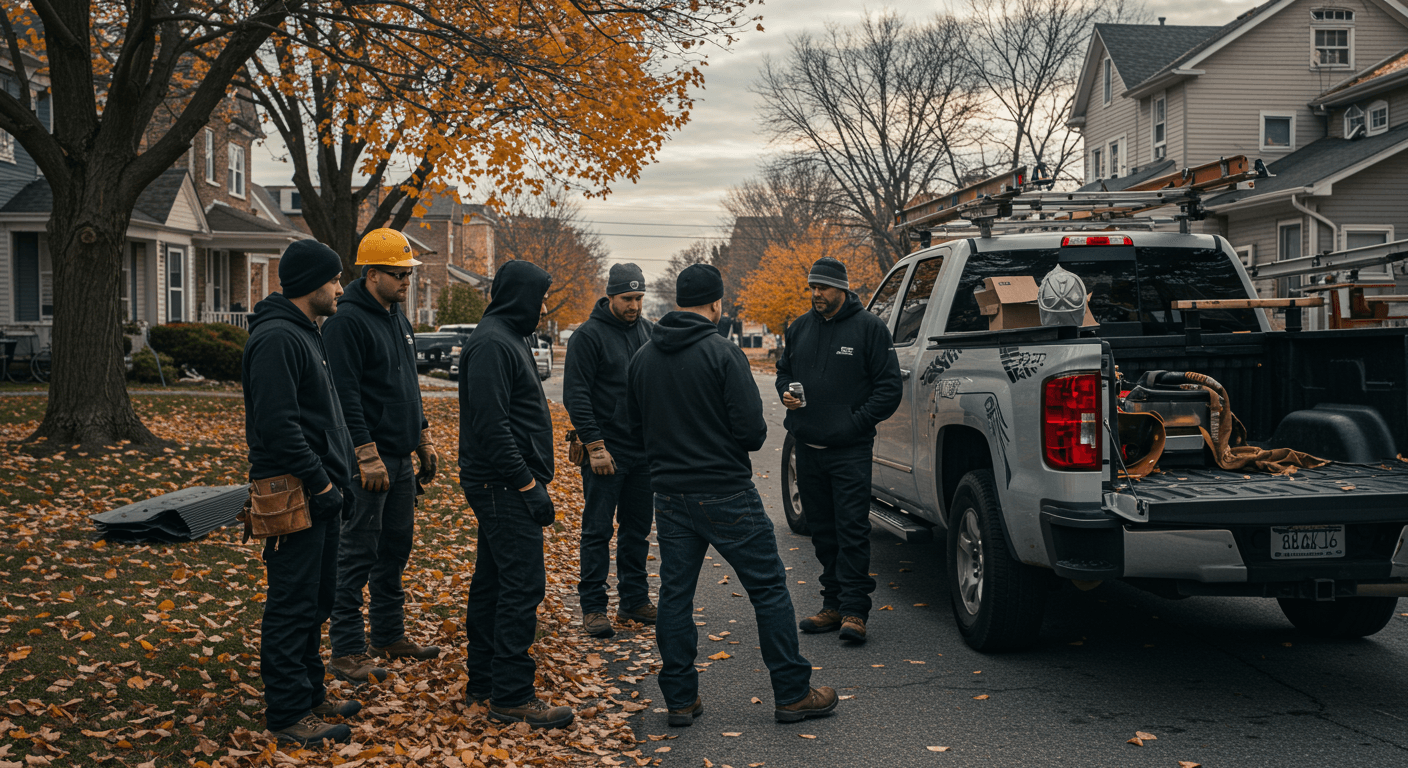
Ever wondered if the $2,840 you spent on that "Now Hiring" billboard on the I-190 was actually just a tax on your inability to keep a lead installer for more than nine months? I was standing on a slushy driveway in Cheektowaga last November, watching a foreman named Vance stare at his phone. He’d just lost his best shingle kicker to a competitor down the road in West Seneca for a measly two-dollar hourly bump. Vance looked at me, his breath visible in the biting Buffalo air, and asked why loyalty seemed to have a price tag lower than a decent pair of work boots.
The reality in the Queen City is that "competitive pay" is no longer a moat; it’s the bare minimum. If you’re still relying on a flat hourly rate and a box of donuts on Fridays to keep your crews from jumping ship, you’re bleeding more than just talent. You’re bleeding overhead, training hours, and customer reputation. Last year, I worked with a mid-sized outfit near Amherst that calculated their true cost of losing a seasoned tech. Between the administrative lag, the initial lead verification process, and the three weeks of "ramp-up" time where the new guy was more of a liability than an asset, they were losing $7,432 every time a truck seat went empty.
We had to stop the leak. We didn't do it by just throwing cash at the problem—we did it by changing the scoreboard. We moved away from paying for "attendance" and started paying for "outcomes." In a market like Buffalo, where the season is compressed by lake-effect snow and a punishing winter tail, every day of peak performance is worth its weight in architectural shingles.
The High Cost of the "Buffalo Bounce"
The roofing industry isn't just about shingles and flashing; it’s a logistics and human capital business. According to industry statistics from ConsumerAffairs, the roofing sector is a $56 billion monster, yet labor remains the single biggest bottleneck for growth. In the Buffalo-Niagara Falls metro area, this bottleneck is tightened by a unique regional pressure: the seasonal migration. When the weather turns in late November, your best guys are looking at six months of uncertainty. If you haven't given them a reason to stay that transcends the current paycheck, they’re gone.
I remember reviewing the books for a shop in Orchard Park. They had a turnover rate of 43.6% annually. When we crunched the numbers, the owner realized he was spending $31,200 a year just on the "hidden" costs of recruiting. That’s a new truck. That’s a massive marketing spend. That’s the difference between a profitable year and just breaking even.
The trend we’re seeing nationwide, and specifically highlighted by Construction Dive, is a shift toward "Total Rewards" packages. This isn't just about healthcare and 401(k)s—it's about performance-based incentives that make the worker feel like a stakeholder. When Vance and I sat down to fix his crew issues, we realized his guys didn't feel like they won when the company won. They just felt like they worked harder for the same $26 an hour.
To fix this, we implemented a "Margin Share" program. Instead of a flat rate, we assigned a labor budget to every job. If the crew finished under the budgeted hours—without safety violations or quality callbacks—they split 28% of the saved labor costs. Suddenly, the guys weren't taking two-hour lunches at the deli in Lackawanna. They were staging materials the night before and checking the weather radar like their lives depended on it.
Designing a Buffalo-Specific Incentive Structure
You can’t just copy-paste a roofing incentive program from a shop in Phoenix or Miami and expect it to work in Erie County. Our climate dictates our culture. A successful program here needs to account for the "grind" of the short season. I’ve seen contractors find massive success by front-loading their incentives during the "Goldilocks" months of June through September.
One strategy that worked wonders for a roofing business in Tonawanda involved a "Safety and Quality Ladder." Every month, the crew started with a potential $450 bonus per person. Every verified safety violation (no harness, blocked egress) docked that pool by $75. Every homeowner complaint that required a return trip docked it by $150. If the crew went the whole month "clean," they got the full amount, plus a "Clean Sweep" multiplier.
This changed the dynamic on the roof. I overheard a lead installer tell a new hire, "Put your damn glasses on, you're messing with my truck payment." That’s the kind of culture shift you can’t buy with a motivational speech. It’s built into the paycheck.
But incentives shouldn't stop at the labor level. Your sales team needs a structure that rewards more than just a signed contract. If they’re selling jobs with razor-thin margins just to hit a volume target, they’re hurting the company. We started incentivizing "Premium Lead Conversion." When a rep closed a lead from a high-intent source with verified data, their commission percentage scaled based on the final job margin, not just the gross sale. This forced the sales reps to actually sell value, rather than just being the lowest bidder on a street in North Buffalo.
The Psychology of the "Stakeholder" Rep
I’ve spent hundreds of hours in the front seats of F-150s, listening to sales reps complain about lead quality. It’s the universal contractor's lament. But here’s the thing: when you give a rep a "locked-in" territory and a preview of verified leads, the excuses have to stop. Performance incentives for sales should be tiered based on their "close-to-quote" ratio.
In a recent training session with a shop near Niagara Square, we looked at a rep who was closing 18% of his leads. He was frustrated. We changed his incentive from a flat 10% commission to a sliding scale: 8% commission for anything under a 20% close rate, and 12% for anything over a 25% close rate. Within 6.5 weeks, his close rate jumped to 27.2%. He didn't suddenly get "better" at roofing knowledge; he got better at his sales process because the financial delta was too large to ignore.
This is where the future of roofing management is heading. It’s about leveraging data to create "micro-incentives." For example, if a rep gets a 5-star Google review that mentions them by name, they get a $50 "Reputation Bonus." This small gesture ensures they don't just disappear after the check clears, which is a major pain point for homeowners in the suburbs like Williamsville or Depew.
Addressing the "Winter Gap"
We can't talk about Buffalo without talking about the snow. The biggest reason for turnover in our region is the seasonal layoff. Your best guys don't want to go on unemployment for three months; they want stability. The most innovative shops I’ve coached are using performance incentives as a "retention bank."
They take a small percentage of the summer performance bonuses and put them into a "Winter Bridge" fund. If the employee stays with the company through the following April, the company matches that fund by 47%. It’s a powerful "golden handcuff" that ensures your crew is ready to go the moment the ground thaws in March, rather than you having to hunt for new hires at the Home Depot parking lot.
Vance, the foreman I mentioned earlier, implemented this. He called it his "Lake Effect Insurance." It didn't cost him significantly more in the long run because he was saving so much on retraining costs. He realized that paying a $1,800 retention bonus in February was much cheaper than spending $4,000 to find and train a new installer in May.
The Role of Lead Quality in Performance
It’s hard to keep a sales team motivated if they’re chasing "chaff"—leads that aren't verified or are being sold to six other contractors. Performance incentives only work when the team feels they have a fair shot at winning. If you're providing them with exclusive, verified leads, you're setting the foundation for high performance.
When a rep knows that the lead they’re walking into has been vetted and they have a "locked preview," their confidence levels spike. I’ve seen this time and again in my coaching. A confident rep closes at a rate roughly 14% higher than one who feels they're just another number in a bidding war. The incentive program is the engine, but the lead quality is the fuel.
Final Thoughts: Building the 716 Powerhouse
The Buffalo roofing market is as tough as the people who live here. You’re fighting the elements, the short season, and a labor market that’s more fluid than ever. But as I told Vance that day in Cheektowaga, you can’t win a modern war with an outdated map.
Performance incentive programs aren't just "extra" costs; they are investments in the stability of your business. When you reduce turnover, you increase consistency. When you increase consistency, you increase your referral rate. And in a town like Buffalo, where everyone knows someone who knows a roofer, your reputation is your most valuable asset.
If you’re tired of the "Buffalo Bounce" and want to build a crew that stays, starts looking at your pay structure as a performance tool rather than a fixed expense. The shops that do this are the ones that will still be standing—and profitable—long after the next lake-effect storm clears.
The 48-Hour Feedback Loop
"The biggest mistake in incentive design is waiting too long to pay. If a crew hits a performance target in May but doesn't see the bonus until July, the psychological link is broken. In the Buffalo market, I recommend a "Performance Scorecard" delivered every Friday with the paycheck. Even if the actual payout is monthly, the visual confirmation of their $384 "Quality Bonus" being earned in real-time keeps the momentum high through the weekend."