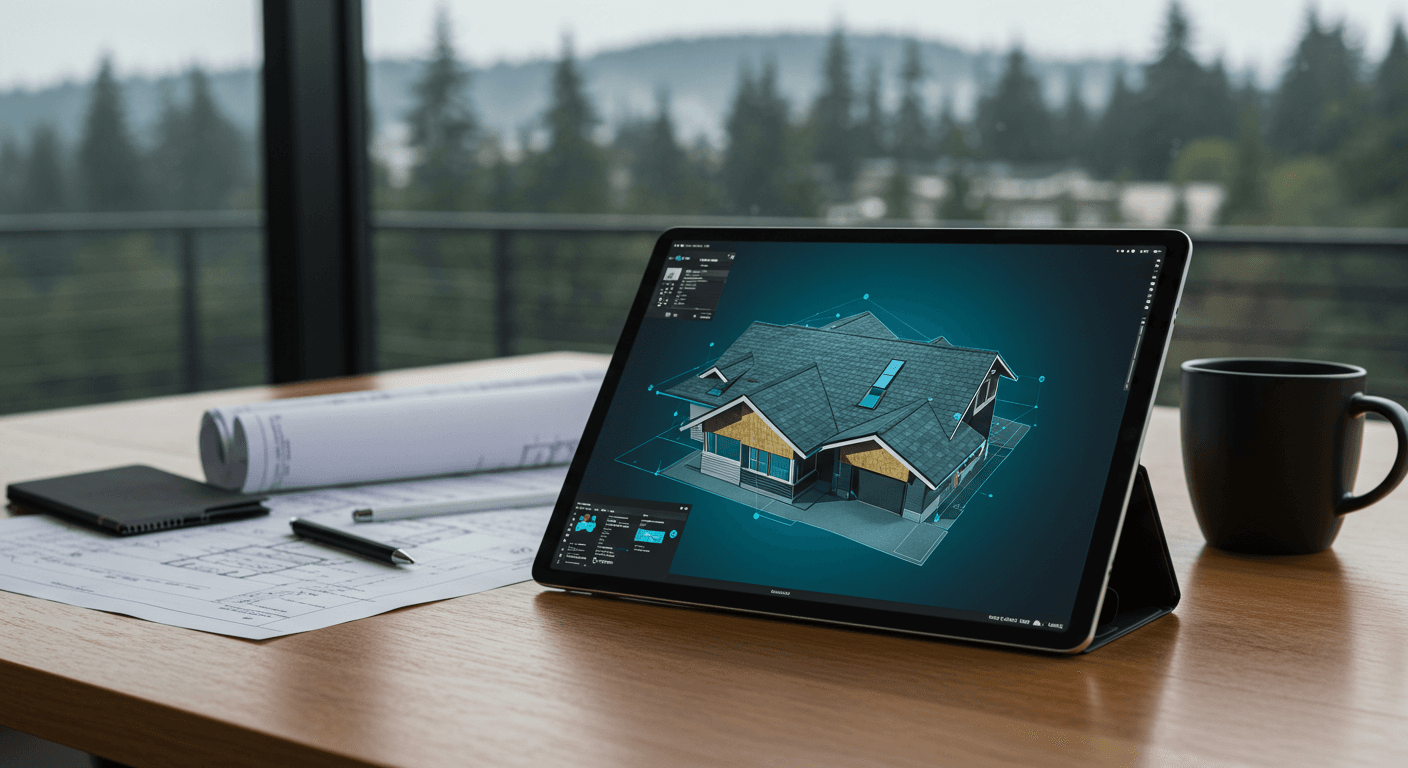
Six months ago, Xavier's estimators in Portland were averaging 14.7 hours per week just sitting in Interstate 5 traffic, clutching paper folders and hoping homeowners would actually show up for their 6:00 PM consultations. Compare that to his current operation, where one remote specialist manages 29 leads weekly from a home office in Bend, maintaining a 34.2% close rate without burning a single gallon of diesel. The difference represents more than just fuel savings; it is a fundamental shift in how West Coast roofing companies must operate to survive rising labor costs and tightening margins. I spent three days auditing Xavier's books last spring and found that his "old school" belly-to-belly approach was actually costing him $218.45 in unbilled overhead for every single estimate provided, regardless of whether the job was won.
At a Glance
Virtual presentations eliminate the "Geography Tax" of West Coast traffic, saving an average of 11.4 hours of estimator time per week.
Digital-first sales cycles reduce the lead-to-contract window from 9.3 days to approximately 3.8 days.
Remote selling increases safety by reducing unnecessary roof climbs during the initial estimation phase.
Higher crew utilization rates are achieved when estimators can handle 5.2 times more volume through virtual screening.
The Geography Tax Killing Your West Coast Margins
If you are running a shop in the Bay Area, Seattle, or Los Angeles, you already know that distance is not measured in miles; it is measured in minutes of frustration. I recently calculated the "drive-time drain" for a client in San Diego who was sending reps from Chula Vista up to Oceanside for initial inspections. We discovered that by the time the rep arrived, the company had already spent $87.12 in labor and vehicle wear and tear.
When you rely on in-person sales for the initial presentation, you are essentially paying a geography tax that your competitors are starting to bypass. Virtual sales allow your best closers to stay stationary, hitting 6 or 7 presentations a day instead of the 2 or 3 they manage when fighting traffic on the 405 or the 101. This is not about being "lazy." It is about systematic efficiency. By utilizing verified leads with locked previews, your sales team can focus their energy only on homeowners who have a documented need and a verified property, rather than driving 45 minutes to find out the "homeowner" is actually a tenant with no signing authority.
West Coast roofing companies see significant productivity gains when transitioning from in-person to virtual sales presentations.
Myth 1: Homeowners Only Buy Over a Handshake
The most common pushback I hear from owners is that roofing is a "relationship business" that requires a physical presence. While relationships matter, the modern West Coast homeowner—especially in tech-heavy hubs like San Jose or Bellevue—values their time more than a firm handshake. They are used to buying everything from groceries to $64,000 cars online.
I watched a sales rep named Xavier (different shop, same name) pivot his entire pitch to a Zoom-based model. He found that homeowners were actually more relaxed when they were not "hosting" a contractor in their living room. They were more honest about their budget and more willing to look at digital 3D models of their homes. This transition is not just for the "younger" crowd. According to the Bureau of Labor Statistics (BLS) guide on becoming a roofer, the industry requires significant physical stamina and balance, but it says nothing about the sales process needing to be physical. By moving the sales presentation to a virtual environment, you allow your most experienced veterans—the ones whose knees might be giving out but whose closing skills are sharper than ever—to stay in the game longer.
Visual Component Required
Do not attempt to switch to virtual sales without a high-resolution visual component. If you are just talking over the phone without a 3D model or drone footage to show the homeowner their specific roof issues, your close rate will plummet by 40% or more.
Myth 2: You Cannot Close High-Ticket Roofs Remotely
There is a stubborn belief that a $28,750 standing seam metal roof requires a "sit-down." I have seen the data prove otherwise. One company I worked with in the Sacramento Valley transitioned their premium installs to a "Virtual-First" model. They used high-resolution aerial imagery and drone-captured thermal data to show homeowners exactly where their plywood was rotting.
When you present a homeowner with a digital "health report" of their roof, the price becomes secondary to the data. It shifts the conversation from "How much do you charge?" to "How soon can you fix this specific problem?" This level of transparency builds more trust than a physical shingle sample ever could. Furthermore, it keeps your sales team off the ladders during the "maybe" phase of a deal. Considering that the BLS reported 110 fatal falls in the roofing industry in 2023, every unnecessary climb you eliminate from your sales process is a direct reduction in your company's liability and risk profile.
The 5-Minute "Pre-Flight" Check
"Before every virtual presentation, have your rep spend 5 minutes reviewing the aerial measurements and property history. Mentioning a specific detail—like a cracked chimney cricket or a rusted valley visible from the satellite view—instantly establishes authority without you having to step foot on the driveway."
The Hidden Operational Savings of Remote Estimation
Beyond the sales rep's time, there is a massive ripple effect on your production office. When a sale is made virtually, the data is already digital. There are no "scratched notes" on the back of a business card that your office manager has to decipher.
In a traditional model, the flow looks like this:
- Lead comes in.
- Rep drives to site (1.5 hours round trip).
- Rep climbs roof, takes photos (45 minutes).
- Rep writes manual quote (30 minutes).
- Rep drives back for presentation (1.5 hours round trip).
- Total time: 4 hours 15 minutes.
In a virtual model:
- Lead comes in.
- Rep reviews aerial data and drone footage (15 minutes).
- Rep conducts Zoom presentation with screen sharing (45 minutes).
- Rep sends digital contract for e-signature (5 minutes).
- Total time: 1 hour 5 minutes.
That is a 74% reduction in the sales labor cost per lead. If you are wondering how the math on pricing or refunds works for these types of high-efficiency models, you can check our frequently asked questions for more detail on how we support streamlined operations.
Action Plan
The 4-Step Virtual Sales Implementation Workflow
A systematic approach to transitioning from in-person kitchen table sales to efficient virtual presentations that reduce overhead and increase capacity.
Digital Asset Collection: Use drone or satellite-based measurement tools to generate a 3D model of the property before the call.
The "Discovery" Call: Conduct a 10-minute phone screen to confirm the homeowner's pain points and insurance status.
Interactive Presentation: Use a screen-sharing platform to walk the homeowner through the 3D model, material options, and specific damage points.
Instant Closing: Provide a digital "Good/Better/Best" proposal with an integrated financing application and e-signature block.
Want to skip the manual work and get exclusive, verified leads instead?
Get $150 in Free CreditsOvercoming the "Impersonal" Hurdle
Some contractors worry that virtual sales feel "cold." To combat this, I recommend what I call the "Human-Digital Hybrid." Your sales rep should still be visible on camera, sitting in a professional environment—not their truck—with a branded background.
I helped a shop in Seattle implement a "Virtual Site Walk." The rep would have the homeowner walk around their own house with their smartphone while on the call, pointing the camera at areas of concern like gutters or fascia rot. This engages the homeowner in the process. It makes them feel like a partner in the solution rather than a target for a sales pitch. It also gives your production team a "ground-level" view of the property access for the crews, which prevents scheduling disasters later on. If you ever run into technical hiccups or need help integrating these lead flows into your CRM, our support team is available to help.
Rethinking Your Recruitment Strategy
The biggest win of the virtual sales model is your ability to recruit. On the West Coast, the cost of living is driving talented people away from the trades. By offering a remote or hybrid sales position, you can attract high-level sales professionals who no longer want to spend 10 hours a day in a pickup truck.
You can hire a stay-at-home parent in Spokane to sell roofs in San Francisco. You can hire a retired adjuster in Arizona to handle your Puget Sound claims. This widens your talent pool from "people within a 30-mile radius" to "the best closers in the country." When your operations are systematic, your growth is no longer limited by how many miles your trucks can cover in a day.