Standing on a scorched driveway in Henderson, I watched Vance fold his leather portfolio as the homeowner gave that polite, terrifying "we'll think about it" nod. Vance had done everything right by the old-school roofing playbook. He showed up on time, measured the square footage with laser precision, and handed over a printed quote that was $1,240 lower than his nearest competitor. Yet, he was walking away empty-handed from a $29,654 residential re-roofing opportunity.
This was not a pricing problem. It was a methodology failure. In the high-stakes Las Vegas market, where every neighborhood from Summerlin to Lake Las Vegas is flooded with "free estimate" door hangers, the race to the bottom is a graveyard for profit margins. Vance was selling a commodity (shingle bundles and labor) while the homeowner was actually looking for a professional to solve a specific problem: skyrocketing NV Energy bills and the fear of a monsoon season leak.
This specific moment sparked a total overhaul in how Vance's company approached every job opportunity. Instead of acting as another "bidder" in a sea of contractors, his team transitioned into consultative partners. Within 7.5 months, their closing ratio on high-end architectural shingles jumped from 21% to 39.2%.
Main Points
Shifting from "order taker" to "problem solver" typically increases average ticket sizes by $3,200 to $5,400.
Consultative sellers see a 28.4% higher referral rate because they build deeper trust during the initial inspection.
The strategy requires a pivot toward education rather than hard-closing, focusing on the unique thermal challenges of the Mojave climate.
The Transactional Trap in the Mojave
Most roofing businesses in Southern Nevada operate on a transactional model. The phone rings, a rep goes out, looks at the roof, provides a price, and hopes for the best. This model relies entirely on volume. If you aren't the cheapest or the fastest, you lose. In a city where local competition is fierce and the National Roofing Contractors Association (NRCA) notes that labor costs continue to fluctuate, relying on being the "low-price leader" is a dangerous game.
Transactional selling ignores the reality of the Clark County building environment. Between the extreme UV exposure and the rapid expansion and contraction of materials, a roof here is a complex system. When you stop talking about "squares" and start talking about "thermal performance," the conversation changes. You are no longer a line item on a budget. You become a consultant managing a multi-decade asset.
Transactional vs. Consultative Sales ROI
| Metric | Transactional Model | Consultative Model |
|---|---|---|
| Avg. Closing Ratio | 19-23% | 34-41% |
| Margin per Job | 12.5% | 18.8% |
| Sales Cycle Length | 2-3 days | 7-10 days |
| Customer Lifetime Value | Low (One-off) | High (Referrals/Maintenance) |
Avg. Closing Ratio
Margin per Job
Sales Cycle Length
Customer Lifetime Value
Why Consultation Wins the Las Vegas Market
I recently analyzed the sales data of a shop in North Las Vegas that was struggling with a 14.8% profit leak due to missed upsell opportunities. Their reps were so focused on "getting the signature" that they failed to mention attic ventilation or high-performance underlayment.
Consultative selling isn't about being "slick." It is about asking questions that the homeowner hasn't considered. For instance, asking about the temperature of the second-floor bedrooms during a July heatwave shifts the focus from the roof surface to the entire building envelope. This approach allows you to justify a premium price point because you are providing a measurable benefit: lower cooling costs and increased comfort.
According to industry reports from Construction Dive, companies that prioritize "value-added services" and expert advice are far more resilient during economic cooling periods. When homeowners are tighter with their cash, they don't want the cheapest option; they want the option that won't fail them in five years.
Implementing the "Expert Advisor" Framework
Transitioning your team requires more than a pep talk. It requires a system. When I worked with Vance to fix his Henderson sales process, we implemented a three-step discovery framework.
First, the "Problem-Impact" phase. Instead of talking about the roof, the rep asks about the interior. "Have you noticed any discolored spots on the ceiling after the last heavy rain?" or "How has your AC been keeping up with the 110-degree days?" This identifies the pain.
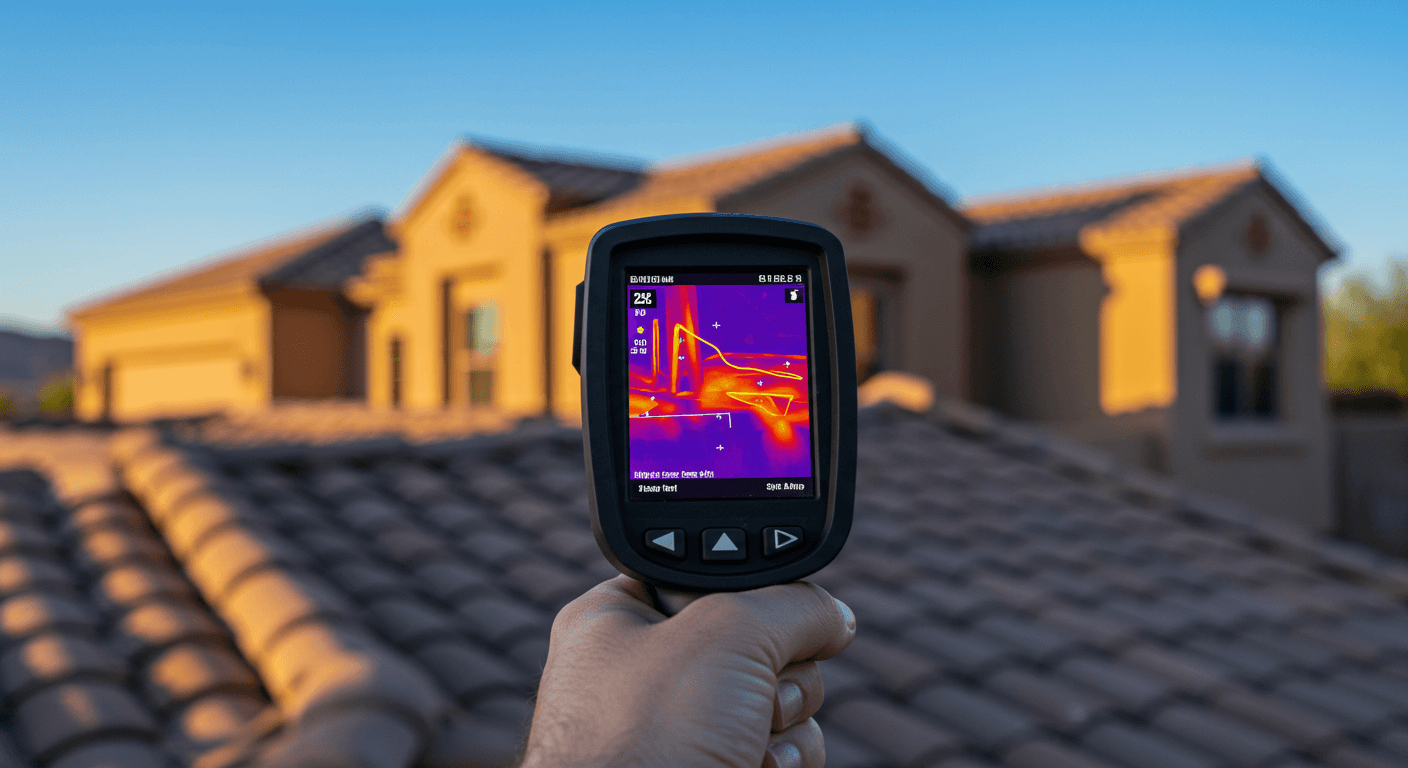
Second, the "Education" phase. This is where you use data. Show them the difference between a standard 3-tab shingle and a cooling-reflective shingle using a thermal imaging camera. When they see the 30-degree temperature difference on a screen, the price difference becomes irrelevant.
Third, the "Solution Alignment." You present three options, but only one is the "Expert Recommendation." By the time you reach this stage, the homeowner should feel like you are on their side of the table, helping them choose the best shield for their home.
Action Plan
The Expert Advisor Framework
A proven three-phase approach that transforms transactional reps into trusted consultants who command premium pricing in competitive markets.
Problem-Impact Discovery: Ask about interior symptoms (discolored ceilings, AC performance) rather than starting with roof damage. This identifies the homeowner's actual pain points.
Data-Driven Education: Use thermal imaging cameras to show measurable differences between standard and premium materials. Visual proof makes price differences irrelevant.
Solution Alignment: Present three options with one clear "Expert Recommendation." Position yourself as an advisor helping them make the best long-term decision.
Want to skip the manual work and get exclusive, verified leads instead?
Get $150 in Free CreditsThe UV-Performance Angle
"In Las Vegas, use the "UV degradation" talk track. Explain that Southern Nevada gets roughly 300 days of sunshine, which literally cooks standard asphalt. Selling a high-performance underlayment as a secondary "insurance policy" for the home is an easy consultative win."
The Role of Lead Quality in Sales Velocity
You cannot afford to spend two hours consulting on a lead that isn't serious. Consultative selling is time-intensive. If your reps are chasing "tire kickers" who are just looking for a number to give their insurance adjuster, the ROI of this method collapses.
This is where your lead verification process becomes the backbone of the sales department. When you know a lead is a verified homeowner with an actual need, your reps can justify the extra time spent on education. Using a mobile app to preview these opportunities ensures your team is only stepping onto driveways where a consultative approach will actually bear fruit.
When you have exclusive, verified leads with locked previews, you eliminate the "bidding war" anxiety. You aren't one of six guys standing in line. You are the specialist invited to solve a problem.
The "Over-Education" Trap
Don't turn into a college professor. While education builds trust, if you spend 90 minutes talking about chemical compositions and never ask for the business, you'll end up being the "smart guy" they didn't hire. Always tie the education back to a specific decision.
Scaling the Methodology Across the Team
Vance eventually took this framework and turned it into a training manual for his four other reps. They stopped measuring their success solely by "leads closed" and started measuring "margin per lead."
They found that by slowing down the front end of the sales process, they actually sped up the back end. There were fewer "change orders" and less friction during the production phase because the expectations were set perfectly during the consultation. In the Clark County market, where word-of-mouth travels fast through homeowner associations (HOAs), this reputation for expertise became their primary lead generator.
The transformation wasn't just about closing more deals—it was about closing the right deals. By focusing on consultative selling, Vance's team attracted homeowners who valued expertise over price, creating a sustainable competitive advantage in one of the most competitive roofing markets in the country.