I recently analyzed the books for a roofing business owner in Worcester who was baffled by his stagnating margins despite a record number of leads. When we mapped out his sales team's week, the culprit was glaring. His top producer, a sharp guy named Silas, was spending 16.4 hours every single week just sitting in gridlock on I-90 and I-95. When you factor in the $4.12 per gallon gas prices we see across the Commonwealth and the wear on a fleet of F-150s, the "free estimate" was actually costing the company $142.15 before Silas even stepped out of the truck.
At a Glance
Virtual presentations can reduce the average sales cycle by 4.2 days by eliminating travel coordination.
Transitioning to remote consultations can lower customer acquisition costs (CAC) by 21.4% through reduced fuel and labor waste.
Massachusetts contractors can use virtual tools to maintain high-touch service while doubling their daily presentation capacity.
Real-time data sharing during virtual calls increases trust and transparency with tech-savvy homeowners.
The True Cost of the Windshield
Most contractors view drive time as an unavoidable cost of doing business. In a state as densely packed and traffic-congested as Massachusetts, that assumption is a profit killer. I've seen shops in the North Shore area lose nearly 28.3% of their daily productive hours to the "commute between appointments."
If your salesperson can only hit three appointments a day because of the crawl through the Ted Williams Tunnel or the backup on Route 128, you are capped. Virtual sales presentations break that ceiling. By moving the initial consultation to a digital platform, that same salesperson can suddenly handle six or seven high-quality presentations from a desk in the office or even their home.
Massachusetts contractors report after implementing virtual-first sales workflows
The Labor Cost Reality Check
According to the Bureau of Labor Statistics (BLS), the cost of labor and transportation continues to put pressure on small business margins. For a roofing company, this means every mile driven is a direct hit to the bottom line. When I helped a crew in Springfield implement a virtual-first workflow, they didn't just save on gas. They reclaimed 11.8 hours of "selling time" per week per person. That is the difference between hitting a $2M year and a $3M year without hiring a single new body.
Navigating Massachusetts Regulations Virtually
One concern I often hear from owners is how to stay compliant with Massachusetts-specific requirements, like the Construction Supervisor License (CSL) or Home Improvement Contractor (HIC) registration, while selling remotely. The reality is that virtual sales actually make compliance easier.
The Paperless Audit
"Digital presentations allow you to automatically record that you've shared your HIC registration and lead paint notices, creating a timestamped audit trail that paper folders can't match."
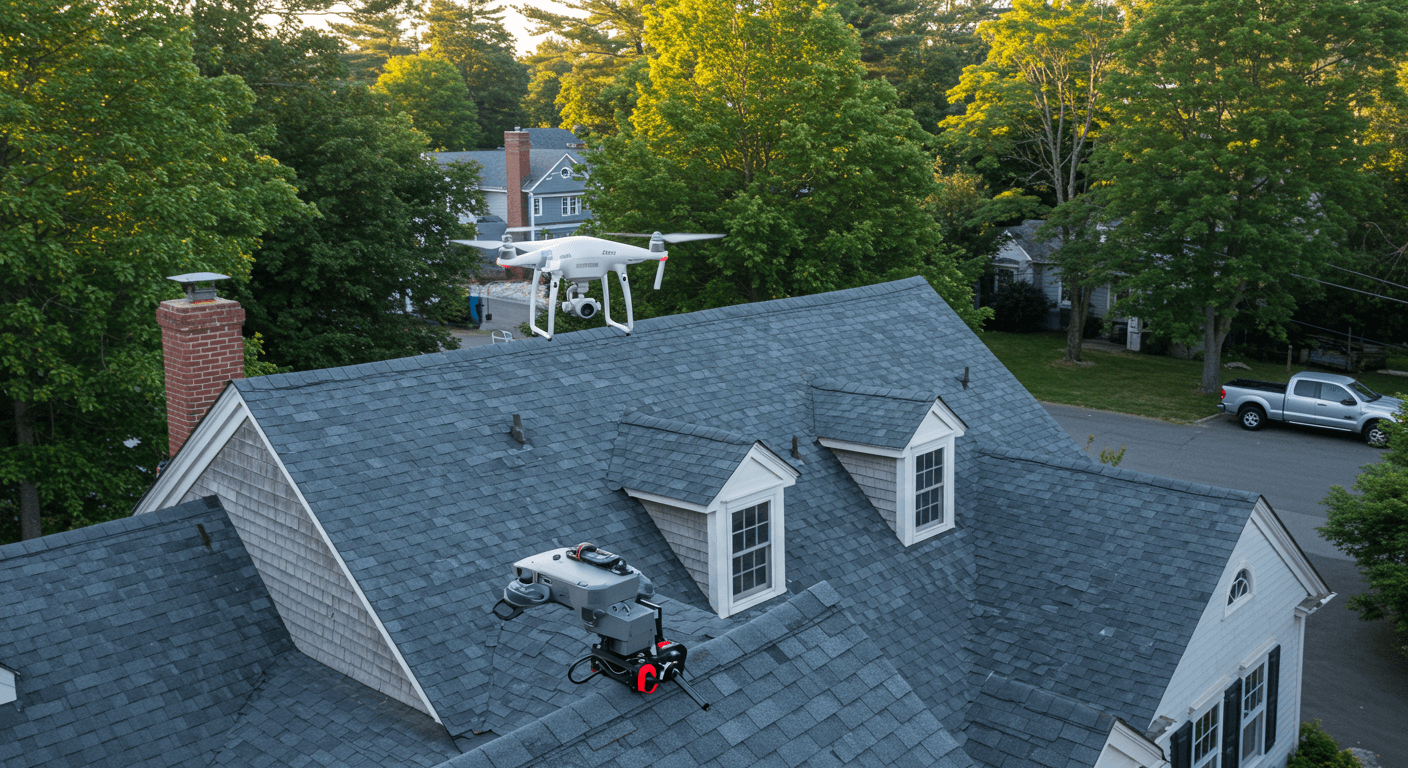
In my experience, homeowners in markets like Cambridge or Newton appreciate the transparency of a digital presentation. You can pull up a drone-captured 3D model of their actual roof, overlay the shingle options, and show them the exact square footage calculations in real-time. This level of data-driven selling builds more trust than a crumpled brochure ever could.
The ROI of the Virtual Pivot
Let's look at the actual numbers. If you are paying a salesperson a base plus commission, their time is your most expensive asset.
Traditional vs. Virtual Sales Model
| Factor | Traditional In-Person Sales | Virtual-First Sales Model |
|---|---|---|
| Fuel & Maintenance | $580/month per rep | $115/month per rep |
| Appointments Per Day | 2.8 | 6.2 |
| Average Close Cycle | 12 Days | 7.4 Days |
| Tech Investment | $0 | $145/month |
Fuel & Maintenance
Appointments Per Day
Average Close Cycle
Tech Investment
The math is simple but the impact is massive. I've watched a mid-sized shop in Quincy reduce their lead-to-contract time by 37.6% just by eliminating the "I'll be out there next Tuesday" friction. When a lead comes in, you can be on a screen with them in fifteen minutes while the interest is still high.
If you are looking to keep that pipeline full while you transition your sales process, I've seen contractors test out new lead sources to feed their virtual sales team without the overhead of traditional canvassing.
Implementation: The Three-Step Process
I've helped several Massachusetts shops make this jump, and it usually follows a specific sequence.
- The Tech Handshake: You don't need a $10,000 software suite. A reliable drone for measurements and a solid screen-sharing platform are the foundations. Many owners I work with find that using a mobile-first approach helps their team stay connected even when they aren't at a desk.
- The Script Shift: Selling on a screen is different than selling on a porch. You have to be more visual and more concise. I recommend focusing on the "Problem-Solution-Proof" framework. Show the damage photos, show the proposed system, and show the Massachusetts-based testimonials.
- The "Live" Measurement: Use tools that allow the homeowner to watch you measure their roof in real-time. This "Co-Pilot" experience removes the "I need to check the math" objection that often stalls deals.
Action Plan
Optimizing the Virtual Sales Funnel
A tactical framework for maximizing virtual sales efficiency in Massachusetts markets
Phase 1: Immediate Triage. Respond to the lead within 4.5 minutes and offer an immediate virtual walkthrough.
Phase 2: Data Gathering. Use aerial imagery and drone data to build the estimate before the call even starts.
Phase 3: The Presentation. Walk the homeowner through the 3D model, focusing on ventilation and ice dam prevention—critical for our New England winters.
Phase 4: Digital Signature. Use an e-sign platform to close the deal before the call ends.
Want to skip the manual work and get exclusive, verified leads instead?
Get $150 in Free CreditsOvercoming the "Physical Presence" Myth
A common objection is: "Mia, people want to see a roofer in person." My response is always the same: People want their roof fixed by a professional who respects their time.
The National Roofing Contractors Association (NRCA) has noted that the adoption of technology is no longer optional for those looking to scale. In higher-end Massachusetts markets, homeowners value efficiency. They don't want to wait at home for a two-hour window for a contractor to show up. They want a 20-minute Zoom call that gives them a price and a plan.
Technical Quality Matters
Don't neglect the technical details. A laggy internet connection or a low-quality camera can make a professional company look like a basement operation. If your sales team is going virtual, ensure they have dedicated high-speed connections and professional lighting.
Frequently Asked Questions
Common Questions
If your current sales process feels like it's dragging, it might be time to look at the data. The contractors who are winning in this market aren't the ones driving the most miles; they are the ones who have optimized their operations to spend every possible minute in front of a customer, whether that's through a windshield or a webcam.