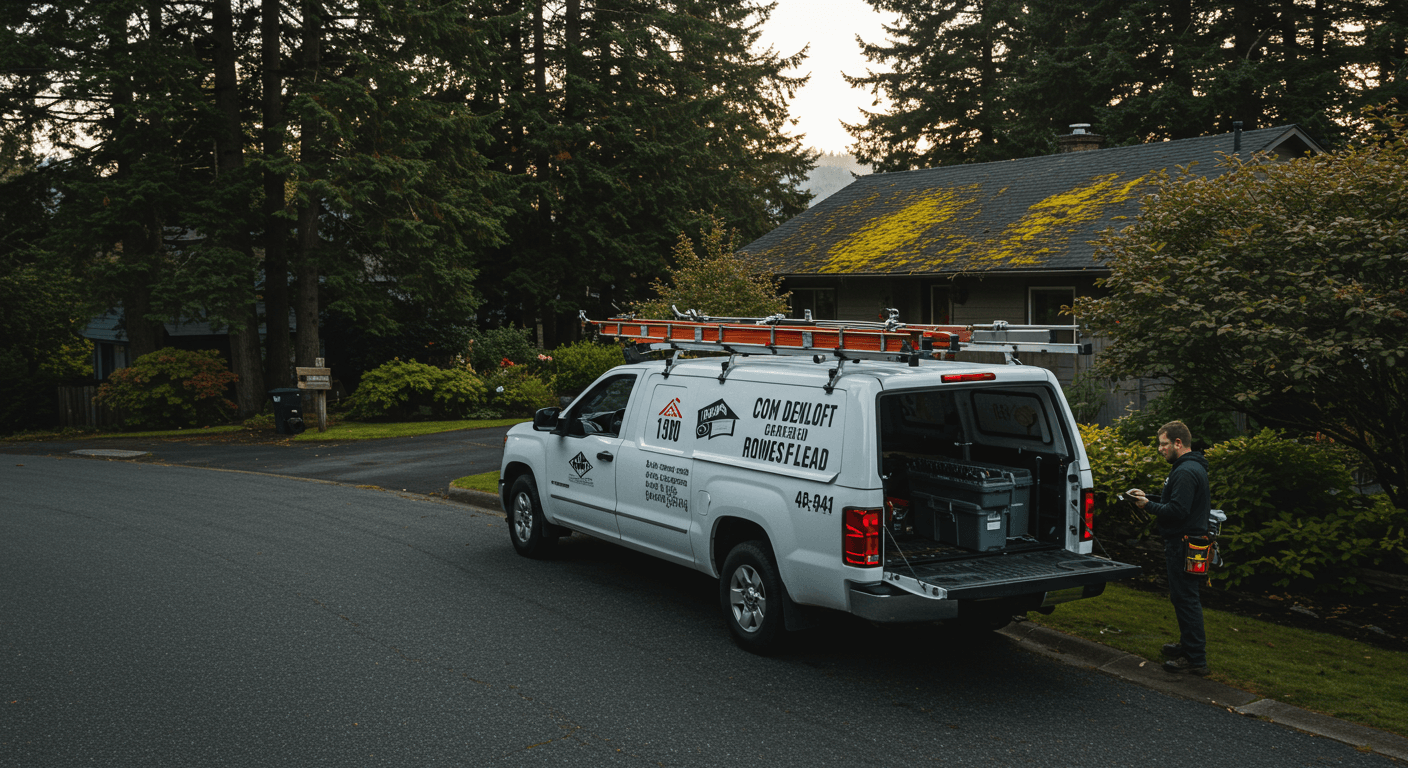
Silas slid his laptop across the desk, the screen glowing with a spreadsheet that looked like a bloodbath of red cells. We were sitting in his shop just outside of Eugene, and the data from his previous month's digital spend was brutal. He'd dropped $9,342 on a mix of "premium" shared leads and local search ads, yet his crew's calendar for the following week was nearly empty. The problem wasn't a lack of homeowners needing help, it was the sheer cost of actually getting a qualified lead into his CRM.
I realized right then that Silas was falling into the same trap many Oregon contractors face. He was chasing the lowest CPL possible, thinking quantity would eventually lead to a win. In reality, he was paying a "hidden tax" on every lead because he was competing with five other guys for the same leaky roof in Beaverton. When we crunched the numbers, his "cheap" $45 leads were actually costing him $1,240 per closed job once you factored in the labor hours wasted on dead-end calls and fuel for no-show estimates.
At a Glance
Shift focus from Cost Per Lead (CPL) to Cost Per Acquisition (CPA) to see true profitability.
Oregon's unique CCB regulations can be used as a lead filtering tool to increase quality.
Exclusive leads consistently outperform shared leads by 3.4x in the Willamette Valley market.
Verify homeowner intent before your sales team spends time on a site visit.
The Oregon Landscape: Why Your CPL is Creeping Up
The roofing market in the Pacific Northwest is unique. Between the strict licensing requirements of the Oregon Construction Contractors Board (CCB) and the seasonal pressure of the rainy season, the cost of doing business is high. In cities like Portland or Hillsboro, the competition for search terms like "roof replacement" is so dense that some contractors are seeing CPCs (cost-per-click) north of $65.
If you are relying solely on traditional digital ads, you are bidding against national franchises with massive budgets. To optimize your lead costs, you have to look beyond the surface level metrics. I've seen shops in Medford cut their acquisition costs by 22% simply by tightening their geographic radius to avoid the "travel time drain" that kills margins on smaller repair jobs.
Medford shops reduced acquisition costs by focusing on tighter geographic zones
Shared vs. Exclusive: The Math Behind the Lead
Many contractors I talk to in Salem think they're saving money by buying shared leads. The logic seems sound: pay $40 for a lead instead of $180. But let's look at the actual campaign data I've seen from local shops over the last 14 months.
Shared Lead Model vs. Exclusive Lead Model
| Factor | Shared Lead Model | Exclusive Lead Model |
|---|---|---|
| Initial Cost | Lower initial cost ($35-$55) | Higher initial cost ($150-$280) |
| Competition | Higher competition (5+ contractors) | Zero competition (Exclusive) |
| Conversion Rate | Conversion rate typically 2-4% | Conversion rate typically 12-18% |
| Team Impact | High sales team burnout | Predictable ROI and higher morale |
Initial Cost
Competition
Conversion Rate
Team Impact
When you buy a shared lead, you aren't just buying a homeowner's contact info. You are buying a race. If you aren't the first person to call within 94 seconds, your chances of closing that lead drop by nearly 73%. For most small to mid-sized roofing companies in Oregon, maintaining a 24/7 call center isn't realistic. This is where exclusive roofing leads change the game. By removing the competition factor, you can actually have a human conversation with the homeowner rather than a panicked sales pitch.
Tactical Steps for Cost Optimization
If your current lead flow feels like a leaky bucket, you need a systematic way to plug the holes. I've helped contractors implement a "Pre-Qualification Framework" that filters out the tire-kickers before a truck ever leaves the yard.
Action Plan
The Lead Value Optimization Framework
A 4-step process to reduce wasted spend and increase your close rate.
Audit your current lead sources and calculate the 'Cost to Close' for each, not just the CPL.
Implement a mandatory verification step to ensure the homeowner is the actual deed holder.
Focus your budget on exclusive territory leads during the 'Big Dark' rainy months to maintain cash flow.
Train your office staff to use a lead preview system so you only pay for jobs that fit your crew's skill set.
Want to skip the manual work and get exclusive, verified leads instead?
Get $150 in Free CreditsOne specific tactic that worked for a client in Gresham was focusing on our verification process. Instead of just taking every name that popped up in their inbox, they started looking at the specific project details first. This meant they stopped wasting time on mobile home repairs (which they didn't do) and focused entirely on steep-slope residential replacements.
The 72-Hour Rule
"In Oregon's competitive corridor, any lead older than 72 hours that hasn't been contacted should be moved to a long-term nurture sequence rather than your active sales pipeline to save your reps' time."
The Impact of Intent and Verification
A lead is only as good as the homeowner's intent. According to the National Roofing Contractors Association (NRCA), contractors who prioritize lead quality over volume see a 19.4% higher profit margin on average. This is because high-intent homeowners are less likely to haggle over every penny in the estimate. They want a professional who is licensed, bonded, and ready to solve their problem before the next storm rolls in off the coast.
I've watched guys use our mobile app to snag exclusive leads the moment they go live. The difference in their voice when they make those calls is night and day. They aren't defensive or rushed. They know the homeowner is waiting for their call specifically.
Moving the Needle on Your Bottom Line
At the end of the day, Silas didn't need more leads. He needed better ones. We cut his total monthly spend by $2,100 but increased his closed revenue by 14.8% in just 60 days. We did this by cutting out the junk shared leads and focusing on high-intent, exclusive opportunities in his specific service area.
If you're tired of seeing your margins evaporate into ad platforms that don't care about your ROI, it's time to stop looking at lead generation as a volume game. It's a precision game. In the Oregon market, where the weather and the regulations are always shifting, precision is the only thing that keeps your crews busy and your trucks on the road.